
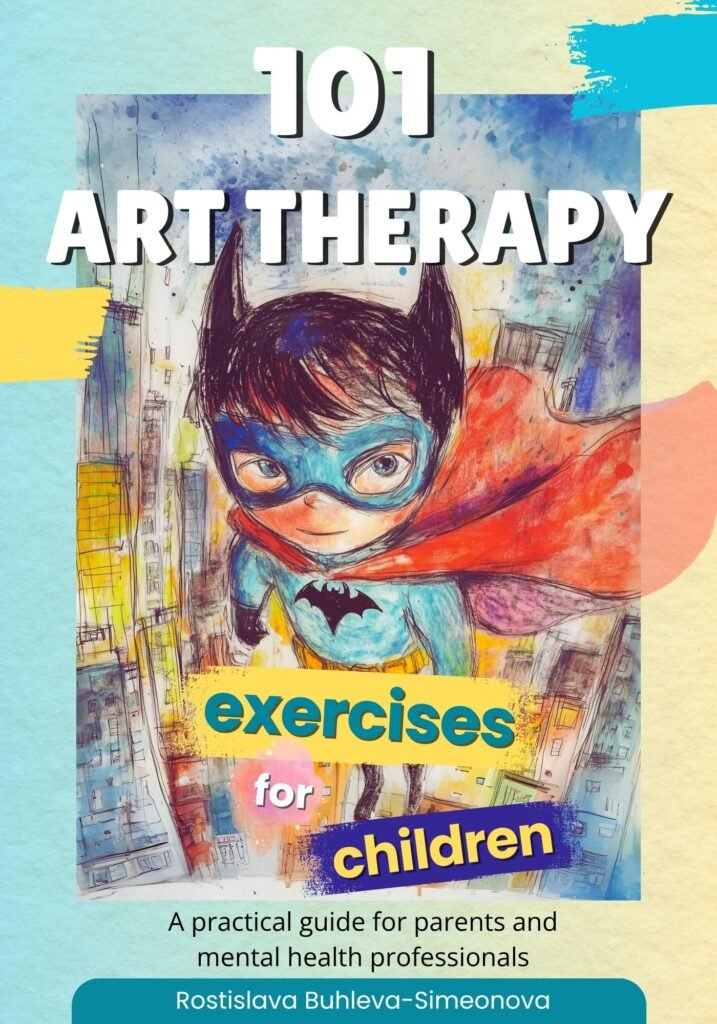
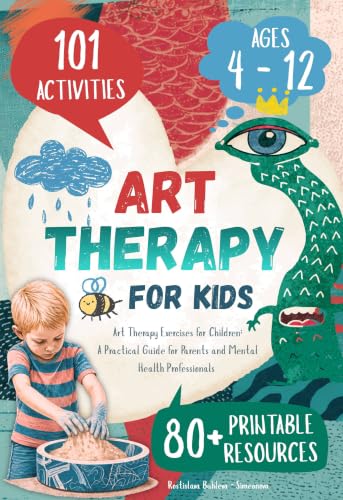
In an era shaped by developmental challenges, opportunities for creativity and critical thinking are steadily declining. Meanwhile, digital engagement dominates children’s daily experiences. As a result, emotional distance between children and caregivers is increasing. In this context, 101 Art Therapy Exercises for Children emerges as a timely and necessary resource. Written by a certified art therapist and parenting expert, the book offers an evidence-based response to modern pressures. Specifically, it presents joyful, age-appropriate, and effective therapeutic art practices. Consequently, it supports emotional growth, cognitive development, and relational connection through structured creative engagement.
At its foundation, the book recognizes that children communicate primarily through play, images, symbols, and movement. In contrast, verbal language often limits emotional expression. Therefore, art therapy aligns naturally with children’s developmental processes. It is especially beneficial for young children, those with special needs, and children who experienced trauma. Drawing, painting, and sculpting function as children’s native language. Moreover, these activities extend beyond creativity. They enable expression of fear, grief, anger, and anxiety. Art becomes a bridge between internal experience and external communication. Through this process, children gain emotional clarity and a stronger sense of agency.
Scientific Foundations of Art Therapy Exercises for Children
Importantly, the book is grounded firmly in neuroscience and psychological research. Each activity reflects validated studies on creative engagement and brain function. Research demonstrates that art-making alters brain physiology and strengthens neural flexibility. Furthermore, it enhances emotional regulation and adaptive capacity. Creative activity activates the right hemisphere and engages the limbic system. In addition, it supports the parasympathetic nervous system. As a result, stress decreases while focus and resilience increase. Rather than presenting theory alone, the book integrates science into structured therapeutic sessions. Practical experience remains closely connected to evidence-based developmental support.
Moreover, the book translates scientific insights into clear and accessible therapeutic practice. Each session is carefully structured, yet flexible for individual needs. Therefore, caregivers and professionals can apply activities confidently across developmental stages. The integration of research and practice strengthens therapeutic effectiveness. At the same time, it preserves joy, spontaneity, and creative freedom. Through this balance, children experience both emotional safety and cognitive stimulation. Ultimately, the scientific grounding ensures that creative expression supports measurable developmental outcomes.
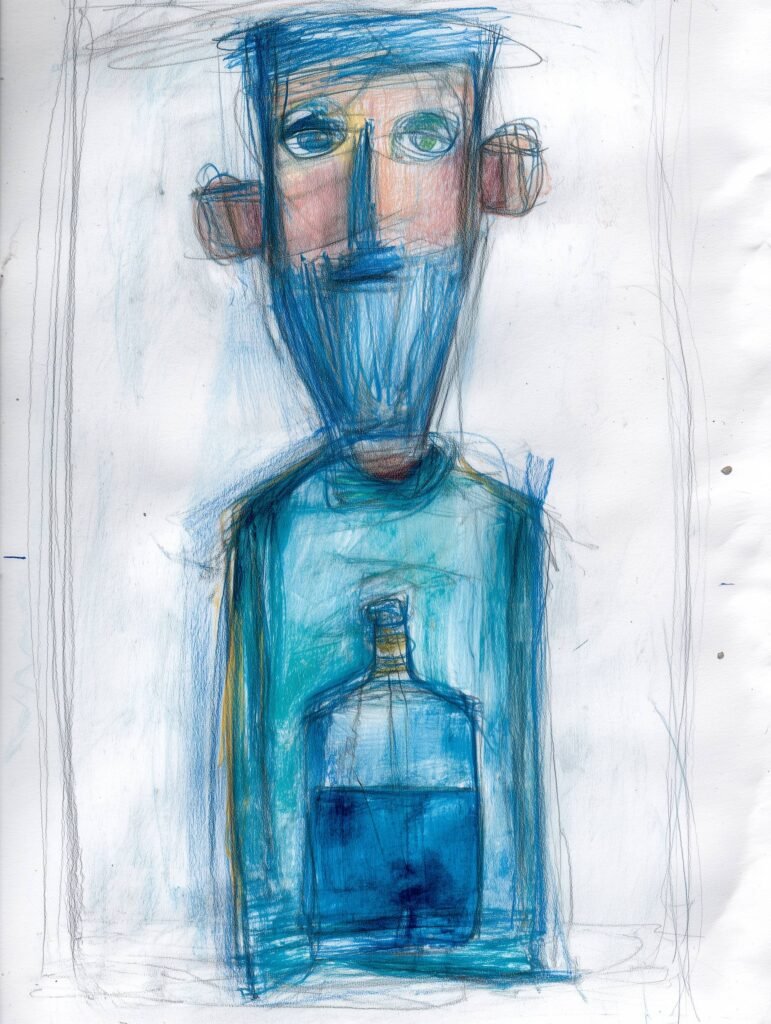
“A Genie from a Bottle”
Preventative and Relational Impact of Art Therapy Exercises for Children
The book serves a dual function as both a therapeutic toolkit and a preventative resource. Parents, caregivers, educators, counselors, and mental health professionals receive gentle, non-intrusive observation methods. Consequently, adults can understand a child’s emotional world over time. Too often, support begins only after difficulties escalate. However, these activities encourage proactive emotional processing. At the same time, they offer subtle insights into a child’s inner landscape. Importantly, this occurs without judgment, pressure, or diagnosis. Through consistent creative engagement, adults notice patterns in expression, mood, and behavior. Therefore, support becomes responsive rather than reactive. This preventative approach strengthens emotional awareness and early intervention capacity.
Beyond emotional regulation, the book emphasizes cognitive development, imagination, and critical thinking. Art-making strengthens memory, attention, and problem-solving through multisensory engagement. Furthermore, children are encouraged to choose, experiment, revise, and reflect. These processes directly support analytical thinking and adaptability. Imagination is presented as a developmental necessity rather than a luxury. It becomes a space for exploring abstract ideas and shaping identity. Additionally, children discover internal strengths through creative exploration. Equally important, relational connection forms the third foundational pillar. 101 Art Therapy Exercises for Children demonstrates how shared art-making deepens bonds between children and caregivers. Collaborative creation builds trust, emotional attunement, and open communication. As a result, the book becomes both a developmental guide and a relationship-centered resource.
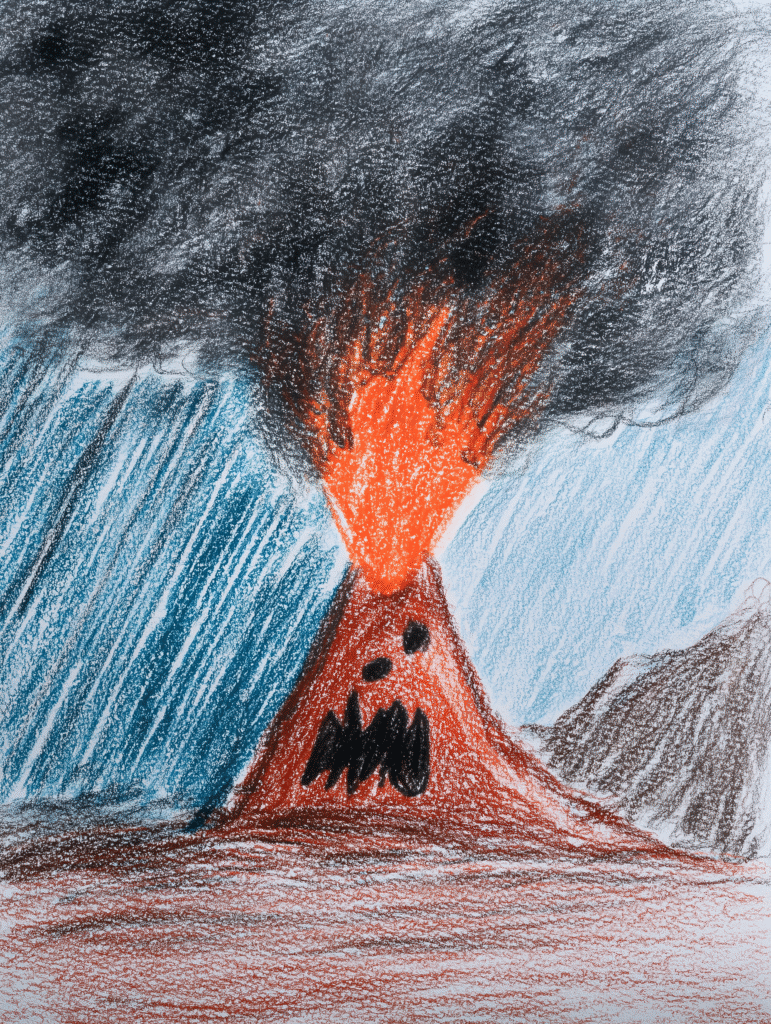
“Anger Volcano”
Ethical Guidance in Аrt therapy Еxercises for Children
The book approaches interpretation with care and ethical clarity. While artwork can offer emotional clues, caregivers are not therapists. Therefore, diagnosis based on a child’s artwork is discouraged. Instead, the book promotes curiosity, neutrality, and open-ended dialogue. Children remain the primary authorities on meaning. Parents observe objective features, including size, placement, repetition, and intensity. At the same time, they prioritize the child’s narrative and emotional experience. When concerns arise, the guidance recommends seeking professional support. Interpretation remains responsible, respectful, and developmentally appropriate. This approach protects children’s autonomy while supporting informed caregiving. Through this balance, emotional expression remains safe and authentic.
A notable strength is the flexible, developmentally informed structure. Activities are grouped by ages four to six, seven to nine, and ten to twelve. However, exercises remain intentionally adaptable across stages. Art therapy prompts evolve with the child’s growing capacities. Therefore, repeated activities reveal new insights over time. Many exercises also include adults as participants. Shared engagement strengthens bonding and reduces performance pressure. Moreover, it models vulnerability and encourages emotional openness. As a result, both child and adult benefit from creative participation. 101 Art Therapy Exercises for Children becomes a relational experience, not only a structured program.

“Drawing with Eyes Closed”
Warm-up Exercise: Drawing with Eyes Closed
Purpose:
The “Drawing with Eyes Closed” exercise invites children to step away from perfectionism and embrace spontaneity, encouraging creative freedom and reducing self-criticism. Rooted in the art therapy principles of Edith Kramer, who valued the process of creation over the final product, this activity builds self-confidence (Kramer, 1971). Psychologically, it taps into the concept of “flow” as described by Csikszentmihalyi (1990), where immersion in an activity helps reduce anxiety and enhances enjoyment. By drawing without relying on visual control, children connect with their imagination and intuition, aligning with Erikson’s stage of initiative vs. guilt, where exploration leads to purpose (Erikson, 1963). A 2017 study demonstrated that non-directive, sensory-based art activities boosted children’s creative confidence by 20%, as shown by their increased willingness to try new things (Lee & Kim, 2017). This warm-up exercise helps children relax, take risks, and prepare for more structured art therapy work.
Materials Needed:
- White paper (8.5×11 inches)
- Crayons, markers, or colored pencils
- Optional: Blindfold or scarf (if preferred)
Session Description:
Introduction (1–2 minutes):
Set a playful, easy-going tone. Explain that the goal of this exercise is to have fun while drawing with closed eyes to see what comes out. Encourage them to move their hand freely on the paper, making lines and shapes without worrying about what they “should” create. Reinforce the idea of letting go of control, saying something like, “Let your hand wiggle and dance across the paper—let’s see what happens!”
Drawing (3–4 minutes):
Distribute the paper and a few drawing tools. Ask the child to close their eyes (or use a blindfold if they prefer). Prompt them to move their hand in any direction, drawing freely without peeking. Stay engaged, offering supportive comments like, “Where’s your hand going now?” or “Let’s try making a big swirl!” If they hesitate, encourage them to start with simple, bold motions.
Reflection (2–3 minutes):
Invite the child to open their eyes and take a look at their creation. Ask, “What do you see here? Does it remind you of anything?” or “What was it like drawing without looking?” Celebrate whatever they’ve created, even if it’s abstract. For example, “I love how those zigzags turned out!” If they seem unsure, gently point out any interesting shapes or patterns to spark their imagination.
Closure (1 minute):
Praise their courage for trying something new. Ask if they’d like to keep their drawing or move on to the next activity.
How it helps:
- Overcoming Perfectionism: Encourages children to let go of “perfect” results, fostering creative exploration.
- Building Confidence: Supports risk-taking, especially for children who are hesitant to draw for fear of making mistakes.
- Stimulating Imagination: Encourages creative thinking through abstract interpretation of their marks.
- Preparing for Future Art Tasks: Helps children loosen up and get comfortable for more focused art therapy activities.
- Reducing Anxiety: Provides a low-pressure, playful way for children to relax and explore creatively.
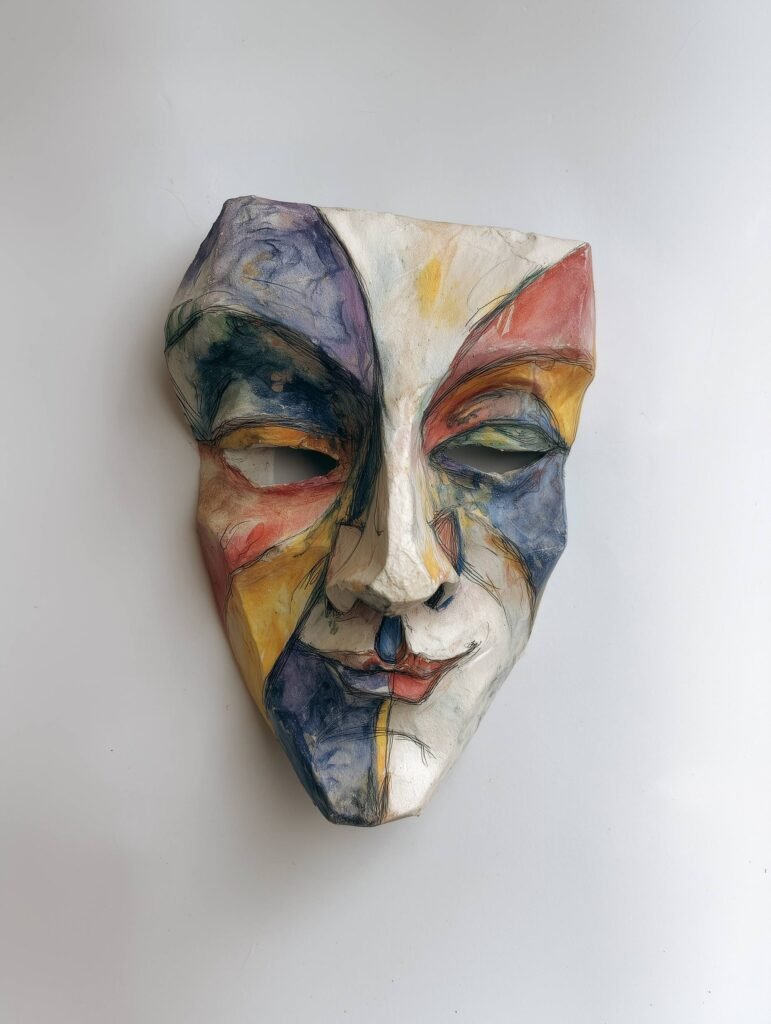
“My Unique Self Mask“
Purpose
The “My Unique Self Mask” session encourages children to explore and affirm their evolving sense of self and identity by creating a wearable paper mask that represents their unique qualities, interests, values, and aspirations. This activity draws on the identity-focused art therapy approaches developed by Judith Rubin in the 1970s, who used symbolic art to help children articulate complex aspects of their self-concept (Rubin, 2005). Psychologically, it aligns with Erikson’s stage of industry vs. inferiority, where children ages 10–12 strive to develop competence and a coherent sense of identity amidst peer and societal pressures (Erikson, 1963). The mask serves as a tangible representation of their individuality, supporting self-determination theory, which emphasizes autonomy and relatedness as key to psychological well-being (Deci & Ryan, 2000). Research supports this approach: a 2020 study found that identity-based art activities increased self-esteem in preadolescents by 32%, as measured by self-report scales (Taylor & Brown, 2020).
Materials Needed
- Cardstock or heavy paper (pre-cut into a mask shape with eye holes, larger for detailed designs), a premade plaster mask
- Coloured pencils, fine-tip markers, or acrylic paint pens (for precision), watercolours
- Brushes and sponges
- Optional: Collage materials (e.g., magazine cutouts, washi tape, metallic stickers) for layered designs
- Scissors (child-safe for detailed cutting, adult supervision)
- Elastic string or adjustable ribbon (to tie the mask, adult assistance)
Session Description
Introduction (5–7 minutes): Ask, “Tell me a little bit about yourself, who you are, what you love?” Share an example related to yourself. Explain that they’ll create a unique self mask to represent who they are, including their qualities, interests, and what they stand for. Show the cardstock mask and describe how they’ll decorate it with symbols, patterns, or images that reflect their identity. Emphasise that the mask is a chance to show their true self, unique and powerful
Creating the Mask (15–30 minutes): Provide the pre-cut cardstock mask and art supplies, ensuring tools like fine-tip markers or paint pens for detailed work. Help the child reflect on their identity, prompting with questions like, “What’s a quality you’re proud of?” “What interests or dreams define you?” or “What do you want people to know about you?” Suggest incorporating symbols, words, or collage elements. Assist with detailed cutting if needed, but let them lead the creation. Praise their ideas (e.g., “A constellation for your big dreams—that’s so thoughtful!”). If they’re unsure, keep asking them questions or telling them about yourself. Once finished, help attach an elastic string or ribbon (adult task) so the mask can be worn briefly. Observe the mask’s complexity (e.g., intricate vs. minimal designs, bold vs. subtle elements) to gauge their confidence in self-expression. Keep the process engaging, encouraging them to celebrate their individuality.
Reflection (5–7 minutes): Sit with the finished mask and explore its meaning together, noting the symbols, words, or images that reflect their sense of self. Ask specific questions: “What does your mask say about who you are?” “Why did you choose these designs or symbols?” “What’s the most important part of your identity shown here?” “Is there a part of you you’d like to show more, like a hidden strength or dream?” “How does it feel to wear or see your mask?” “Is there any part of you that you are not too happy about?” Optionally, let them wear the mask briefly and share how it feels to embody their unique self. Listen attentively, reflecting their pride or insights. If they share struggles, like feeling pressured to fit in, validate them.
Closure (3–5 minutes): Ask if there is anything they would like to change. Celebrate their creation, saying, “Your mask is so interesting and shows the amazing person you are!” Offer to display it in their room, store it in a special place, or revisit it for inspiration.
Pivotal Moments
- Building Self-Esteem: Reinforces confidence as children affirm their unique qualities and values through their mask.
- Fostering Self-Awareness: Encourages reflection on identity, interests, and aspirations, critical for 10–12-year-olds navigating self-concept.
- Navigating Peer Pressure: Provides a creative outlet to assert individuality amidst social expectations or conformity.
- Developing Competence: Supports a sense of mastery and purpose, aligning with Erikson’s industry vs. inferiority stage.
- Exploring Future Aspirations: Helps children articulate dreams or goals, like career interests or personal values, through symbolic designs.
- Coping with Self-Doubt: Offers a positive way to process insecurities about fitting in or being “enough.”
- Celebrating Individuality: Highlights the child’s unique strengths, fostering pride in their distinct identity.
Lasting Value of Art Therapy Exercises for Children
In conclusion, 101 Art Therapy Exercises for Children unites science, creativity, and relational wisdom. It offers a compassionate framework for emotional, cognitive, and social development. Rooted in evidence-based art therapy and developmental psychology, the exercises honor children’s natural communication styles. Specifically, children express themselves through images, symbols, movement, and play. Meanwhile, caregivers receive gentle, non-intrusive tools that support emotional expression and growth. Consequently, support becomes both practical and deeply responsive.
Across sessions, art is presented as a process rather than a product. Therefore, children build self-regulation, confidence, imagination, and resilience. The activities encourage critical thinking, emotional insight, and flexibility. At the same time, they remain adaptable to each child’s developmental stage and lived experience. Repetition and openness allow meaning to emerge gradually. As a result, each session responds to the child’s evolving inner world.
Equally important, the book emphasizes relational connection. By inviting caregivers to participate, it fosters trust, attunement, and meaningful communication. Shared art-making creates a safe space for emotions to surface. Moreover, it strengthens bonds and prevents unspoken struggles from remaining hidden. Ultimately, the book functions as both a preventative resource and a supportive companion. It empowers adults to nurture emotionally healthy and creatively engaged children. In the end, healing and growth often begin with a simple mark on paper.

Rostislava Buhleva-Simeonova is a psychologist, art therapist, and gamificator. She has worked with children, adults, and the elderly within various therapeutic programmes over the past eight years, all the while providing the much-needed playful twist that art and gamified experiences can bring to this sometimes uneasy setting. But it wasn’t until the birth of her daughter, Aurora, that this work took on an even deeper personal meaning. With her academic and real-life experience, honed through numerous trainings and sessions, she is currently authoring books and articles in the field of child psychology and development, offering expertise in art and play therapy to guide parents and caregivers, as well as professionals in the fields of social work and mental health, throughout various pivotal moments in children’s lives. Last but not least, all of her books have been “peer-reviewed” by her daughter, who testifies to the efficiency of these methods.