
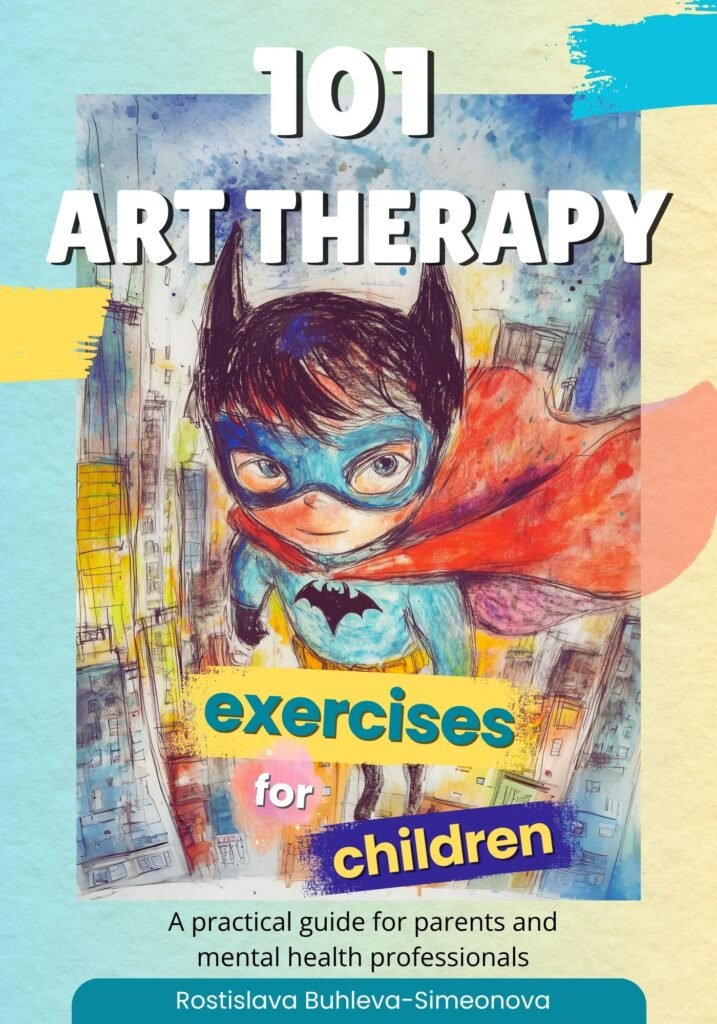
In a time when child development is increasingly shaped by global “epidemics”—diminished opportunities for creativity and critical thinking, the dominance of digital engagement, and a growing emotional disconnect between children and caregivers—child art therapy emerges as both a timely and deeply necessary approach. The book 101 Art Therapy Exercises for Children, written by a certified art therapist and parenting expert, responds thoughtfully to these modern challenges through structured, age-appropriate creative practices.
At its core, the book recognizes that children do not primarily communicate through words. Rather, they express themselves through play, images, symbols, and movement. Drawing, painting, and sculpting therefore become more than simple creative outlets; they function as a child’s natural language. For children who struggle to verbalize complex emotions such as fear, grief, anger, or anxiety, art offers a bridge between inner experience and external expression.
The Psychological and Neuroscientific Foundations of Child Art Therapy
One of the defining strengths of the book lies in its grounding in psychological and neuroscientific research. Within the framework of child art therapy, creative engagement has been shown to influence brain physiology in meaningful ways. Studies suggest that art-making activates the right hemisphere of the brain, engages the limbic system, and stimulates the parasympathetic nervous system.
As a result, creative expression can reduce stress while strengthening emotional regulation and neural flexibility. At the same time, these processes support attention, resilience, and adaptive thinking. Importantly, the book does not present research in abstract terms alone. Instead, each activity is thoughtfully connected to therapeutic goals, ensuring that practice is consistently informed by evidence.
In this way, scientific insight becomes directly applicable to everyday caregiving and educational settings.
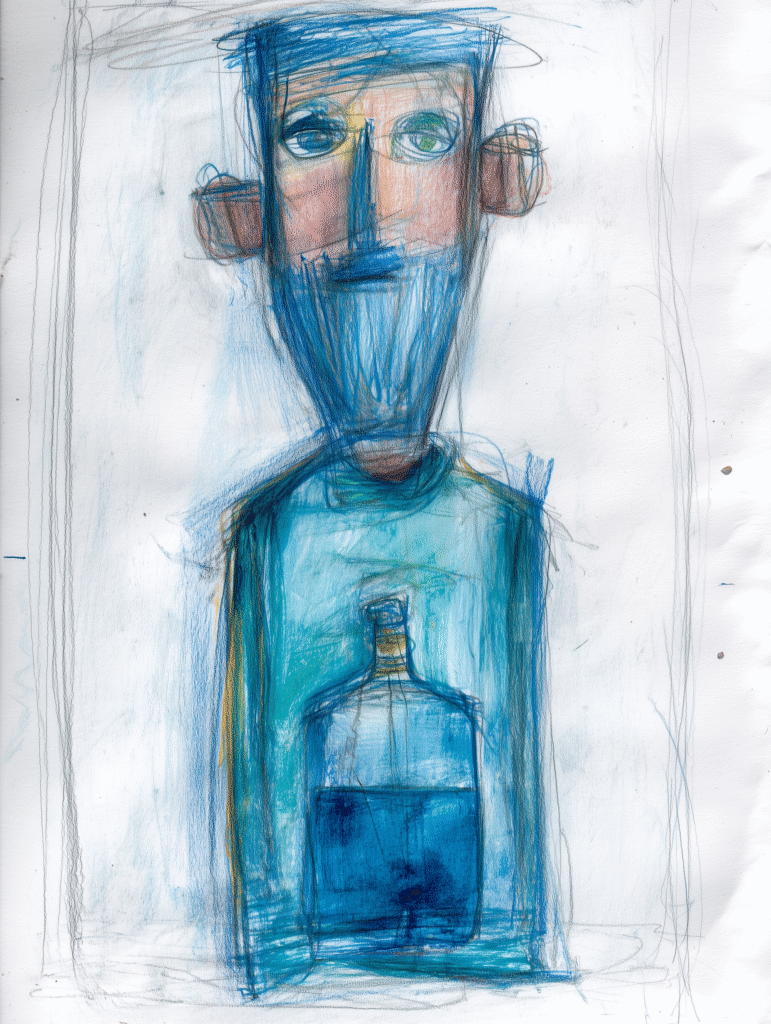
“A Genie from a Bottle”
Child Art Therapy as a Preventative and Observational Tool
Beyond emotional expression, child art therapy also functions as a gentle observational tool for parents, educators, and mental health professionals. The exercises in the book encourage adults to engage with children’s creative processes in a non-intrusive and supportive manner.
Too often, adults are forced to intervene only after emotional or behavioral difficulties become visible. However, creative activities provide a preventative framework for understanding children’s experiences earlier. Through repeated engagement with art, patterns of emotion, imagination, and coping strategies may gradually become visible.
Equally important, the book approaches interpretation with caution and ethical clarity. While artwork can offer emotional clues, caregivers are reminded that they are not therapists and should not diagnose based on drawings alone. Instead, adults are encouraged to remain curious and neutral, allowing children to explain the meanings within their own creations.
Imagination, Cognition, and the Developmental Power of Child Art Therapy
Another central theme explored in the book is the relationship between creativity and cognitive development. Within child art therapy, imagination is not treated as a luxury but as an essential developmental capacity.
Art-making encourages children to experiment, revise ideas, and reflect on their choices. Consequently, these processes strengthen problem-solving abilities, attention, and memory through multisensory engagement. Children learn to explore possibilities, tolerate uncertainty, and adapt their thinking as their creations evolve.
Through this process, imagination becomes a developmental laboratory where identity, creativity, and resilience can gradually emerge.
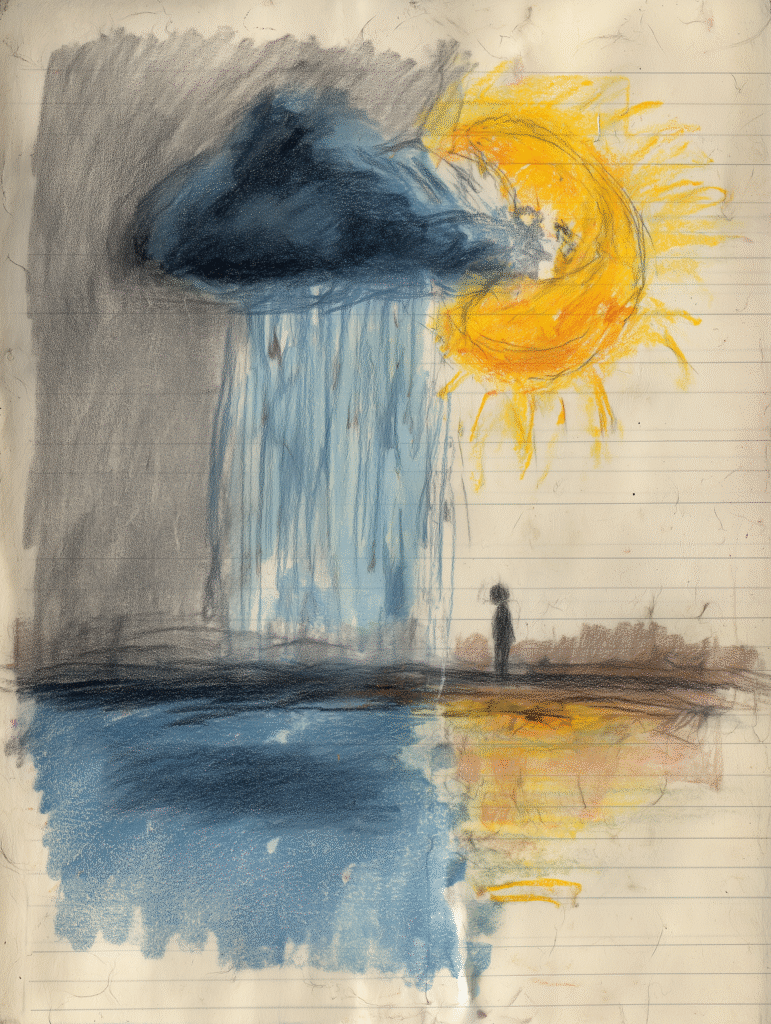
“Emotion Weather Map”
Relational Connection and Attachment in Child Art Therapy
Perhaps one of the most meaningful contributions of child art therapy lies in its capacity to strengthen relationships between children and caregivers. Shared creative activities create a calm relational space in which trust, emotional attunement, and open communication can develop naturally.
Research consistently demonstrates that collaborative creative experiences can increase attachment security while reducing conflict within families. When adults participate in art-making alongside children, the activity becomes less about instruction and more about connection.
Importantly, the book encourages this shared engagement. Many exercises are designed for collaborative participation, allowing caregivers to explore creativity alongside the child.
Through these moments of joint exploration, children often feel safer expressing thoughts and emotions that might otherwise remain hidden.
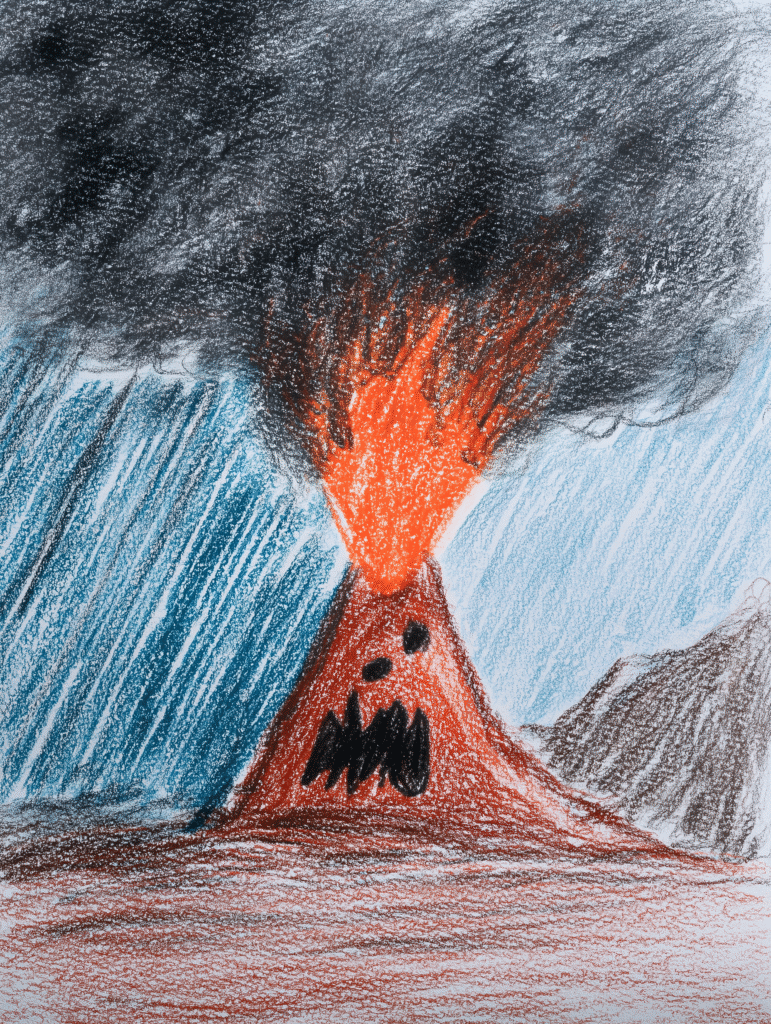
“Anger Volcano”
A Developmentally Sensitive Approach to Child Art Therapy
The structure of the book reflects a careful awareness of developmental stages. Activities are organized into age groups—4–6, 7–9, and 10–12—ensuring that child art therapy exercises remain appropriate for children’s evolving emotional and cognitive capacities.
At the same time, the exercises remain intentionally flexible. Many activities can be repeated across developmental stages, often revealing new insights as children mature. This evolving process allows caregivers to observe changes in emotional awareness, imagination, and self-expression over time.
Equally important, several exercises can be adapted for group settings or shared family activities. As a result, the book becomes more than a collection of creative prompts. It offers a thoughtful and compassionate guide for supporting children’s emotional development, relational security, and imaginative growth through the enduring language of art.
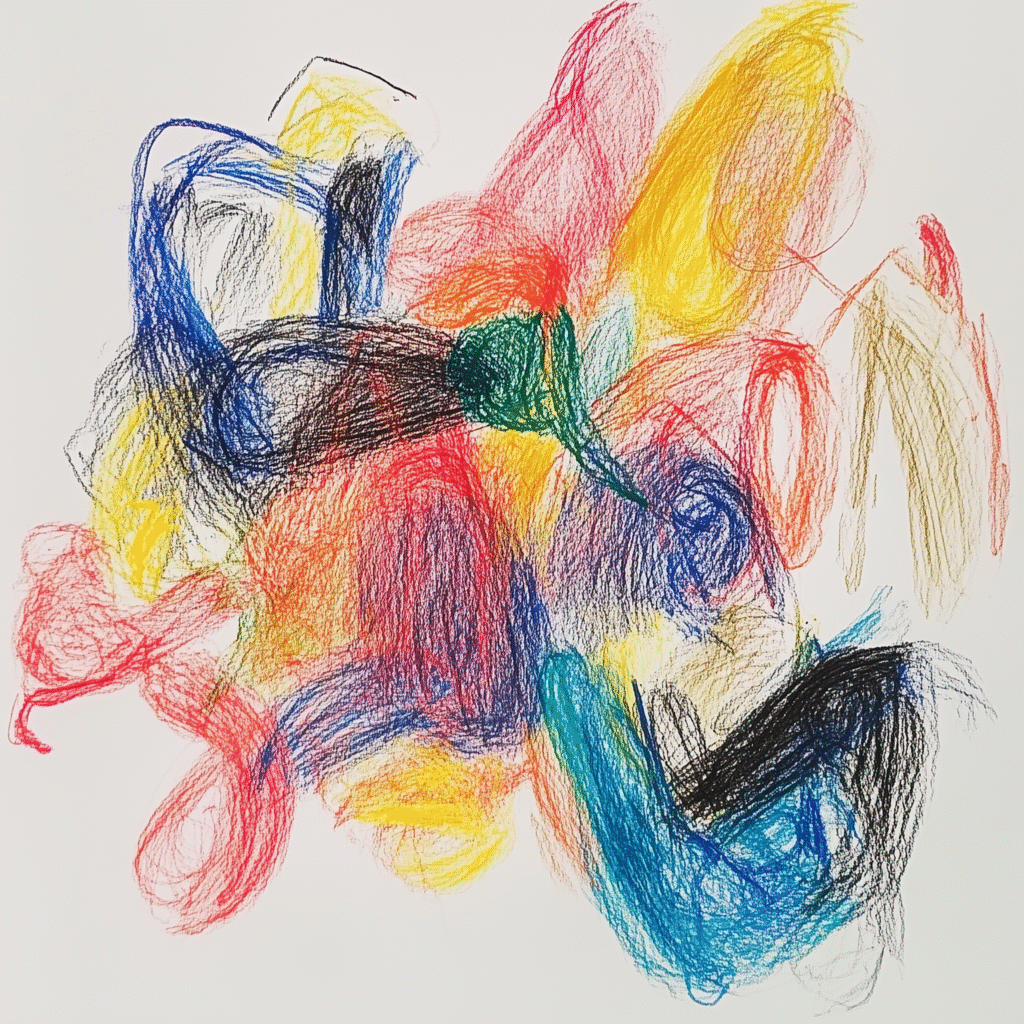
“Scribble Drawing”
Warm-up Exercise: Scribble Drawing
Purpose
The “Scribble Drawing” exercise sparks imagination and creative problem-solving by having children create a random scribble and then transform it into recognizable images. This activity draws on the work of art therapist Florence Cane, who used spontaneous mark-making to unlock creativity (Cane, 1951). It aligns with divergent thinking, a key component of creativity, where multiple solutions emerge from a single prompt (Guilford, 1967). For children it supports Erikson’s stage of initiative vs. guilt, encouraging purposeful exploration (Erikson, 1963). A 2018 study found that open-ended art tasks like scribble drawing increased creative thinking in children by 25%, as measured by originality scores (Davis et al., 2018). This warm-up fosters flexibility, imagination, and readiness for deeper art therapy by turning chaos into meaning.
Materials Needed
- White paper (8.5×11 inches)
- Crayons, markers, or colored pencils
Session Description
Introduction (1–2 minutes): Create a fun, curious vibe. Explain that they’ll make a big, wild scribble, then turn it into something cool, like animals, people, or objects. Say, “Your scribble is like a treasure map—what will you find?”
Scribbling (2–3 minutes): Hand out paper and a crayon or marker. Ask them to make a big, loopy scribble, moving their hand freely for 10–15 seconds. Then, invite them to look at the scribble and add details to turn it into something recognizable (e.g., eyes for a face, wings for a bird). Encourage multiple images if they see them. Stay engaged, saying, “What do you see in there?”
Reflection (2–3 minutes): Explore the drawing together. Ask, “What did you find in your scribble?” or “How did you decide what to make?” Celebrate their ideas. If they’re unsure, point out shapes (e.g., “This loop looks like a balloon!”) to spark discussion.
Closure (1 minute): Praise their imagination. Ask if they want to keep their scribble art or start the next task.
How it helps
- Sparking Creativity: Encourages children to find meaning in abstract forms, boosting imagination.
- Fostering Problem-Solving: Develops flexible thinking by transforming randomness into images.
- Building Confidence: Reinforces pride in creating something unique from a simple start.
- Overcoming Hesitation: Helps shy children dive into art with a low-pressure, playful task.
- Preparing for Exploration: Warms up the mind for open-ended art therapy activities.
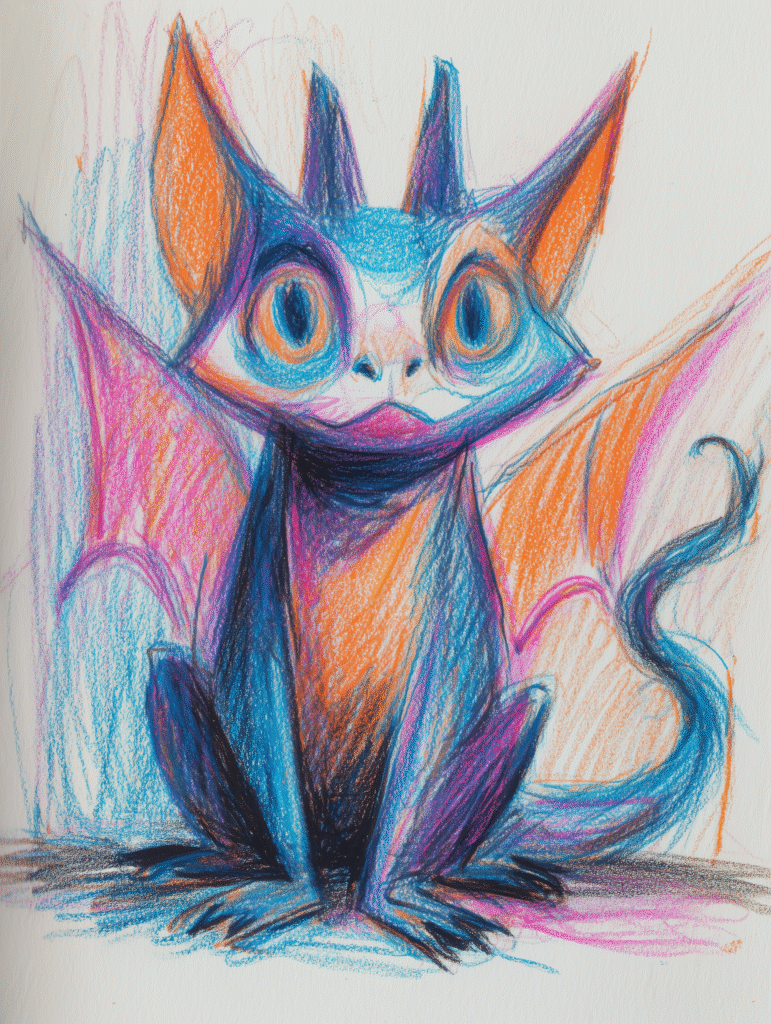
“Magic Animal Friend”
Magic Animal Friend
Purpose
The “Magic Animal Friend” session encourages children to create an imaginary animal companion through drawing, fostering emotional security and self-expression. This activity draws on the work of art therapists like Judith Rubin, who in the 1970s emphasized fantasy-based art to help children explore their inner worlds safely (Rubin, 2005). Psychologically, it aligns with object relations theory, which suggests that imagined figures can serve as transitional objects, providing comfort and stability during stress (Winnicott, 1971). By designing a magical animal friend, children externalize their need for companionship and protection, supporting emotional regulation and resilience. Research supports this approach: a 2015 study found that fantasy art activities increased feelings of security in children ages 4–7 by 30%, as measured by caregiver reports (Green et al., 2015). This session helps children process fears and build confidence through a playful, symbolic outlet.
Materials Needed
- White paper (8.5×11 inches)
- Crayons, markers, coloured pencils and watercolours
- Optional: Googly eyes, feathers, or glitter glue for embellishment
Session Description
Introduction (5–7 minutes): Ask the child, “If you could have a magical animal friend, what would it be like?” Share an example to spark ideas (e.g., “Mine would be a flying cat with sparkly wings”). Explain that they’ll draw their own special animal friend who can help them feel safe or happy. Emphasize that it can be anything they imagine—no rules! Show the paper and art supplies, describing how they can use colors and shapes to bring their friend to life.
Drawing the Animal (15-30 minutes): Lay out the paper and art supplies, ensuring a variety of colours and tools are accessible. Invite the child to start drawing their magic animal, suggesting they think about its features, like wings, a fluffy tail, or a glowing horn. Ask prompts like, “What does your animal love to do?” Stay present but non-directive, offering encouragement (e.g., “A rainbow tail—that’s so cool!”). If they hesitate, sketch a simple animal on scrap paper to inspire without guiding their work. Keep the process light, celebrating their unique ideas.
Reflection (5–7 minutes): Sit with the finished drawing and explore it together. Ask, “Can you tell me about your animal friend?” “What’s its name?” or “How does it help you when you’re scared or sad?” Listen attentively, reflecting their excitement or comfort and validate their feelings. Discuss how they can imagine their animal friend whenever they need support, like a guardian in their mind.
Closure (3–5 minutes): Praise their creativity, saying, “Your magic animal is so amazing!” Suggest they think of their animal friend when they need a boost, perhaps by picturing it nearby. Offer to keep the drawing in their room or a special folder to revisit. End with a playful moment, like pretending to “talk” to the animal together.
Pivotal Moments
- Developing Imagination: Supports the growth of fantasy play, a key developmental task at ages 4–6.
- Managing Fears: Offers a symbolic protector for dealing with anxieties, like fear of the dark.
- Building Confidence: Reinforces self-esteem as children create a unique, powerful animal friend.
- Adjusting to New Routines: Helps children feel supported during transitions, like starting preschool.
- Expressing Emotions: Encourages non-verbal sharing of feelings through the animal’s traits or story.
- Navigating Sibling Rivalry: Provides a safe outlet for processing jealousy by focusing on a personal ally.
Conclusion: The Lasting Value of Child Art Therapy
101 Art Therapy Exercises for Children brings together scientific insight, creative exploration, and relational wisdom to present a thoughtful and compassionate approach to supporting children’s emotional, cognitive, and social development. At the heart of this approach is child art therapy, which recognizes that children communicate most naturally through images, symbols, movement, and play. By combining principles from developmental psychology and evidence-based art therapy, the book provides caregivers with gentle and non-intrusive ways to support emotional expression and growth.
Throughout the sessions, art is presented not as a product to be judged, but as a meaningful process. Through creative engagement, children gradually build self-regulation, confidence, imagination, and resilience. At the same time, the activities encourage critical thinking, emotional insight, and flexibility. Because the exercises remain adaptable to each child’s developmental stage, temperament, and lived experience, they allow creative meaning to unfold gradually over time.

Rostislava Buhleva-Simeonova is a psychologist, art therapist, and gamificator. She has worked with children, adults, and the elderly within various therapeutic programmes over the past eight years, all the while providing the much-needed playful twist that art and gamified experiences can bring to this sometimes uneasy setting. But it wasn’t until the birth of her daughter, Aurora, that this work took on an even deeper personal meaning. With her academic and real-life experience, honed through numerous trainings and sessions, she is currently authoring books and articles in the field of child psychology and development, offering expertise in art and play therapy to guide parents and caregivers, as well as professionals in the fields of social work and mental health, throughout various pivotal moments in children’s lives. Last but not least, all of her books have been “peer-reviewed” by her daughter, who testifies to the efficiency of these methods.