
Every parent who has lived through a traumatic event alongside their child has faced the same impossible-feeling task. The event is over. The immediate danger has passed. And the child standing in front of them is not the child who stood there before — not because something is broken, not because the damage is permanent, but because a nervous system that has encountered something overwhelming has changed its settings in exactly the way nervous systems are designed to do. The question is not whether something happened. The question is what to do now.
Supporting children after trauma is not simply a matter of time and patience, however generously both are offered. It is a matter of the right kind of support — delivered in the right language, at the right developmental stage, within the right kind of relationship. And the research on what that looks like has never been clearer or more practically useful than it is now.
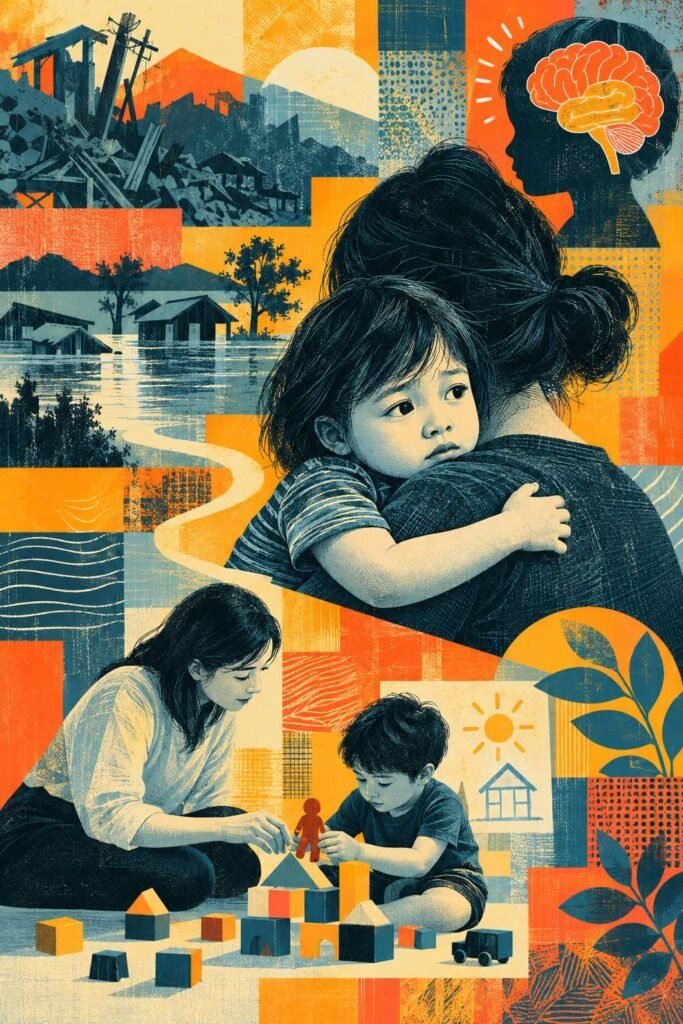
What Trauma Does to the Young Child
Before exploring how play therapy helps, it is worth establishing what trauma actually does to the developing child — because the treatment logic follows directly from the neurological reality.
Trauma, in the clinical sense, is not simply a frightening experience. It is an experience that overwhelms the child’s capacity to cope — one that exceeds the regulatory resources available to them in the moment and leaves the nervous system in a state of activation that does not reliably return to baseline once the immediate threat has passed. The amygdala — the brain’s threat-detection system — calibrates itself to the level of danger the environment has demonstrated. A child who has experienced something genuinely threatening carries, in their nervous system, the learned knowledge that the world can be suddenly, overwhelmingly dangerous — and that knowledge does not simply disappear when the danger is gone.
The impact on the young child is particularly significant because the developing brain is, during the early years, at its most plastic — most responsive to experience, for better and for worse. Traumatic experiences in the first years of life negatively affect the individual’s development — affecting cognitive functioning, emotional regulation, attachment, sleep, and the child’s fundamental sense of whether the world is a safe place to inhabit.
The natural disaster context illuminates this particularly clearly. Therapeutic play intervention is an effective strategy that can promote cognitive development, reduce anxiety and stress, and increase confidence, enabling children to explore their problems, find solutions, and regulate their emotions. Children who have experienced earthquake, flood, fire, or other catastrophic events carry both the acute trauma of the event itself and the sustained disruption of everything that provided stability and safety in its aftermath — their home, their routines, their community, and often their primary caregiving relationships. BioMed Central
The Scale of Childhood Trauma After Disaster
The research on children’s mental health following natural disasters has grown substantially in the wake of the increasing frequency and severity of such events — and the picture it reveals is clinically significant.
Natural disasters occur with increasing frequency every year. Due to their unexpected nature and devastating impact on individuals’ lives, natural disasters can have shocking effects on mental health. Children are a risky group among those affected because their coping skills are limited and they have not yet achieved their independence. ResearchGate
A 2024 study on the mental health impact of the 2023 Turkey-Syria earthquakes on children confirmed that the impact manifests as fear, anxiety, and traumatic stress — effects that may persist for significant periods without appropriate intervention. A 2025 systematic review and meta-analysis of psychological interventions for adult survivors of the same earthquakes found large pooled effects favouring structured psychological interventions for PTSD, depression, and anxiety — while noting that evidence for children specifically remains limited and requiring further investigation.
The literature has highlighted a significant gap in robust and credible research for children, and especially for preschool children’s response to natural disasters and effective intervention. This gap makes the growing body of play therapy research with disaster-affected children both clinically important and practically urgent — because the children most acutely at risk are precisely those for whom the evidence base has historically been thinnest. Wiley Online Library
The Randomised Trial That Changes the Picture
A 2025 randomised controlled trial published in BMC Psychology — the TOTEM study — evaluated a therapeutic play-based intervention programme with 53 earthquake-survivor children aged 4 to 6 years in Kahramanmaraş, Turkey, one of the epicentres of the devastating 2023 earthquakes. The study was conducted as a randomised, single-blinded, two-arm trial with a pre-test and post-test control — one of the most rigorous methodological designs available in child intervention research.
Children were randomised to either a control group receiving usual care or an intervention group receiving the therapeutic play-based intervention programme. The intervention group showed statistically significant reductions in psychosocial distress following the programme, alongside improvements in emotional expression, stress regulation, and overall psychological wellbeing — with the statistically significant difference in post-test scores at one month following the intervention confirming that the benefits were maintained beyond the immediate intervention period.
The TOTEM programme was specifically designed to reduce the adverse psychosocial effects of earthquakes in preschool children — and its effectiveness in a container settlement, under the most austere and disrupted post-disaster conditions imaginable, makes the findings particularly clinically significant. This was not a trial conducted in ideal circumstances. It was conducted with children living in temporary shelters, in the aftermath of one of the most devastating seismic events in modern history. And the play-based intervention produced measurable, maintained improvements.
The finding has direct implications well beyond the earthquake context. It confirms that therapeutic play-based intervention is effective for acute trauma in very young children — in the age group for whom verbal therapeutic approaches are most inaccessible, in the conditions of most acute distress, and with the most limited available resources.
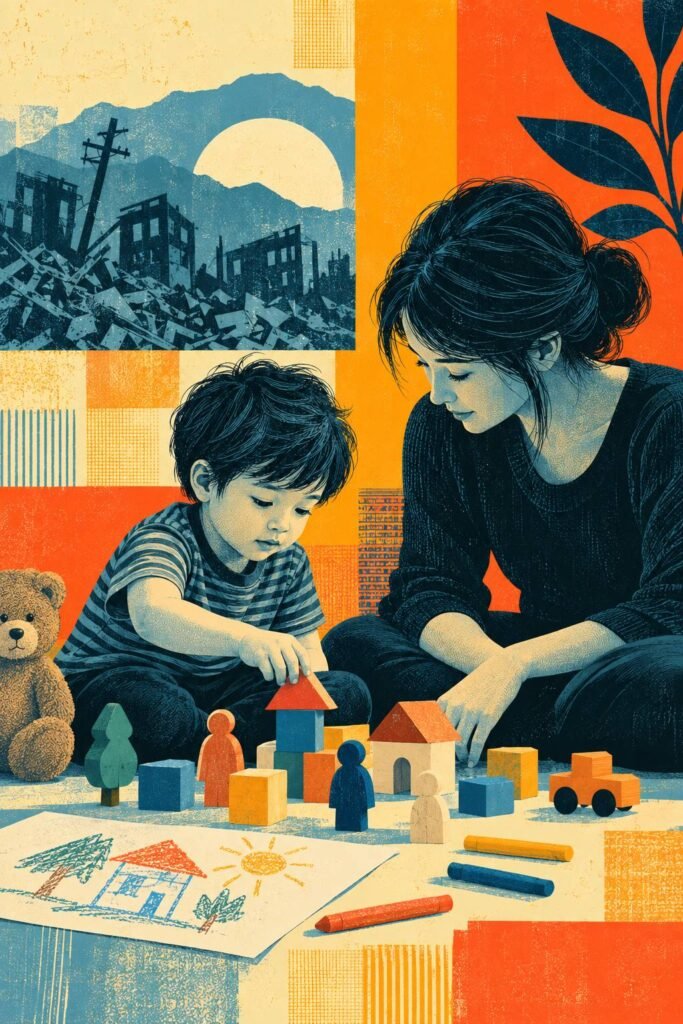
Why Play Is the Right Tool for Traumatised Children
The case for play as the primary therapeutic medium for children who have experienced trauma is grounded in the same neurological reality that makes trauma so difficult to address through verbal, cognitively directed approaches.
Trauma is stored not only in memory but in the body — in the nervous system’s reflexive patterns of activation and response that verbal processing alone cannot reliably reach. A child who has experienced an earthquake, a fire, a violent event, or a significant attachment disruption does not hold that experience primarily as a narrative they can tell. They hold it as a felt sense — a quality of alertness, a startle response, a physical constriction in certain environments or certain sounds — that exists below the level of language and that language alone cannot fully address.
Play operates at exactly the level where trauma lives. It is embodied, sensory, imaginative, and physically engaging — reaching the right hemisphere directly, activating the social engagement system, and providing a medium through which experience can be processed symbolically, at a protective distance, without the full exposure of direct verbal disclosure. A sensitive adult-child, dyadic interaction and calm communication during play enhances resiliency and encourages healing post-trauma — highlighting the necessity for supportive relationships with a trusting adult post-disaster. ResearchGate
The research on child-centred play therapy specifically — reviewed by Parker and colleagues in a 2020 systematic review of 32 studies — confirmed that child-centred play therapy reduces behavioural symptoms resulting from trauma, and made the specific and important observation that trauma presentations in children are often confused with ADHD, particularly in children experiencing poverty, systemic discrimination, and attachment difficulties. Post-disaster trauma generates exactly the presentation most likely to be misread: hypervigilance that looks like hyperactivity, intrusive processing that looks like inattention, emotional flooding that looks like dysregulation rather than grief.
A 2024 scoping review published in the Australian Journal of Rural Health, examining the role of the play therapist in supporting children and families following natural disasters, confirmed the clinical consensus: a sensitive adult-child, dyadic interaction and calm communication during play enhances resiliency and encourages healing post-trauma, highlighting the necessity for supportive relationships with a trusting adult post-disaster and the role of play therapy in providing this. Wiley Online Library
What Supporting Children After Trauma Through Play Actually Looks Like
Play therapy for traumatised children is not free play supervised from a distance. It is a structured, theoretically grounded, clinically directed process in which the therapist or caregiver uses the child’s natural medium as the primary vehicle for therapeutic intervention — providing the safety, the attunement, and the specific activities through which the child can approach and process overwhelming material at a pace and in a form that their nervous system can tolerate.
Several specific modalities have particular relevance for supporting children after trauma through play.
Symbolic and projective play — giving the traumatic experience a character, a story, a distance — allows the child to approach what happened without the full exposure of direct disclosure. The child who plays out the earthquake in the sandtray, who sends toy figures through a disaster scenario and brings them to safety, who draws what the scary thing looked like and then draws what happened after — is not simply playing. They are processing the traumatic material at the level of symbol and metaphor, giving it a form that can be looked at, moved, and gradually made less overwhelming.
Somatic and movement-based play — physical activities that engage the body directly, through rhythm, movement, and sensory experience — address the trauma at the level of the nervous system, where it is stored. A child whose body is locked in the activation of the threat response needs physical outlets that move the stored energy through the body — completing the stress response cycle that the traumatic event interrupted. Play that is physically engaging — that involves movement, rhythm, pressure, and tactile input — is doing neurological work that sitting still and talking cannot replicate.
Relational and attachment-based play — activities that build the safe, consistent, warm adult-child relationship that the research consistently identifies as the most powerful moderator of trauma recovery — provide the co-regulatory foundation within which all other therapeutic work becomes possible. The child who repeatedly experiences the attuned presence of a trusted adult who remains steady, warm, and genuinely interested, regardless of what the child brings into the session, is accumulating evidence that the relational world is safer than the traumatic experience taught them it was. That evidence, accumulated across many small moments of consistent, warm, non-reactive presence, is what gradually recalibrates the nervous system’s threat-detection settings.
Expressive and creative play — drawing, painting, sculpting, storytelling — externalises the internal experience and gives it a visible, workable form. Children value nature, mobility, art, family, friendships, animals, play, familiar places, opportunities for agency, and self-expression in post-disaster recovery. Expressive arts activities that provide opportunities for all of these — that engage the child’s creativity, that involve familiar and comforting materials, and that give the child genuine choice and agency — are addressing the specific dimensions of post-traumatic experience that research confirms matter most to children themselves. ResearchGate
The Role of the Caregiver in Supporting Children After Trauma
One of the most consistent and practically important findings in the research on supporting children after trauma is the significance of the caregiver relationship — not only as a context for the child’s recovery but as an active therapeutic medium in its own right.
Children’s trauma responses do not unfold in isolation. They unfold within relationships — and the quality of those relationships has a direct and measurable effect on the trajectory of recovery. A child whose primary caregiver is themselves traumatised, dysregulated, or unable to remain present to the child’s distress without being overwhelmed by their own, has a significantly more difficult recovery trajectory than one whose caregiver can offer a regulated, warm, consistently attuned presence alongside their own grief and fear.
This is not a judgement of caregivers who have themselves been affected by the same events that traumatised their child. It is a clinical observation with direct practical implications: supporting the caregiver is not secondary to the child’s recovery. In many cases, it is the most important therapeutic task of all. A parent who has been helped to regulate their own nervous system — who has been given support, information, and the opportunity to process their own traumatic experience — is a parent who can offer their child the co-regulatory presence that is, consistently across the research literature, the single most powerful predictor of the child’s recovery.
Before You Begin: A Note on Professional Support
Before attempting any therapeutic play activities at home with a child who has experienced significant trauma, I would sincerely recommend consulting a qualified mental health professional experienced in childhood trauma and trauma-informed practice. The frameworks and activities described in this article are offered as a supportive resource — not as a replacement for the clinical assessment and ongoing therapeutic relationship that a trained professional provides. Where trauma symptoms are severe, persistent, or accompanied by significant functional impairment, professional support is not a last resort. It is the appropriate and timely response to a child whose needs exceed what any individual adult, however loving and however present, can meet alone.
Supporting Children After Trauma: The Play Therapy Toolbox
The Play Therapy Toolbox: 123 Simple Play Therapy Activities and Therapeutic Games Supporting Every Stage of Child Development from Age 3 to 12 was built around the understanding that children who have experienced trauma need tools that meet them where the trauma actually lives — in the body, in the imagination, in the felt sense of what is unsafe and what is not — within the safety of a warm, attuned, consistently present relationship.
The trauma and adverse childhood experiences chapters address the full range of presentations children bring following traumatic events: the hypervigilance that keeps the nervous system on high alert long after the immediate danger has passed; the intrusive re-experiencing that arrives without warning and subsides without resolution; the regression to earlier developmental behaviours; the nightmares and sleep disruption; the emotional flooding and the disconnection from learning, from play, and from the relationships that matter most. Every activity comes with a therapeutic rationale grounded in peer-reviewed research, step-by-step guidance on how to conduct the session and exactly what to say, questions to use with the child, and a parent guidance note written in the same warm, accessible language as this article.
The activities grow with the child — because a four-year-old processing an acute traumatic event and a ten-year-old navigating the complex grief of a prolonged difficult period both need support, but the therapeutic approach, the language, and the emotional depth of the tool need to be completely different. And a comprehensive annex cross-references all 123 activities by presenting condition, age group, and page number — so you can navigate directly to the right tool for the right child at the right moment, without searching.
Three Things Worth Knowing
Trauma responses are the nervous system doing its job.
The most important reframe available to any adult supporting a child after trauma is this: what the child is experiencing is not a malfunction. It is an intelligent system responding adaptively to what it has learned about the world. The hypervigilance, the startle response, the emotional flooding, the regression — these are the nervous system’s best attempts to keep the child safe in a world that has shown it can be suddenly dangerous. The therapeutic task is not to override these responses but to provide the relational safety and the right kind of experience that gradually teaches the nervous system that safety is, once again, available.
Young children need play, not words.
The research on supporting children after trauma is unambiguous on the question of therapeutic medium: for children under approximately ten years, and particularly for children under six, verbal processing approaches are the tools least available to a traumatised nervous system. Play — embodied, sensory, imaginative, symbolically rich play — is the primary medium through which young children process overwhelming experience. The child who cannot tell you what happened can often show you. Meeting them where they are, in the language that is most naturally available to them, is the condition under which genuine therapeutic work becomes possible.
You are the most important tool in the room.
The TOTEM trial, the scoping review, the meta-analyses, the systematic reviews — across every piece of research reviewed in this article, one finding recurs with a consistency that deserves to be named directly: the quality of the adult-child relationship is the single most powerful predictor of how a child recovers from trauma. Not the specific technique. Not the particular activity. The warm, consistent, genuinely curious, non-reactive presence of a trusted adult who remains steady alongside whatever the child brings. The Play Therapy Toolbox gives you the activities. You are the reason those activities are safe enough to enter.
Available Now for $5.99 — For a Limited Time
If this exploration of supporting children after trauma gave you a sense of what becomes possible when traumatised children are met in their own language, The Play Therapy Toolbox gives you 123 more tools built on the same foundation. The ebook is available now on Amazon at $5.99 for a limited time — with immediate access to 123 activities and 75+ full-colour printable worksheets for children aged 3 to 12.
Play is not preparation for life. It is life — in its most honest, most essential, most healing form.
Disclaimer: This article is intended as an educational and supportive resource for parents, caregivers, educators, and mental health professionals. It is not intended to diagnose, treat, or replace professional therapeutic or medical care. If a child is experiencing significant emotional, behavioural, or developmental difficulties, please seek guidance from a qualified mental health professional.


Rostislava Buhleva-Simeonova is a psychologist and game design specialist. She has worked with children, adults, and the elderly within various therapeutic programmes over the past eight years, all the while providing the much-needed playful twist that art and gamified experiences can bring to this sometimes uneasy setting. But it wasn’t until the birth of her daughter, Aurora, that this work took on an even deeper personal meaning. With her academic and real-life experience, honed through numerous trainings and sessions, she is currently authoring books and articles in the field of child psychology and development, offering expertise in art and play therapy to guide parents and caregivers, as well as professionals in the fields of social work and mental health, throughout various pivotal moments in children’s lives. Last but not least, all of her books have been “peer-reviewed” by her daughter, who testifies to the efficiency of these methods.
References
Ahmed, S., Saied, A., & Nashwan, A. (2024). The impact of the 2023 Türkiye-Syria earthquakes on the mental health of children. International Journal of Social Psychiatry, 70(1), 1–7. https://doi.org/10.1177/00207640241278983
Bratton, S. C., Ray, D., Rhine, T., & Jones, L. (2005). The efficacy of play therapy with children: A meta-analytic review of treatment outcomes. Professional Psychology: Research and Practice, 36(4), 376–390. https://doi.org/10.1037/0735-7028.36.4.376
Dalkılınç, G., Okumuş, S., & Güloğlu, B. (2024). Play therapy for children exposed to natural disasters. Psikiyatride Güncel Yaklaşımlar. https://doi.org/10.18863/pgy.1431472
Kellogg, E. (2024). Using child-centered play therapy as an intervention to reassess ADHD diagnoses and trauma in children. Lesley University Expressive Therapies Capstone Theses. https://digitalcommons.lesley.edu/expressive_theses/358/
Nilsson, S., et al. (2024). The role of the play therapist in supporting children and families following a natural disaster: A scoping review. Australian Journal of Rural Health. https://doi.org/10.1111/ajr.13186
Parker, M. M., Hergenrather, K., Smelser, Q., & Kelly, C. T. (2020). Exploring child-centered play therapy and trauma: A systematic review of literature. International Journal of Play Therapy, 30(1), 2–13. https://doi.org/10.1037/pla0000136
Ray, D. C., Burgin, E., Gutierrez, D., Ceballos, P., & Lindo, N. (2022). Child-centered play therapy and adverse childhood experiences: A randomized controlled trial. Journal of Counseling & Development, 100(2), 134–145. https://doi.org/10.1002/jcad.12412
Topal, Z., et al. (2025). The effect of therapeutic play-based intervention programme applied to earthquake victim preschool children on psychosocial well-being: A randomised controlled trial. BMC Psychology, 13, 981. https://doi.org/10.1186/s40359-025-03317-4
Veraksa, A. N., et al. (2025). Non-therapeutic play to overcome negative emotional symptoms and improve emotional intelligence in children aged 3–7: A systematic review. Frontiers in Psychology. https://doi.org/10.3389/fpsyg.2025.1475387
Yuliani, E., Mursid, A., & Muzdalia, I. Playing therapy can reduce post-traumatic stress disorder (PTSD) in post-earthquake children. International Journal of Multidisciplinary Research Studies.