
Every parent who has watched their child struggle with anxiety has encountered the same frustration. The reassurance that does not reach far enough. The explanation that makes perfect sense to an adult and lands nowhere useful in a child who is not, in the moment of their anxiety, available for rational argument. The instruction to think differently about something that does not feel, to the child, like thinking at all — that feels like a physical fact, an overwhelming reality, a certainty that their nervous system has arrived at before the thinking brain has had a chance to weigh in.
Cognitive behavioural therapy is the most extensively researched psychological treatment for childhood anxiety. The evidence base is robust, the effect sizes are large, and the outcomes are durable across follow-up assessments. But the standard form of CBT — verbal, dialogue-based, cognitively directed — is designed for a brain that can reliably access language, abstract reflection, and the deliberate examination of thought patterns. And the anxious child, in the middle of their anxiety, is precisely not that brain.
Cognitive behavioral play therapy for children solves this problem at its root. It does not ask the child to think differently about their anxiety in the language of adult reflection. It provides the cognitive and behavioural tools of CBT in the language that is most naturally available to a child’s nervous system: play.
And the research now confirms that this approach is not simply more child-friendly than standard CBT. It is more effective.
The Finding That Matters
A 2025 meta-analysis published in the Journal of Pediatric Nursing synthesised data from 29 studies published between 2015 and 2024, evaluating the impact of CBT interventions on anxiety levels in children with anxiety disorders across 35 outcomes.
The overall finding confirmed what the earlier research literature had been pointing toward: CBT interventions are significantly effective in reducing anxiety levels in children with anxiety disorders, with an overall standardised mean difference of -1.51 — a large effect that places CBT firmly among the most evidence-supported psychological interventions available for childhood anxiety.
But the most clinically significant finding was not the overall CBT effect. It was what happened when the analysis examined the different types of CBT separately. Among the various types of CBT, cognitive behavioral play therapy emerged as the most effective in reducing anxiety — with a standardised mean difference of -2.41, significantly outperforming standard verbal CBT approaches. Follow-up assessments at three, six, and twelve months post-intervention demonstrated that CBT has a sustained effect in lowering children’s anxiety levels — confirming that the gains produced by CBPT are not simply short-term improvements but durable changes that persist well beyond the intervention itself.
An SMD of -2.41 is an extraordinary effect size. For context, effect sizes above 0.80 are generally considered large in psychological intervention research. The CBPT effect size is more than three times that threshold. It represents one of the strongest findings in the childhood anxiety intervention literature — and it is worth understanding precisely why.
What Cognitive Behavioral Play Therapy for Children Actually Is
Cognitive behavioral play therapy for children was developed by Susan Knell in 1993 and has been refined and extended by subsequent researchers and clinicians — most notably by Geraci, whose work integrating CBPT principles with developmental neuroscience has substantially deepened the theoretical foundations of the approach. It is a structured, theoretically grounded therapeutic approach designed for preschool and school-aged children — typically ages three to eight — that integrates the empirically supported cognitive and behavioural techniques of CBT with the developmental appropriateness of play.
CBPT is not CBT with toys added. It is a genuinely integrated approach in which play is not a vehicle for delivering CBT content but the primary therapeutic medium through which CBT’s mechanisms of change operate. The cognitive restructuring, the behavioural experiments, the graduated exposure, the development of coping skills — all of these are embedded in the play itself, expressed through the child’s natural medium rather than translated into it after the fact.
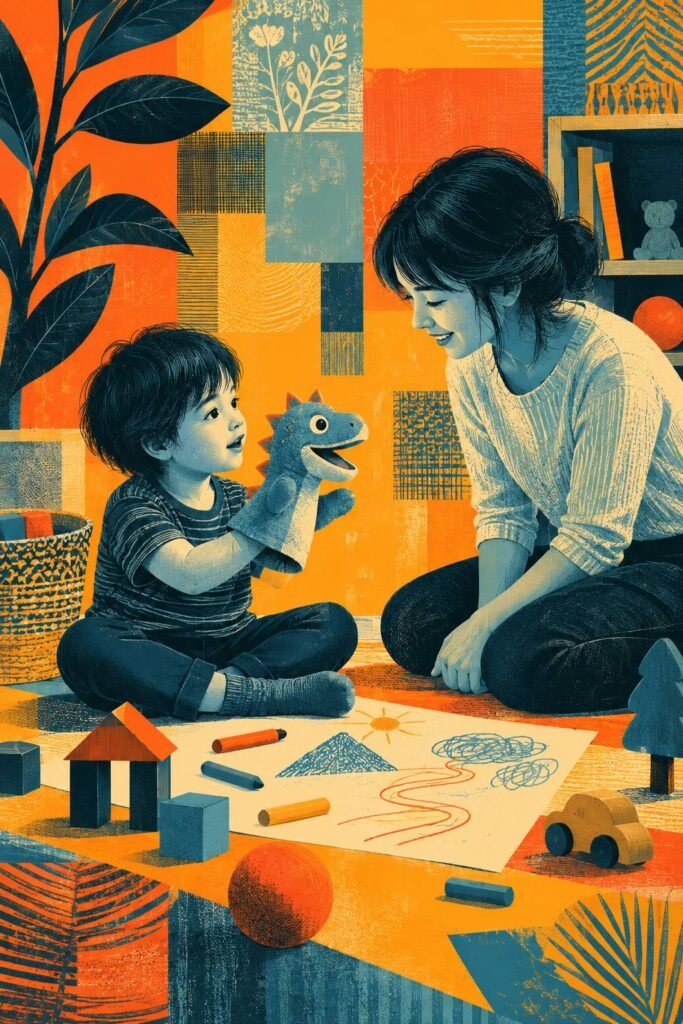
Today, we have confirmation that cognitive behavioral therapy, thanks to the integration of play, can be used with young children aged three to eight. Preschool-aged children have not yet developed the cognitive skills to examine their own thought patterns abstractly — but using play in a therapeutic context, it is possible to apply empirically supported cognitive and behavioural techniques. The child who would be unable to identify and challenge their anxious cognitions in a verbal dialogue can do precisely this through the medium of a puppet whose thoughts the child can examine, challenge, and change — because the puppet is not them, and the protective distance of the play frame makes the cognitive work safe enough to do.
Why Standard CBT Often Falls Short With Young Children
The research on CBT for childhood anxiety consistently identifies age as a significant moderator of treatment outcome — with younger children showing weaker responses to standard verbal CBT than older children and adolescents. This finding is not surprising from a developmental perspective. Standard CBT requires several cognitive capacities that are still actively developing in young children: the ability to identify and articulate internal mental states, the capacity for abstract thinking about hypothetical scenarios, metacognition — the ability to think about one’s own thinking — and the deliberate, willed manipulation of cognitive content.
These are all prefrontal cortex functions. And anxiety, as we have established in the broader research, specifically compromises prefrontal cortex availability. The anxious child is being asked to use cognitive tools that their anxiety has made temporarily unavailable — which is precisely why the instruction to think differently about the feared thing, however sound in principle, so often fails to produce the expected result in practice.
CBPT bypasses this barrier by operating through the right hemisphere — through image, symbol, sensation, and story — rather than demanding the left hemisphere’s verbal, abstract, consciously directed engagement. The cognitive work of CBT is present in CBPT — the identification of anxious thoughts, the examination of their validity, the practice of alternative responses — but it is embedded in the play itself, delivered through characters and scenarios that the child is already naturally engaged with, rather than through the metacognitive dialogue that verbal CBT requires.
A 2024 systematic review published in Balıkesir Health Sciences Journal, examining eight studies on CBPT and children’s anxiety levels — including four randomised controlled trials — confirmed that this therapeutic approach has a positive impact on children’s mental health by alleviating anxiety across a range of anxiety presentations and a range of clinical and educational settings. The review noted that CBPT was typically delivered over eight to twelve sessions, held once a week — a duration and frequency consistent with the broader play therapy literature’s finding that regular, consistent engagement produces cumulative benefits.
The Mechanisms: Why CBPT Works Better Than Standard CBT for Children
Understanding why cognitive behavioral play therapy for children outperforms standard verbal CBT requires understanding the specific mechanisms through which CBPT produces its effects — and how those mechanisms align more precisely with the developmental realities of early and middle childhood.
Developmentally appropriate cognitive restructuring — the identification and modification of anxious thought patterns — is one of CBT’s core mechanisms. In standard verbal CBT, this is accomplished through Socratic dialogue, thought records, and the explicit examination of cognitive distortions. In CBPT, the same process happens through the child’s play with puppets, characters, and narrative — the child who changes the ending of the anxious character’s story is doing genuine cognitive restructuring, but doing it in a medium that does not require the metacognitive capacity that verbal CBT demands.
Graduated exposure — the cornerstone of anxiety treatment across every evidence-based modality — is one of the most difficult elements of standard CBT to implement with young children, because it requires the child to deliberately approach feared material with a level of conscious intention that anxiety actively undermines. In CBPT, exposure is embedded in the play — the child who enacts a feared scenario through play, who sends a character into the feared situation and watches what happens, is experiencing genuine gradual exposure without the full activation that direct confrontation would produce.
Behavioural experiments — the deliberate testing of anxious predictions against actual outcomes — are similarly more accessible in CBPT than in standard CBT, because the play frame allows the child to test the prediction at one remove. The character tests what happens. The child observes the outcome. And the evidence accumulates — that the feared thing did not happen, that the character survived, that the prediction was wrong — in a form that the child’s nervous system can receive without being fully overwhelmed by the exposure.
Skill development — the acquisition of specific coping skills, relaxation techniques, and problem-solving strategies — is embedded in CBPT through modelling, reinforcement, and the child’s own active engagement in the play. A child who teaches a puppet how to breathe through anxiety, who coaches a character through a feared situation, who designs a coping plan for a story’s protagonist, has not simply heard about coping skills. They have practised them — in the most developmentally appropriate and neurologically accessible form available.

The Evidence Across Settings and Presentations
The research on cognitive behavioral play therapy for children confirms its effectiveness across a range of anxiety presentations and clinical contexts.
Separation anxiety — one of the most common and most distressing presentations in early childhood — has been specifically addressed in multiple CBPT studies. A case study published on cbpt.org traced the therapeutic process for a four-and-a-half-year-old girl experiencing separation anxiety, confirming the effectiveness of CBPT across defined therapeutic phases: orientation, evaluation, conceptualisation, and graduated intervention through play. The structured phases of CBPT — which distinguish it from non-directive play therapy — allow for the kind of targeted, progressive intervention that anxiety treatment specifically requires.
Social anxiety disorder, which shows a progressive increase in prevalence across developmental stages — affecting 4.7% of children, 8.3% of adolescents, and 17% of youth in a 2024 global meta-analysis — responds particularly well to the social skills and exposure components that CBPT delivers through role-play and social scenario enactment. The child who practises social situations through play, who experiments with different social responses through characters, who experiences the repeated outcome that the feared social event is survivable, is building the evidence base for reduced social anxiety in a form that their nervous system can genuinely integrate.
Generalised anxiety, school refusal, and the specific fears that are so common in early childhood — fears of the dark, of monsters, of loud noises, of medical procedures — have all been addressed in the CBPT literature with consistent findings of meaningful anxiety reduction. The flexibility of the CBPT framework — which can be adapted to virtually any specific fear through appropriate play materials and scenarios — makes it one of the most versatile anxiety interventions available for the age group in which anxiety most commonly first presents.
Cognitive Behavioral Play Therapy for Children and The Play Therapy Toolbox
The Play Therapy Toolbox: 123 Simple Play Therapy Activities and Therapeutic Games Supporting Every Stage of Child Development from Age 3 to 12 was built around the same understanding that the research on cognitive behavioral play therapy for children has now confirmed: that the most effective therapeutic tools for anxious children are those that integrate the cognitive and behavioural mechanisms of evidence-based treatment with the developmental appropriateness of play — delivered within the safety of a warm, attuned, consistently present relationship.
The anxiety, worry, and emotional overthinking chapters draw on the principles of CBPT alongside other evidence-based approaches — providing activities that embed cognitive restructuring, graduated exposure, and coping skill development in the play-based, symbol-rich, developmentally appropriate medium that the research confirms is most effective for the age group the Toolbox serves.
Every activity comes with a therapeutic rationale grounded in peer-reviewed research, step-by-step guidance on how to conduct the session and exactly what to say, questions to use with the child, and a parent guidance note written in the same warm, accessible language as this article. The activities grow with the child — because the CBPT approach that is most effective for a four-year-old with separation anxiety is genuinely different from the approach most effective for a nine-year-old with social anxiety, and the Toolbox is built around that developmental specificity. And a comprehensive annex cross-references all 123 activities by presenting condition, age group, and page number — so you can navigate directly to the right tool for the right child at the right moment, without searching.
Before You Begin: A Note on Professional Support
Before attempting any cognitive behavioral play therapy activities at home with an anxious child, I would sincerely recommend consulting a qualified mental health professional experienced in childhood anxiety and play-based therapeutic approaches. The research on CBPT confirms its effectiveness when delivered by trained clinicians — and while structured, parent-led play activities produce genuine emotional benefits, the specific graduated exposure and cognitive restructuring components of CBPT are most effective when overseen by a professional who can assess the child’s current anxiety level, design an appropriate exposure hierarchy, and adjust the intervention in response to the child’s progress.
Three Things Worth Knowing
CBPT is not CBT made child-friendly. It is CBT made neurologically appropriate.
The finding that cognitive behavioral play therapy for children outperforms standard verbal CBT is not simply an accessibility finding — a confirmation that children engage better with play than with dialogue. It is a neurological finding: the play medium delivers the mechanisms of CBT change through the right hemisphere, in the mode most naturally available to the child’s nervous system, without the metacognitive demands that anxiety specifically compromises. The superiority of CBPT over standard CBT for children is not a matter of preference. It is a matter of developmental appropriateness — and the research confirms that developmental appropriateness is clinically significant.
The effects last.
The 2025 meta-analysis finding that follow-up assessments at three, six, and twelve months post-intervention confirmed sustained anxiety reductions is clinically significant in a way that deserves emphasis. Anxiety interventions for children sometimes produce short-term improvements that do not persist — particularly when the intervention addresses only symptoms rather than the underlying cognitive and behavioural patterns that maintain them. CBPT, by targeting those patterns through the most developmentally appropriate medium available, produces changes that the research confirms are durable. The child who has learned, through play, that the feared thing is survivable, that anxious thoughts can be examined and changed, and that they have coping resources available — has learned something that does not simply expire when the sessions end.
You are the most important tool in the room.
Cognitive behavioral play therapy for children is not delivered by techniques. It is delivered through the quality of the relationship within which those techniques are offered. The anxious child’s nervous system is, at its root, a system that has learned that the world is not reliably safe — and what gradually recalibrates that learning is the repeated, consistent, embodied experience of a warm, regulated, genuinely curious adult presence that remains steady regardless of what the child brings into the session. The activities in the Toolbox are the cognitive and behavioural structure. You are the relational safety that makes the structure therapeutic.
Available Now for $5.99 — For a Limited Time
If this exploration of cognitive behavioral play therapy for children gave you a sense of why play is not simply a vehicle for delivering CBT but the most developmentally appropriate and neurologically precise medium through which its mechanisms of change operate, The Play Therapy Toolbox gives you 123 more activities built on exactly that understanding. The ebook is available now on Amazon at $5.99 for a limited time — with immediate access to 123 activities and 75+ full-colour printable worksheets for children aged 3 to 12.
Play is not preparation for life. It is life — in its most honest, most essential, most healing form.

Disclaimer: This article is intended as an educational and supportive resource for parents, caregivers, educators, and mental health professionals. It is not intended to diagnose, treat, or replace professional therapeutic or medical care. If a child is experiencing significant emotional, behavioural, or developmental difficulties, please seek guidance from a qualified mental health professional.

Rostislava Buhleva-Simeonova is a psychologist and game design specialist. She has worked with children, adults, and the elderly within various therapeutic programmes over the past eight years, all the while providing the much-needed playful twist that art and gamified experiences can bring to this sometimes uneasy setting. But it wasn’t until the birth of her daughter, Aurora, that this work took on an even deeper personal meaning. With her academic and real-life experience, honed through numerous trainings and sessions, she is currently authoring books and articles in the field of child psychology and development, offering expertise in art and play therapy to guide parents and caregivers, as well as professionals in the fields of social work and mental health, throughout various pivotal moments in children’s lives. Last but not least, all of her books have been “peer-reviewed” by her daughter, who testifies to the efficiency of these methods.
References
Bratton, S. C., Ray, D., Rhine, T., & Jones, L. (2005). The efficacy of play therapy with children: A meta-analytic review of treatment outcomes. Professional Psychology: Research and Practice, 36(4), 376–390. https://doi.org/10.1037/0735-7028.36.4.376
CBPT.org. (2025). Scientific articles: Cognitive behavioral play therapy. https://cbpt.org/scientific-articles/
Dişsiz, M., et al. (2025). The effect of cognitive behavioral interventions applied to children with anxiety disorders on their anxiety level: A meta-analysis study. Journal of Pediatric Nursing. https://doi.org/10.1016/j.pedn.2024.12.020
Geraci, M. A. (2022, 2024). Cognitive behavioral play therapy: Theoretical refinements and clinical applications. European Association for Behavioural and Cognitive Therapies.
Knell, S. M. (1993). Cognitive-behavioral play therapy. Jason Aronson.
Ray, D. C., Armstrong, S. A., Balkin, R. S., & Jayne, K. M. (2015). Child-centered play therapy in the schools: Review and meta-analysis. Psychology in the Schools, 52(2), 107–123. https://doi.org/10.1002/pits.21798
Salari, N., et al. (2024). Global prevalence of social anxiety disorder in children, adolescents, and youth: A meta-analysis. Journal of Prevention.
Uzunpınar, S., et al. (2024). The impact of cognitive-behavioral play therapy on children’s anxiety levels: A systematic review. Balıkesir Health Sciences Journal. https://dergipark.org.tr/en/pub/balikesirsbd/article/1349116
Zarra-Nezhad, M., Pakdaman, F., & Moazami-Goodarzi, A. (2023). The effectiveness of child-centered group play therapy and narrative therapy on preschoolers’ separation anxiety disorder and social-emotional behaviours. Early Child Development and Care, 193(6), 841–853. https://doi.org/10.1080/03004430.2023.2167987