
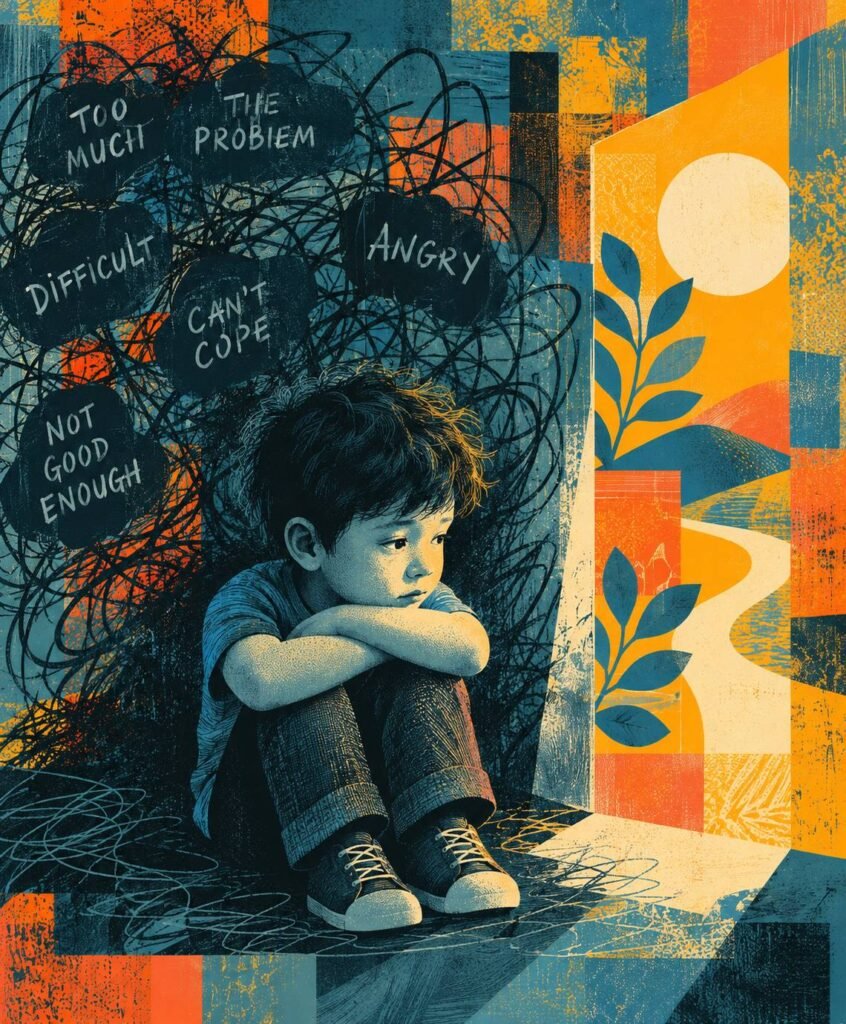
Every parent has watched a child struggle to make sense of something that happened to them — not because they lack the intelligence to understand it but because the experience is too large, too raw, or too close to be seen clearly from the inside. The child who has been told, in one way or another, that they are the problem — the difficult one, the angry one, the one who cannot cope — and who has begun, quietly and without realising it, to believe the story. The one whose sense of who they are has been shaped by experiences they did not choose and could not control. The one who needs, more than almost anything else, a different story — not because the difficult one is untrue but because it is not the whole truth, and it has been given too much authority over how the child sees themselves and what they believe they are capable of.
Narrative therapy for children is built on a single, radical, and profoundly hopeful insight: the stories people tell about themselves are not simply descriptions of who they are. They are constructions — shaped by experience, by the responses of others, and by the particular weight that certain events have been given in the telling. And if a story is a construction, it can be reconstructed. A child who has lived inside a story of helplessness, deficiency, or damage can, with the right kind of support, begin to find in their own history the evidence for a different story — one of resilience, of agency, of a self that has survived things it was not supposed to survive, and that is more than the sum of the hardest things that have happened to it.
What Narrative Therapy for Children Actually Is
Narrative therapy was developed by Michael White and David Epston in the late 1980s and has since become one of the most widely practiced and extensively researched humanistic therapeutic approaches in child and family work. Its theoretical foundations draw on postmodern philosophy — specifically the understanding that there is no single, objective truth about a person’s identity, but rather multiple possible stories that could be told about the same life, with different events foregrounded, different meanings attributed, and different conclusions drawn.
The core concept is externalisation: the therapeutic practice of separating the problem from the person. The child is not the problem. The problem is the problem. When a child becomes identified with their difficulties — when they become the angry child, the failing child, the traumatised child — the problem and the identity collapse into one another in a way that makes change feel impossible. Externalisation reverses this: it gives the problem a name and a form that exists outside the child, and in doing so, it returns to the child the authorship of their own story.
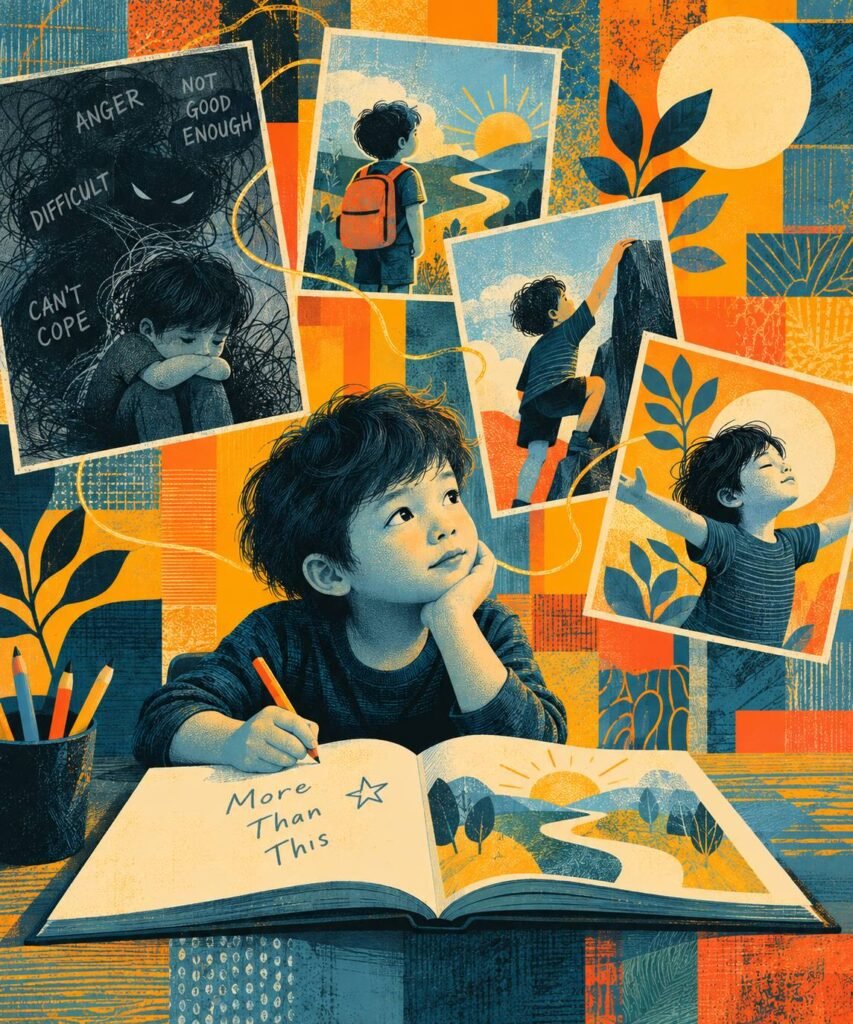
From that position of authorship, narrative therapy invites the child to look for what White and Epston called unique outcomes — moments in their own history when the problem did not win, when they responded differently, when the story could have been told another way. These moments are not invented. They are real — they exist in every child’s history, however difficult that history has been. The therapeutic work is finding them, naming them, and weaving them into a new narrative: one in which the child is the protagonist of a story of agency and resilience rather than the victim of a story of damage and deficit.
What the Research Shows
The evidence base for narrative therapy for children has grown substantially in recent years — across diverse populations, presenting problems, and delivery formats — and the findings are consistent in ways that deserve clinical attention.
A study published in the Journal of Systemic Therapies examined the effectiveness of narrative therapy in boosting eight to ten year old children’s social and emotional skills across 813 problem-solving stories collected from 353 children over two years. The results showed that children receiving narrative therapy intervention demonstrated significant improvement in self-awareness, self-management, social awareness and empathy, and responsible decision-making — compared both to their own baseline stories and to a control group. These are precisely the capacities that the research on child wellbeing identifies as most predictive of positive long-term outcomes — and narrative therapy produced meaningful improvements across all of them.
A 2022 randomised controlled trial published by the Dulwich Centre evaluated the effectiveness of narrative therapy on the resilience of orphaned and abandoned children fostered in an SOS Children’s Village in Rwanda. Seventy-two children participated, randomly allocated to an intervention group or a delayed treatment control. Children in the intervention group attended ten narrative therapy sessions over two and a half months. The results showed a significant main effect of time and group for resilience total scores, with a relatively large effect size in the intervention group — confirming that narrative therapy produced meaningful, measurable improvements in resilience in a population for whom the need is particularly acute and the evidence base had previously been thin.
A 2026 systematic review published via the Better Care Network examined narrative-based interventions for children and adolescents in foster care across multiple studies, finding consistent improvements in externalising problems, self-efficacy, resilience, and sense of control — with interventions ranging from eight to eighteen weeks and delivered in both group and individual formats. The review confirmed narrative approaches as a meaningful therapeutic tool for a population whose access to a stable sense of identity and personal agency is frequently disrupted by care placements — and whose need for a coherent, authored self-narrative is, for precisely that reason, more urgent than for most.
A systematic literature review published in 2026 via Springer Nature, examining narrative interventions for character development in traumatised children, concluded that narrative intervention is an important and effective tool for enhancing character development in traumatised children — offering practical insights for educators and therapists on how narratives can foster resilience and emotional growth.
And a 2025 paper published in the Journal of Systemic Therapies, examining storytelling as a tool for building children’s resilience, confirmed that narrative approaches — including the structured use of personal story, fictional narrative, and therapeutic storytelling — produce measurable improvements in resilience across a range of child populations and clinical contexts.
Why Story Is the Right Medium for Children
The case for narrative therapy as a therapeutic approach for children is grounded in the same developmental reality that supports all play-based and creative therapeutic modalities — and in several additional considerations that are specific to the narrative domain.
Children think in stories before they think in arguments. The narrative mode of cognition — organising experience into sequences of events with causes, consequences, and meanings — is developmentally prior to the logical, categorical mode that adult reasoning most typically employs. A child who cannot engage with an abstract discussion of their own identity, self-concept, or coping capacity can very often engage with the question: tell me about a time when you were braver than you expected to be. The story is the cognitive format that is most naturally available to the child’s developing mind — and narrative therapy works with that format rather than against it.
A 2024 qualitative interview study published in Counselling and Psychotherapy Research, examining narrative therapy with children through interviews with Danish therapists, identified the child’s engagement with their own story as the central mechanism of change — and noted that the externalisation technique was particularly effective in reducing shame and self-blame, creating the psychological space within which genuine reflection and re-authoring became possible. The therapists reported that children who had previously been unable to discuss their difficulties in direct conversation were readily able to engage when the problem was given an external form and the conversation became, in effect, a story about something outside the child rather than an interrogation of who the child was.
The research on narrative and identity development confirms this at the neurological level. The default mode network — the large-scale brain network that underlies self-referential thought, autobiographical memory, and the construction of personal identity — is activated by narrative engagement in ways that suggest story is not simply a vehicle for communicating about the self but one of the primary mechanisms through which the self is constructed. A child who is supported in telling a different story about themselves is not simply describing a changed self. They are, in the most literal neurological sense, constructing one.
Narrative Therapy and Externalisation in Practice
The practical application of narrative therapy for children begins with externalisation — giving the problem a form and a name that exists outside the child — and moves through a series of therapeutic conversations that gradually build the alternative story.
For young children, externalisation is most naturally accomplished through play: the problem becomes a character, a creature, a figure in the sandtray that the child can examine, interact with, and develop a relationship with that is fundamentally different from the relationship of identification. The child who is struggling with anger becomes the child who is dealing with the Anger Monster — and the Anger Monster, once externalised, can be examined, questioned, and gradually given less authority over the child’s choices and identity.
For older children, externalisation can be more explicitly narrative: the problem is named and described, its history in the child’s life is mapped, its effects are documented — and then the child is asked the questions that open the door to the alternative story. Has there been a time when the problem tried to take over and you did not let it? Has there been a moment when you responded differently? Who in your life has seen the part of you that the problem tries to hide?
These questions are not rhetorical. They are invitations to look for evidence — real, specific, historically grounded evidence — that the dominant problem-saturated story is not the only story that could be told. And when that evidence is found, named, and placed in the sequence of a new narrative, something shifts: not simply in how the child talks about themselves but in how they experience themselves as an agent in their own life.

For Deeper Work: The Play Therapy Toolbox
The Play Therapy Toolbox: 123 Simple Play Therapy Activities and Therapeutic Games Supporting Every Stage of Child Development from Age 3 to 12 draws extensively on narrative therapy principles — and on the understanding that the most therapeutically powerful stories available to a child are not the ones that are read to them but the ones they are helped to tell about themselves.
The narrative and storytelling activities across the Toolbox address the full range of what narrative therapy for children is most effective for: the dominant negative self-story that has been shaped by trauma, loss, or chronic adversity; the identity disruption of the child whose sense of self has been repeatedly interrupted by circumstances outside their control; the externalising difficulties that reflect a problem-saturated story rather than a stable identity; and the particular need of the child who has not yet been given the language, the space, or the adult attention to locate in their own history the evidence for who they actually are.
Every activity comes with a therapeutic rationale grounded in peer-reviewed research, step-by-step guidance on how to conduct the session and exactly what to say, questions to use with the child, and a parent guidance note written in the same warm, accessible language as this article. The activities grow with the child — because the narrative approach that is most effective for a five-year-old is genuinely different from the one most effective for an eleven-year-old, and the Toolbox is built around that developmental specificity. And a comprehensive annex cross-references all 123 activities by presenting condition, age group, and page number — so you can navigate directly to the right tool for the right child at the right moment, without searching.
Before You Begin: A Note on Professional Support
Before attempting narrative therapy activities at home with a child who is carrying significant trauma, identity disruption, or a long-established problem-saturated self-story, I would sincerely recommend consulting a qualified mental health professional experienced in narrative approaches and child therapeutic work. The principles described in this article are offered as a supportive framework — not as a substitute for the clinical relationship and ongoing assessment that trained narrative therapy practice requires.
Three Things Worth Knowing
The child is never the problem.
The most important principle in narrative therapy for children — and the one with the most direct practical implications for parents and educators — is this: the problem and the child are not the same thing. A child who is struggling with anger is not an angry child. They are a child who is dealing with anger. A child whose trauma has shaped their behaviour is not a damaged child. They are a child whose nervous system has responded adaptively to what it has been given. The language matters — not because it changes the reality but because it changes the relationship the child has to their own experience. And that relationship is where the therapeutic work lives.
The alternative story must be grounded in real evidence.
Narrative therapy is not positive thinking, and it is not the replacement of one fictional story with another. The alternative story — the one in which the child is resilient, capable, and more than the sum of their hardest experiences — must be built from real, specific, historically grounded evidence. The moments when the problem did not win. The times when the child responded differently. The qualities that the people who know them best have seen and named. Without that evidence, the alternative story is simply reassurance. With it, it is something the child can actually inhabit.
You are the most important tool in the room.
Narrative therapy for children is ultimately a relational practice. The most powerful thing any adult can offer a child whose self-story has been shaped by difficulty is the experience of being witnessed — specifically, carefully, and with genuine interest — by someone who is looking for the evidence of who they really are rather than the confirmation of who the problem says they are. The Toolbox provides the activities and the questions. You are the audience that makes the re-authoring real.
Available Now for $5.99 — For a Limited Time
If this exploration of narrative therapy for children gave you a sense of what becomes possible when children are helped to find, name, and tell the story they could not see from inside it, The Play Therapy Toolbox gives you 123 more tools built on the same foundation. The ebook is available now on Amazon at $5.99 for a limited time — with immediate access to 123 activities and 75+ full-colour printable worksheets for children aged 3 to 12.
Play is not preparation for life. It is life — in its most honest, most essential, most healing form.

Disclaimer: This article is intended as an educational and supportive resource for parents, caregivers, educators, and mental health professionals. It is not intended to diagnose, treat, or replace professional therapeutic or medical care. If a child is experiencing significant emotional, behavioural, or developmental difficulties, please seek guidance from a qualified mental health professional.

Rostislava Buhleva-Simeonova is a psychologist and game design specialist. She has worked with children, adults, and the elderly within various therapeutic programmes over the past eight years, all the while providing the much-needed playful twist that art and gamified experiences can bring to this sometimes uneasy setting. But it wasn’t until the birth of her daughter, Aurora, that this work took on an even deeper personal meaning. With her academic and real-life experience, honed through numerous trainings and sessions, she is currently authoring books and articles in the field of child psychology and development, offering expertise in art and play therapy to guide parents and caregivers, as well as professionals in the fields of social work and mental health, throughout various pivotal moments in children’s lives. Last but not least, all of her books have been “peer-reviewed” by her daughter, who testifies to the efficiency of these methods.
References
Better Care Network. (2026). Narrative interventions for children and adolescents in foster care: A systematic review. https://bettercarenetwork.org/sites/default/files/2026-03/Narrative_interventions_foster_care.pdf
Jørgensen, C. R., et al. (2024). Narrative therapy with children: A qualitative interview study with Danish therapists about the application of narrative practices. Counselling and Psychotherapy Research, 24, 295–307. https://doi.org/10.1002/capr.12656
Karibwendea, F., et al. (2022). A randomized controlled trial evaluating the effectiveness of narrative therapy on resilience of orphaned and abandoned children fostered in SOS Children’s Village. Dulwich Centre. https://dulwichcentre.com.au/collection-evidence-for-the-effectiveness-of-narrative-therapy/
Karimi, M., et al. (2023). Narrative therapy on the psychological capital of mothers of children with intellectual and developmental disability. Iranian Rehabilitation Journal, 21(4), 721–730.
Kress, V. E., & Paylo, M. J. (2015). Treating those with mental disorders: A comprehensive approach to case conceptualization and treatment. Pearson.
Springer Nature. (2026). Systematic literature review of using narrative interventions to support character development in children with trauma. https://link.springer.com/chapter/10.1007/978-981-95-2385-6_34
Spencer, T. D., & Petersen, D. B. (2020). Narrative intervention: Principles to practice. Language, Speech, and Hearing Services in Schools, 51(4), 1081–1096. https://doi.org/10.1044/2020_lshss-20-00015
Staton-Tindall, M., et al. (2016). The effectiveness of narrative therapy with children’s social and emotional skill development: An empirical study of 813 problem-solving stories. Journal of Systemic Therapies, 35(3), 42–59.
White, M., & Epston, D. (1990). Narrative means to therapeutic ends. Norton.
Yazıcı Çelebi, N. (2018). Narrative therapy and resilience in adolescents. Psychological Resilience Scale — referenced in: Systematic Review of Narrative Therapy. Current Approaches in Psychiatry, 16(1). http://www.cappsy.org/archives/vol16/no1/cap_16_01_05_en.pdf