
Every parent has watched a child who cannot sit still for ten minutes of homework spend three unbroken hours absorbed in a game. Not because the game requires less of them — often it requires considerably more: sustained attention, strategic thinking, tolerance of failure, persistence in the face of repeated setbacks, and the willingness to try again after losing. Something about the game makes all of that not only possible but genuinely enjoyable. And understanding what that something is turns out to be one of the most practically useful things any adult who works with children can know.
The answer is not that games are easier than learning or therapy. The answer is that good games are designed — deliberately, precisely, and with a detailed understanding of what keeps a developing mind engaged, motivated, and willing to tolerate difficulty in service of a goal. And the research on what makes that design effective has significant implications not only for education but for play therapy, art therapy, and every structured activity that asks a child to engage with something difficult in a context that needs to feel safe enough to stay in.
Gamification in child development is not about adding points and badges to activities that would otherwise feel like work. At its most effective, it is about understanding the design principles that make sustained, motivated, emotionally invested engagement possible — and building those principles into the activities, the therapeutic tools, and the interactions that we offer children every day.
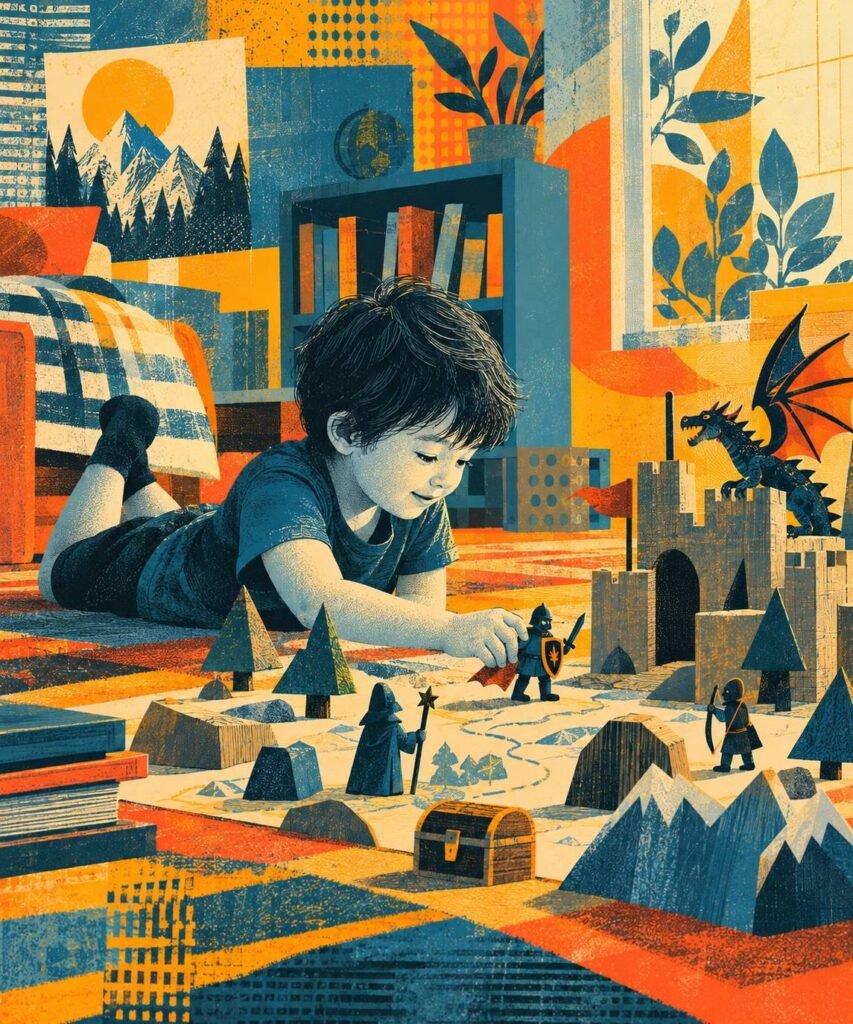
What Gamification Actually Is
Gamification is the application of game design principles — challenge, feedback, autonomy, progression, and reward — to contexts that are not games. In education and therapeutic practice, it means structuring activities in ways that draw on the same motivational mechanisms that make games so reliably engaging: the clear goal, the immediate feedback, the sense of progressive mastery, the freedom to try and fail and try again without permanent consequence, and the experience of being the agent of one’s own progress.
It is important to distinguish gamification from game-based learning, with which it is sometimes confused. Game-based learning uses actual games as the learning medium. Gamification uses game design principles to enhance other kinds of activities — making a worksheet feel more like an adventure, a therapeutic exercise feel more like a challenge the child has chosen, or a difficult emotional conversation feel less like an assessment and more like a collaborative exploration.
The research on gamification in child development consistently confirms that when these principles are well-applied — when autonomy, feedback, and progressive challenge are genuinely built in rather than superficially added — the results are substantial. A 2025 meta-analysis published in Psychology in the Schools examined gamification’s impact on student motivation in K-12 education across 31 experimental studies and found a pooled effect size of g = 0.654 — a moderate-to-large effect that places gamification among the more effective motivational interventions available in educational settings. The analysis found that gamification’s effects on intrinsic motivation — the child’s own genuine interest and engagement — were particularly strong in primary school children, making it especially relevant for the age group most served by play-based therapeutic approaches.
The Research Finding That Shapes the Toolbox
A 2025 study published in Education Sciences, examining gamification and emotional intelligence development in children, confirmed something that has direct implications for how play therapy resources are most effectively designed.
The study confirmed that the most effective gamification strategies for children’s intrinsic motivation — the genuine, internally driven desire to engage rather than the externally driven compliance — include four specific elements: promoting autonomy and a sense of control, offering immediate feedback, valuing learning through error, and progressively increasing challenge as obstacles are overcome.
These are not simply good teaching principles. They are the specific design conditions under which children’s emotional intelligence — their capacity to identify, understand, and manage their own emotions and the emotions of others — develops most effectively through gamified engagement. The study confirmed that gamification uniquely supports children’s emotion management and identification skills — and that parents who are more emotionally aware have strategies that support and encourage children to express their feelings, which helps develop emotional intelligence.
This finding sits at the heart of the Play Therapy Toolbox’s design. Every activity in the book is structured around the same four principles the research identifies: the child’s autonomy over how they engage, immediate feedback through the adult’s attuned response, the explicit normalisation of mistakes and incomplete answers as part of the process, and the progressive development of emotional and psychological complexity across the developmental stages the book addresses. This is not gamification in the superficial sense of adding stars and rewards. It is gamification in the research-supported sense of designing the motivational conditions under which children genuinely engage.
Why These Four Principles Matter for Children
Understanding why the four principles the research identifies produce such consistent results requires understanding something about how children’s motivation actually works — and why the approaches that seem most obvious to adults so often fail to engage children in the sustained way that genuine therapeutic or developmental work requires.
Autonomy and a sense of control are not simply nice additions to a therapeutic activity. They are neurologically necessary conditions for genuine engagement. The brain’s reward circuitry — the system that generates the felt sense of motivation, interest, and pleasure in an activity — is activated by self-directed action in a qualitatively different way from compliance-directed action. A child who chooses how to engage with an activity, who makes genuine decisions within it rather than following a prescribed sequence, has a neurologically different experience from a child who is told exactly what to do and how to do it. That difference shows up not only in how much the child enjoys the activity but in how much they learn from it, how willing they are to tolerate difficulty within it, and how likely they are to generalise what they experienced to other contexts.
Immediate feedback addresses one of the most consistent barriers to sustained engagement in children: the gap between action and consequence. Children, whose developing nervous systems are optimised for present-moment experience rather than delayed gratification, engage most persistently when the feedback on their actions arrives immediately and is directly connected to what they just did. In a therapeutic context, this is the adult’s warm, specific, genuinely interested response to what the child brings — not a summary at the end of the session but a moment-by-moment attunement that communicates I see what you just did and I find it interesting. That attunement is itself a form of gamification feedback — and the research confirms it is one of the most motivationally powerful forms available.
Valuing learning through error addresses the perfectionism that is one of the most consistent barriers to genuine engagement in anxious or shame-prone children. The game that allows the player to fail, reset, and try again without permanent consequence creates a relationship to difficulty that is fundamentally different from the activity in which failure means exposure or judgment. When a therapeutic activity explicitly normalises incomplete answers, unexpected responses, and the exploration of approaches that do not quite work, it creates the psychological safety that genuine engagement requires — and that anxious children, who are the population most in need of therapeutic support, are often most lacking.
Progressive challenge is the design principle most directly connected to the research concept of flow — the state of absorbed, intrinsically motivated engagement that Csikszentmihalyi identified as characterised by the precise alignment between the difficulty of the task and the capacity of the person attempting it. Activities that are too easy produce boredom. Activities that are too difficult produce anxiety. Activities pitched at exactly the right level of challenge — neither trivial nor overwhelming — produce the sustained, pleasurable engagement that is both most motivationally powerful and most developmentally productive. A well-designed play therapy resource builds progressive challenge across developmental stages: what a three-year-old can do with a particular therapeutic concept is genuinely different from what a nine-year-old can do with it, and the activities need to reflect that.
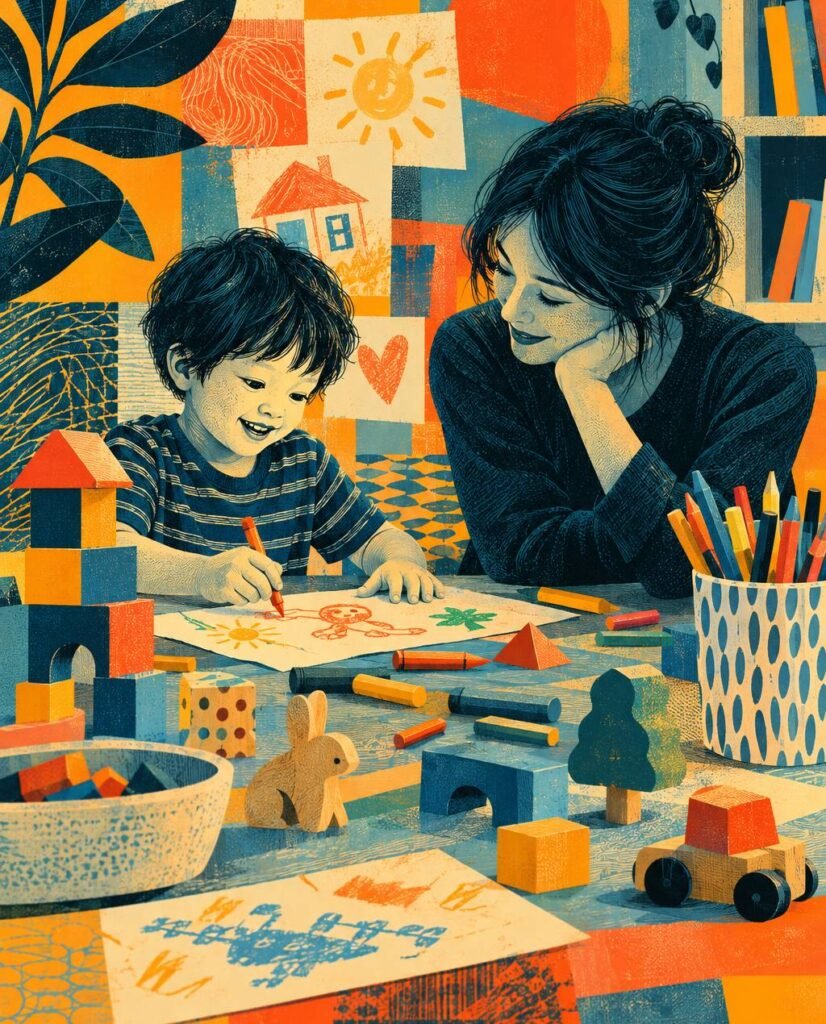
What the Broader Research Confirms
The gamification research across educational and developmental contexts is consistent in confirming that these principles produce genuine and measurable outcomes — and that the outcomes are not limited to academic engagement but extend into the social, emotional, and motivational domains most relevant to therapeutic work with children.
A 2024 systematic review and meta-analysis published in Frontiers in Psychology on game-based learning in early childhood education confirmed that game-based approaches promote cognitive, social, and emotional development in young children — with effects on engagement, motivation, and emotional competence that are particularly strong in the early childhood years. The review identified progressive challenge and immediate feedback as the strongest individual predictors of positive outcome across the studies examined.
A 2024 systematic review published in Frontiers in Education on the impact of gamification on school engagement — examining research conducted between 2013 and 2023 — confirmed that gamification is an effective strategy for increasing academic, emotional, and behavioural engagement simultaneously, and that its effects are most pronounced when the design genuinely incorporates the child’s autonomy rather than using game elements as a superficial overlay on essentially directive activities.
A 2025 randomised controlled trial examining the impact of educational gamification on cognition, emotions, and motivation confirmed that well-designed gamified learning produced significant improvements in emotional engagement, interest, and enjoyment compared to traditional approaches — with the gamified group showing measurably lower levels of neutral emotional response, indicating that they were more emotionally engaged throughout the activity rather than simply compliant.
A 2024 meta-analysis published in Educational Technology Research and Development, examining gamification’s effects on intrinsic motivation specifically, confirmed that gamification enhances children’s perceptions of autonomy and relatedness — two of the three core psychological needs identified by self-determination theory as foundational to intrinsic motivation. The finding that gamification specifically improves the felt sense of autonomy is particularly significant for therapeutic work: a child who experiences a therapeutic activity as something they are choosing to do, rather than something being done to them, is a child whose engagement is qualitatively and motivationally different.
Gamification in Child Development and The Play Therapy Toolbox
The Play Therapy Toolbox: 123 Simple Play Therapy Activities and Therapeutic Games Supporting Every Stage of Child Development from Age 3 to 12 was built on the design principles that the gamification research identifies as most effective — not because the book is a gamification project but because the best play therapy has always incorporated these principles, and the research now provides the theoretical framework that explains why they work.
Every activity in the book offers the child genuine autonomy within a clear structure — choices about how to engage, what to draw, how to arrange, what to include, rather than a sequence to follow. Every activity generates immediate feedback through the adult’s attuned, warm, genuinely interested response to what the child brings. Every activity explicitly normalises incomplete and unexpected responses — there is no wrong answer in any of the 123 activities, only different information about the child’s current inner world. And the activities are organised across four developmental chapters — Age 3, Ages 4 to 6, Ages 7 to 9, and Ages 10 to 12 — each calibrated to the specific cognitive and emotional capacities of that developmental stage, building progressive challenge across the arc of childhood.
The result is a resource that draws on the motivational design of good games without being a game — that provides the sustained, intrinsically motivated, emotionally engaged experience that the research confirms is most productive for development, learning, and therapeutic change, in the form most appropriate for the children it serves.
Before You Begin: A Note on Professional Support
The gamification principles described in this article are embedded in the Play Therapy Toolbox’s design to make therapeutic activities as genuinely engaging and motivationally supportive as possible for children. Before using the Toolbox with a child who is experiencing significant emotional, behavioural, or developmental difficulties, I would sincerely recommend consulting a qualified mental health professional. The activities are designed to be accessible to non-specialist adults — but they are most effective as part of a broader support plan that includes professional guidance where it is needed.
Three Things Worth Knowing
The best play has always been designed.
The insight that gamification in child development produces better outcomes than unstructured activity is not new — it is what every good play therapist, every skilled teacher, and every genuinely attuned parent has always known intuitively. What the research adds is the specific design principles that explain why: autonomy, immediate feedback, permission to fail, and progressive challenge. These are not add-ons to good therapeutic and developmental practice. They are its foundational architecture.
Intrinsic motivation is the goal — not compliance.
The most important distinction in the gamification research is between activities that produce compliance — the child doing what they are asked because they have been asked — and activities that produce intrinsic motivation — the child engaging because they genuinely want to. Compliance produces performance in the presence of the adult. Intrinsic motivation produces genuine learning, genuine emotional processing, and genuine change that the child carries with them beyond the session. The design principles the research identifies are specifically the ones that produce the second kind of engagement — and they are the principles the Toolbox is built around.
You are the most important feedback mechanism in the room.
The research on gamification consistently identifies immediate feedback as one of the two strongest predictors of sustained engagement and positive outcome. In a play therapy context, the most powerful form of immediate feedback is not a point, a badge, or a score. It is the warm, specific, genuinely interested response of an attuned adult to what the child just brought into the room. Your attentiveness, your curiosity, your unhurried reception of whatever the child produces — these are the feedback mechanisms that make the activities work. The design of the Toolbox provides the structure. Your genuine engagement provides the feedback that brings it alive.
Available Now for $5.99 — For a Limited Time
If this exploration of gamification in child development gave you a sense of why the design principles that make games so reliably engaging are the same principles that make play therapy most effective, The Play Therapy Toolbox gives you 123 activities built on exactly those principles. The ebook is available now on Amazon at $5.99 for a limited time — with immediate access to 123 activities and 75+ full-colour printable worksheets for children aged 3 to 12.
Play is not preparation for life. It is life — in its most honest, most essential, most healing form.

Disclaimer: This article is intended as an educational and supportive resource for parents, caregivers, educators, and mental health professionals. It is not intended to diagnose, treat, or replace professional therapeutic or medical care. If a child is experiencing significant emotional, behavioural, or developmental difficulties, please seek guidance from a qualified mental health professional.

Rostislava Buhleva-Simeonova is a psychologist and game design specialist. She has worked with children, adults, and the elderly within various therapeutic programmes over the past eight years, all the while providing the much-needed playful twist that art and gamified experiences can bring to this sometimes uneasy setting. But it wasn’t until the birth of her daughter, Aurora, that this work took on an even deeper personal meaning. With her academic and real-life experience, honed through numerous trainings and sessions, she is currently authoring books and articles in the field of child psychology and development, offering expertise in art and play therapy to guide parents and caregivers, as well as professionals in the fields of social work and mental health, throughout various pivotal moments in children’s lives. Last but not least, all of her books have been “peer-reviewed” by her daughter, who testifies to the efficiency of these methods.
References
Coelho, A., et al. (2025). The impact of educational gamification on cognition, emotions, and motivation: A randomized controlled trial. ResearchGate. https://www.researchgate.net/publication/393697731
Education Sciences. (2025). Gamification and emotional intelligence: Development of a digital application for children. https://doi.org/10.3390/educsci15040453
Frontiers in Education. (2024). Impact of gamification on school engagement: A systematic review. https://doi.org/10.3389/feduc.2024.1466926
Frontiers in Psychology. (2024). Game-based learning in early childhood education: A systematic review and meta-analysis. https://doi.org/10.3389/fpsyg.2024.1307881
Kurnaz, M. F., & Koçtürk, N. (2025). A meta-analysis of gamification’s impact on student motivation in K-12 education. Psychology in the Schools, 62(12), 4997–5009. https://doi.org/10.1002/pits.70056
Liuyufeng, L., et al. (2024). Gamification enhances student intrinsic motivation, perceptions of autonomy and relatedness, but minimal impact on competency: A meta-analysis and systematic review. Educational Technology Research and Development, 72(2), 765–796.
Ukgoda, H. (2025). Gamification in education: Its impact on engagement, motivation, and learning outcomes. Journal of Educational Technology Development and Exchange, 18(3), 41–66.
Veraksa, A. N., et al. (2025). Non-therapeutic play to overcome negative emotional symptoms and improve emotional intelligence in children aged 3–7: A systematic review. Frontiers in Psychology. https://doi.org/10.3389/fpsyg.2025.1475387