
Before a child can read, before they can count, before they can sit still for a lesson or follow a three-step instruction — they are learning. They are learning through their hands. Through the feel of something wet between their fingers, the resistance of something that pushes back when they press it, the particular satisfaction of squeezing something soft and watching it change shape. They are building the neural architecture that everything else will rest on — and they are doing it through touch, through movement, through the messy, absorbing, completely serious business of sensory play.
Sensory play is not a distraction from real learning. It is the primary medium through which the infant and toddler brain builds its most foundational structures — the neural pathways for attention, memory, language, emotional regulation, and the fine motor precision that writing, drawing, and self-care will eventually require. Understanding what it does, when to introduce it, and how to provide it well is one of the most practically significant things any parent or early childhood educator can know.
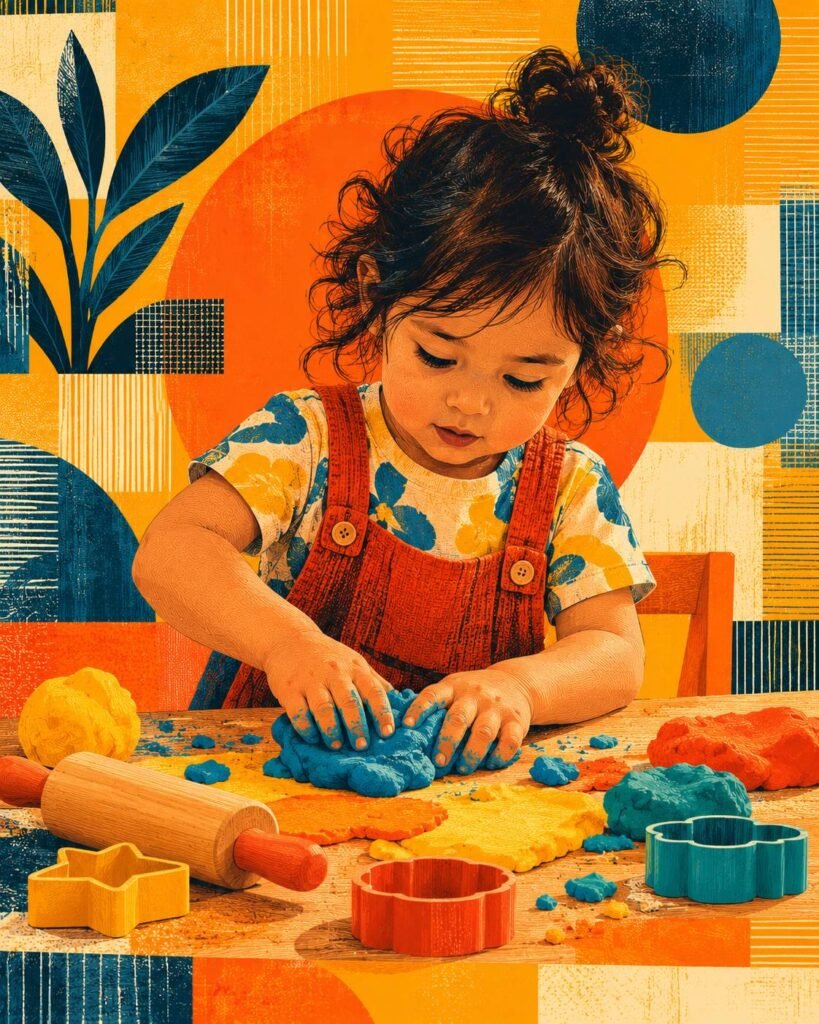
What the Developing Brain Actually Needs
The infant brain at birth contains approximately 100 billion neurons — nearly the same number it will have throughout life. What it does not yet have, in anything close to its adult form, is the complex network of connections between those neurons — the synaptic connections that allow different brain regions to communicate, to integrate information, and to coordinate the sophisticated cognitive, emotional, and motor functions that development requires.
Those connections are built through experience. Specifically, they are built through sensory experience — through the repeated activation of neural pathways by meaningful, varied, embodied interaction with the physical world. Neuroscientists describe this process as use-dependent development: the pathways that are most frequently activated become the most strongly myelinated, the most efficient, and the most available for future use. The pathways that are not activated in the sensitive periods of early development may never be as fully established.
Researchers have confirmed that sensory experiences actively help in cognitive development by distributing information across distinct brain regions — and that repetitive activities like scooping sand and swirling water help in reducing stress, confirming that sensory play addresses both the cognitive and the emotional dimensions of development simultaneously. psychologspsychologs
At the centre of the tactile processing system is the somatosensory cortex — the brain region responsible for interpreting touch, pressure, temperature, and texture. The more the somatosensory cortex is activated through rich, hands-on play, the stronger and more refined a child’s sensory and motor pathways become, laying a solid foundation for cognitive and emotional development. lattooland
Jean Piaget’s account of the sensorimotor stage — the developmental period from birth to approximately two years — remains one of the most accurate and practically useful descriptions of how early learning works: children learn through direct sensory and motor experiences, and sensory play is fundamental in this stage. The infant who reaches for a textured ball, grasps it, brings it to their mouth, shakes it, drops it, and reaches for it again is not simply playing. They are constructing the cognitive schemas — the internal representations of how the world works — that Piaget identified as the building blocks of all subsequent intellectual development. eccdc
When to Start — From Birth Through Early Childhood
Sensory play does not begin at a specific developmental milestone. It begins at birth — because the newborn’s entire experience of the world is sensory. Every feed, every hold, every change of position, every variation in texture, temperature, and pressure is sensory input that the developing brain is actively processing and using.
What changes across the developmental stages is not whether sensory play is happening but what form it takes, how the child engages with it, and what specific capacities it is most directly building.
Birth to 6 months
In the earliest months, sensory play is primarily provided by the caregiver — through the quality of touch, the variation in voice, the range of textures and temperatures the infant encounters in the course of daily care. The infant who is held against different textures — soft cotton, warm skin, the slight roughness of a knitted blanket — is receiving tactile input that is activating the somatosensory cortex and beginning to build the tactile discrimination capacities that later, more independent sensory play will develop further.
Simple activities at this stage include: skin-to-skin contact, gentle massage with varied pressure, introducing soft toys with different textures for the infant to grasp and mouth, and water play during bath time — varying the temperature slightly, allowing the infant to splash and feel the movement of water.
6 to 12 months
As the infant develops the ability to sit with support and begins reaching, grasping, and transferring objects, sensory play becomes more interactive and more independent. This is the period Piaget’s sensorimotor schema-building is most visible: the infant who repeatedly drops an object and watches it fall is not being difficult. They are building the understanding of object permanence and cause and effect that forms the foundation of logical thinking.
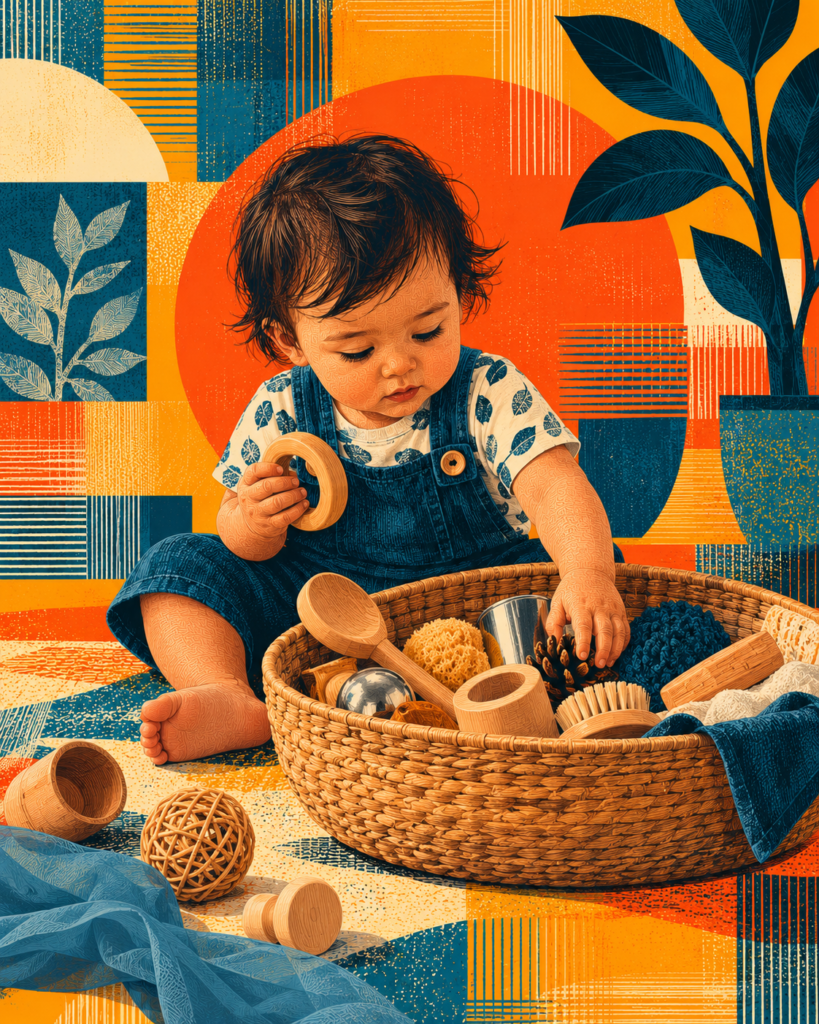
Activities at this stage: treasure baskets — shallow containers filled with safe natural objects of different textures, weights, and sizes for the infant to explore freely; water play with varying temperatures; textured surfaces to crawl and pull to stand on; finger painting with non-toxic, edible paint.
12 to 18 months
The toddler who is beginning to walk is also beginning to engage more deliberately with the physical properties of materials — filling and emptying, stacking and knocking down, pressing and pulling. Fine motor development is accelerating, and sensory play that offers resistance and precision — play dough, sand, water with containers — supports the development of the hand strength and finger coordination that later writing and self-care tasks require.
18 months to 3 years
This is the period of most intensive sensory play engagement for most children — the period during which play dough, sensory bins, water tables, mud, sand, and other tactile materials become central to the child’s daily experience. Language development is rapid during this period, and exploring sensory materials encourages toddlers to describe their experiences, expanding their vocabulary and communication skills — as toddlers engage in sensory play, they learn to label different textures, colours, and objects, building language skills through sensory-rich experiences. theollieworld
3 to 6 years
By the preschool years, sensory play becomes more complex, more imaginative, and more social. Children begin to use sensory materials as media for symbolic play — the play dough becomes food, a house, a creature; the sand becomes a landscape with roads and rivers. The sensory experience is now serving the development of narrative, symbolic thinking, and social collaboration simultaneously.
When to Introduce Play Dough
Play dough deserves its own section — because it is one of the most comprehensively beneficial sensory materials available for early childhood, and because parents frequently either introduce it too cautiously or too late.
Play dough is appropriate to introduce from approximately 18 months onward for most children — earlier if the child has demonstrated reliable enough mouthing awareness and the adult can provide close supervision. The primary safety consideration is ingestion: homemade play dough with non-toxic ingredients is the safest option for younger toddlers, and even commercial play dough is not seriously harmful if small amounts are consumed, provided it is not a staple of the diet.
What play dough provides that few other materials can replicate is the combination of resistance and malleability — the particular physical satisfaction of a material that pushes back when pressed, yields to sustained pressure, and can be shaped, reshaped, rolled, cut, and built with across an extended period of engagement. This combination specifically develops:
Hand strength and finger coordination — the sustained effort of working with play dough builds the intrinsic hand muscles that fine motor tasks require. A child who has spent regular time with play dough has measurably stronger hands than one who has not — and stronger hands make writing, scissors use, and self-care tasks significantly more accessible.
Proprioceptive feedback — the resistance of play dough provides the proprioceptive input that helps children understand where their hands are in space and how much force they are applying. This proprioceptive awareness is foundational for all fine motor precision.
Sustained attention — play dough is one of the most reliable sustained attention activities available for toddlers, because it is inherently open-ended, intrinsically motivating, and provides continuous sensory feedback that keeps the nervous system engaged. A two-year-old who will not sit at a table for three minutes will frequently sit with play dough for twenty.
Emotional regulation — the repetitive, rhythmic quality of working with play dough — rolling, pressing, squeezing — activates the parasympathetic nervous system and reduces cortisol. Tactile play helps develop emotional regulation, as many calming and soothing behaviours are tactile. Play dough is one of the most reliable de-escalation tools available for young children — and one of the most overlooked. abcmouse
Sensory Play Activities Across the Developmental Range
The following activities are organised by developmental stage and by the specific capacities they most directly support.
Treasure Basket Exploration (6–12 months)
A shallow basket or bowl filled with eight to ten natural objects of different textures, weights, and sizes — a wooden spoon, a small pine cone, a smooth stone, a piece of soft fabric, a metal spoon, a cork. The infant explores freely, with the adult nearby but not directing. The open-ended nature of treasure basket play is its most important feature: the infant is the researcher, and the materials are the research subject.
Water Play with Containers (12 months onward)
A shallow tray or water table with a small amount of water and various containers for pouring, filling, and emptying. Varying the temperature slightly — slightly cooler or warmer than the infant expects — adds an additional layer of sensory input. Adding a small amount of food colouring, or natural materials like leaves or flowers, extends the play and introduces visual sensory variation alongside the tactile.
Play Dough (18 months onward)
Introduced with simple tools — a rolling pin, a blunt cutter, some simple moulds — play dough provides an immediate and engaging activity that requires no direction. Homemade play dough is preferable for this age group: two cups of flour, half a cup of salt, two tablespoons of cream of tartar, two tablespoons of oil, one cup of boiling water, food colouring. The making of the play dough is itself a sensory activity that older toddlers can participate in.
As the child develops, play dough activities can be extended: hiding small objects inside for the child to find by feel; making imprints of natural objects — leaves, shells, bark — and examining the textures; building simple structures; using it alongside loose parts — twigs, stones, beads — for more complex imaginative play.
Sensory Bins (18 months onward)
A deep tray or bin filled with a base material — dry rice, lentils, sand, oats, water beads — and embedded with small objects for the child to find, or tools for scooping, pouring, and transferring. The base material provides the primary tactile experience; the embedded objects and tools provide the sustained engagement and the fine motor challenge. Sensory bins are particularly valuable for children who are tactile-avoidant — the enclosed, contained nature of the bin provides a clear boundary that makes the tactile experience more manageable for children who find open sensory experiences overwhelming.
Mud and Natural Materials (2 years onward)
Outdoor sensory play with mud, soil, sand, water, leaves, bark, and other natural materials provides the broadest and most varied sensory input available to a child — and the research on outdoor play consistently confirms that the combination of physical movement, fresh air, and natural sensory experience produces stronger developmental and regulatory benefits than indoor sensory play alone. A mud kitchen — a simple outdoor play area with containers, utensils, and access to soil and water — is one of the most developmentally rich environments available for children aged two to six.

Supporting the Child Who Resists Sensory Play
Not all children are equally comfortable with sensory experiences — and the child who pulls away from play dough, refuses to touch sand, or protests at the feel of paint on their hands is not being difficult. They may be experiencing genuine sensory sensitivity — a nervous system that processes tactile input with greater intensity than typical — and the appropriate response is not to force the exposure but to introduce sensory materials gradually, with the child in control of the pace and the degree of contact.
Sensory play can be especially beneficial for toddlers who struggle with sensory processing challenges, helping them self-regulate and cope with sensory stimuli more effectively. For these children, the approach that works best is systematic desensitisation — beginning with the least threatening form of the material (watching it, touching it with one finger, using a tool rather than bare hands) and gradually, across many sessions, building tolerance for more direct contact. The adult’s role is to follow the child’s lead, to celebrate every small increment of engagement, and never to use social pressure or comparison as a motivational tool. theollieworld
Where sensory sensitivity is significant and persistent — where it is interfering with daily activities, eating, self-care, or social engagement — assessment by an occupational therapist experienced in sensory processing is appropriate and genuinely helpful.
For Deeper Work: The Play Therapy Toolbox
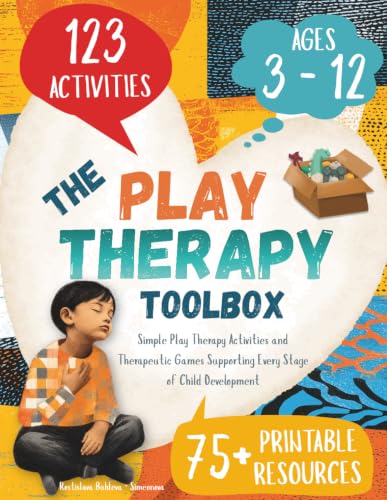
The Play Therapy Toolbox: 123 Simple Play Therapy Activities and Therapeutic Games Supporting Every Stage of Child Development from Age 3 to 12 draws on the sensory play tradition throughout — and specifically on the understanding that the most powerful developmental and therapeutic work available to young children happens through their hands, their bodies, and their direct, absorbing engagement with physical materials.
The sensory and somatic activities across the Toolbox are structured to support the specific capacities that sensory play research consistently identifies as most significant: emotional regulation, fine motor development, sustained attention, proprioceptive awareness, and the particular quality of present-moment bodily engagement that is both developmentally foundational and therapeutically restorative. Every activity comes with a therapeutic rationale grounded in peer-reviewed research, step-by-step guidance on how to conduct the session and exactly what to say, and a parent guidance note that translates the developmental principles into the language of ordinary daily life.
Before You Begin: A Note on Professional Support
For most children, sensory play is safe, enjoyable, and straightforwardly beneficial — and the activities described in this article require no specialist training to provide. Where a child shows significant sensory sensitivity, avoidance of tactile materials, or sensory-seeking behaviour that is intense or difficult to manage, assessment by a qualified occupational therapist or developmental paediatrician is recommended before introducing new sensory activities at home.
Three Things Worth Knowing
The mess is the learning.
Every parent who has watched a toddler push their hands deeply into a bowl of cornflour and water, or press play dough until it oozes between their fingers, or paint their entire forearms instead of the paper — and wondered whether this is really educational — can be reassured by the research: the mess is precisely where the learning is happening. The neural pathways being built in those moments of full-body sensory engagement are the pathways that attention, memory, language, and emotional regulation will depend on for the rest of the child’s life. Protecting the table is fine. But it should not come at the cost of the mess.
Repetition is not boredom — it is consolidation.
The toddler who wants to fill and empty the same container for twenty minutes, or who asks for play dough every day for three weeks, is not lacking imagination. They are consolidating a schema — reinforcing a neural pathway through repeated activation until it becomes stable and automatic. Repetition in sensory play is the neurological equivalent of practice in skill development: it is how the brain builds the reliable, efficient pathways that support all future learning. Follow the child’s lead on this, and resist the adult instinct to introduce variety before the child has finished with what they are currently exploring.
Your presence is the most important sensory ingredient.
The research on early childhood development consistently confirms that the quality of the adult’s engaged, attuned presence during sensory play is a significant moderator of its developmental benefit. The child who explores play dough alongside a genuinely curious, warm, non-directing adult is building something additional to the motor and cognitive benefits of the sensory experience itself: they are building the secure base from which all genuine exploration proceeds. The materials are the invitation. Your presence is the reason the child is willing to get their hands dirty.
Available Now for $5.99 — For a Limited Time
If this exploration of sensory play for toddlers gave you a sense of what is happening in the developing brain during the ordinary, messy business of hands-on play, The Play Therapy Toolbox gives you 123 more activities built on the same understanding — that development and healing both happen through the body, through the hands, and through the quality of the relationship within which those experiences are offered. The ebook is available now on Amazon at $5.99 for a limited time — with immediate access to 123 activities and 75+ full-colour printable worksheets for children aged 3 to 12.
Play is not preparation for life. It is life — in its most honest, most essential, most healing form.
Disclaimer: This article is intended as an educational and supportive resource for parents, caregivers, educators, and mental health professionals. It is not intended to diagnose, treat, or replace professional therapeutic or medical care. If you are concerned about your child’s sensory development or processing, please seek guidance from a qualified occupational therapist or developmental paediatrician.

Rostislava Buhleva-Simeonova is a psychologist and game design specialist. She has worked with children, adults, and the elderly within various therapeutic programmes over the past eight years, all the while providing the much-needed playful twist that art and gamified experiences can bring to this sometimes uneasy setting. But it wasn’t until the birth of her daughter, Aurora, that this work took on an even deeper personal meaning. With her academic and real-life experience, honed through numerous trainings and sessions, she is currently authoring books and articles in the field of child psychology and development, offering expertise in art and play therapy to guide parents and caregivers, as well as professionals in the fields of social work and mental health, throughout various pivotal moments in children’s lives. Last but not least, all of her books have been “peer-reviewed” by her daughter, who testifies to the efficiency of these methods.
References
Arjulayana. (2025). Sensory play in early childhood education: The key to stimulating the brain and creativity of young children. Gemilang: Early Childhood Education Programs, 2(3).
Brain and Behavior. (2024). Motor and sensory developments are intertwined during infancy and early childhood.
Chen, X., & Monroy, C. (2026). Sensory experiences and cognitive development across brain regions. Referenced in: Psychologs. (2026). Sensory play and brain development: How messy play builds healthy minds.
Cankaya, O., Rohatyn-Martin, N., Leach, J., Taylor, K., & Bulut, O. (2023). Preschool children’s loose parts play and the relationship to cognitive development: A review of the literature. Journal of Intelligence, 11(8), 151.
Piaget, J. (1952). The Origins of Intelligence in Children. International Universities Press.
Scott, H. K., & Cogburn, M. (2023). Piaget. In StatPearls. StatPearls Publishing.
Trends in Cognitive Science. (2023). The process of sensation is inherently emotional; sensation-driven emotion can be deliberately harnessed.