
Introduction
Every child’s journey into language is a unique adventure, shaped by their environment, experiences, and innate abilities. While developmental milestones provide helpful benchmarks, it’s crucial to remember that these timeframes are relative—children don’t follow a strict calendar. One child might babble enthusiastically at 6 months, while another takes a bit longer to coo in response to a parent’s voice. Factors like bilingual households, individual temperament, and even exposure to diverse sounds can influence the pace. What matters most is consistent, loving interaction that fosters curiosity and connection. This guide draws on established psychological theories and the latest research to outline key speech and language milestones from birth to age 5, offering evidence-based insights into how children build their verbal world. Remember, if your child seems to lag behind, early consultation with a speech-language pathologist (SLP) can make all the difference—intervention is most effective when the brain is at its most plastic, between birth and age 3.
Psychological theories have long illuminated this process. Jean Piaget’s cognitive development theory posits that language emerges as children construct mental schemas through interaction with their environment, with egocentric speech in early years serving as a tool for self-regulation before social communication matures. Lev Vygotsky, in contrast, emphasized the sociocultural roots of language, arguing that private speech—children talking to themselves—evolves from social dialogue and is essential for cognitive growth within the “Zone of Proximal Development,” where guided support from caregivers scaffolds learning. Noam Chomsky’s nativist theory complements these by suggesting an innate “language acquisition device” enables children to grasp universal grammar rules effortlessly, explaining why kids worldwide hit similar milestones despite varied inputs.
Contemporary findings from 2023–2025 reinforce these ideas while highlighting environmental influences. A global study analyzing over 40,000 hours of audio from 1,001 children across 12 countries found that the quantity of adult speech—not gender, multilingualism, or socioeconomic status—predicts a child’s vocal output, underscoring Vygotsky’s social interaction focus. Similarly, research shows that early behavioral regulation aids language growth, linking self-control to richer vocabularies. Bilingual children reach early milestones on par with monolinguals, aligning with Chomsky’s universal grammar. And while screen time’s impact varies, shared viewing with adults boosts lexical density, echoing Piaget’s assimilation through experience. These insights guide our exploration of milestones, paired with playful, therapy-inspired activities to nurture speech at home.
Birth to 3 Months: The Symphony of Sounds Begins
In these earliest months, infants are sponges for auditory input, turning coos and cries into the foundations of speech. According to the American Speech-Language-Hearing Association (ASHA)’s 2023 updated milestones, babies in this stage should:
- Startle or quiet to loud sounds.
- Coo (vowel-like sounds such as “oo” or “ah”) in response to voices.
- Turn their head toward familiar sounds, like a parent’s voice.
- Cry differently for various needs (e.g., hunger vs. discomfort).
These align with Piaget’s sensorimotor stage, where infants assimilate sensory experiences into basic schemas, and Vygotsky’s view of social origins, as caregiver responses shape early vocal play. Recent 2024 research confirms that even passive exposure to adult speech in the first months predicts stronger neural synchronization to words, supporting Chomsky’s innate mechanisms.
Activity: “Mirror & Echo Conversation” (Infant-Directed Speech + Turn-Taking)
Goal: Strengthen auditory processing, teach the rhythm of conversation, and build the earliest social-pragmatic turn-taking skills (the pre-verbal foundation of dialogue).
How to do it (10–15 minutes, 3–5 times a day):
- Hold baby 8–12 inches from your face (perfect visual distance for newborns).
- Use slow, high-pitched, sing-song “parentese” (infant-directed speech). Research shows this speech style activates broader neural networks in the infant brain than adult-directed speech (Saint-Georges et al., 2013; Piazza et al., 2024).
- Make a simple sound: “Oooooooh” (long vowel), “Aaaaaah,” or gentle lip trill. Hold the sound 3–4 seconds while smiling widely.
- Pause completely for 5–10 seconds and watch baby’s face and body. Most babies will quiet, widen eyes, or make a tiny coo/grunt.
- Immediately imitate whatever sound or mouth movement they offer, exaggerating slightly, then pause again.
- Repeat 8–12 exchanges. End with a soft kiss or gentle stroke so the “conversation” has a clear, loving close.
Why it works: This is the earliest form of protoconversation (Trevarthen, 1993). Babies whose parents contingently respond within 1–2 seconds show significantly larger vocabularies at 24 months (Tamis-LeMonda et al., 2014).
4 to 6 Months: Babbling Takes Center Stage
By mid-year, babies experiment with consonant-vowel combinations, mimicking the rhythm of speech. ASHA milestones include:
- Babbling strings like “ba-ba-ba” or “da-da-da.”
- Laughing and squealing with joy.
- Responding to their name by turning or smiling.
- Making sounds to get attention, such as raspberries (lip trills).
This phase reflects Piaget’s emerging coordination of senses and actions, with babbling as egocentric practice for later social speech. A 2023 study highlights how rhythmic exposure (like songs) accelerates babble complexity, tying into sociocultural learning.
Activity: “Raspberries & Babbles on the Body” (Oral-Motor + Imitation)
Goal: Increase oral-motor awareness, encourage consonant-vowel combinations, and reinforce imitation as the primary learning mechanism.
Materials: Your face and body only.
Step-by-step (do during diaper changes or tummy time):
- Blow a big raspberry on baby’s bare tummy → say “Buh-buh-buh-buh!”
- Immediately blow a raspberry on their foot → “Puh-puh-puh-puh!”
- Switch to tongue clicks on their palm → “Da-da-da!”
- Pause and lean in expectantly. When baby makes any sound, instantly copy it back with excitement.
- Cycle through 5–6 different consonants (b, p, d, m, g) on different body parts.
- Finish by blowing a final gentle raspberry on their cheek and saying “All done! Yay baby!”
Evidence: Infants who experience varied oral-motor play produce twice as many different consonant types by 9 months (Icht & Mama, 2023).
7 to 12 Months: First Words on the Horizon
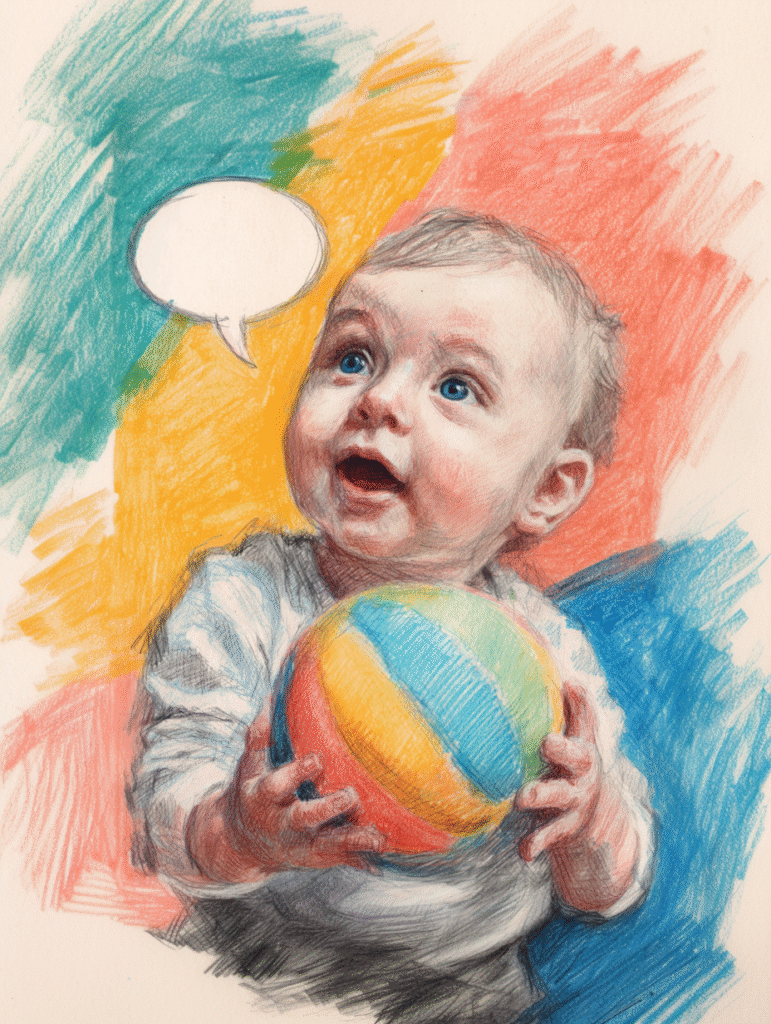
Toward the end of the first year, jargon emerges—babbling that mimics sentence cadence. Key milestones:
- Using gestures like waving “bye-bye” or pointing to request.
- Understanding simple words (“no,” “ball”).
- Saying 1–2 words (e.g., “mama,” “dada” specifically).
- Imitating sounds from books or songs.
Vygotsky’s zone of proximal development shines here, as parental modeling bridges gestures to words. 2025 findings show that early sign language boosts vocabulary in hearing children, enhancing Chomsky’s universal grammar via multimodal input.
Activity: “Magic Bag of Sounds” (Joint Attention + First Words)
Goal: Combine joint attention, object permanence, and sound imitation to trigger the naming explosion.
Materials: Small drawstring cloth bag, 6 highly motivating small toys/objects that make distinct sounds (keys, squeaky duck, mini maraca, bell, crinkly toy, small drum).
How to play (10–12 minutes):
- Sit on the floor facing baby. Show the closed bag and shake it dramatically: “What’s in the baaaag?”
- Pull out one object very slowly while making its sound: “Duck! Duck says quack-quack!”
- Let baby explore and activate the sound. Imitate whatever vocalisation they make.
- Hide it behind your back and ask “Where’s duck?” → bring it back with huge excitement.
- After 2–3 rounds with the same object, put it away and move to the next.
- End by dumping all objects out together for free play.
Evidence: Joint attention episodes at 9–12 months predict vocabulary size at 18 and 24 months with r = .62 correlation (Carpenter et al., 1998; recent meta-analysis 2024).

13 to 18 Months: Vocabulary Explosion
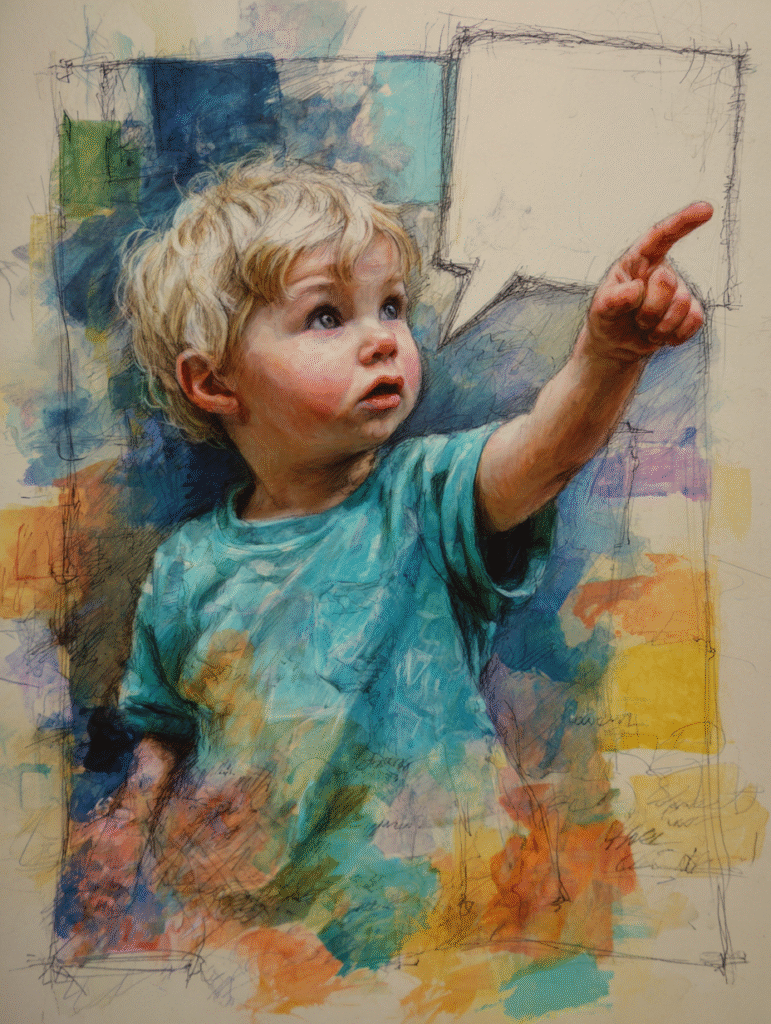
Toddlers now label their world, often with 10–20 words. Milestones:
- Saying 5–20 words and pointing to named pictures.
- Following simple one-step directions (“Give me the ball”).
- Imitating two-word phrases.
- Using jargon that sounds like real talk.
Piaget sees this as preoperational thought budding, with words symbolizing objects. A 2024 global analysis links richer adult input to faster growth here, beyond SES factors.
Activity: “Slow-Motion Snack Commentary” (Self-Talk + Parallel Talk)
Goal: Model single words and two-word phrases in highly motivating context.
Best done at snack or mealtime:
- Choose 6–8 bite-size pieces of favorite food (blueberries, puffs, cheese cubes).
- Hold one piece 6 inches from child’s face and narrate in slow, telegraphic speech: “Blueberry. Blue. Berry. Want blueberry?”
- Wait 5–8 seconds for any attempt (“beh,” “buh,” “mo”).
- Immediately respond: “Yes! Blueberry! Here’s blueberry!” and pop it in mouth with huge smile.
- After 3–4 successful exchanges, raise to two-word level: “More blueberry?” “Big blueberry!” “Yummy blueberry!”
- If child says an approximation, expand it: Child: “buh” → You: “Blueberry! Yes, blueberry!”
Evidence: Children exposed to high rates of self-talk and parallel talk at meals have 50–100 more words at 24 months (Rowe & Snow, 2020 update).
19 to 24 Months: Two-Word Wonders
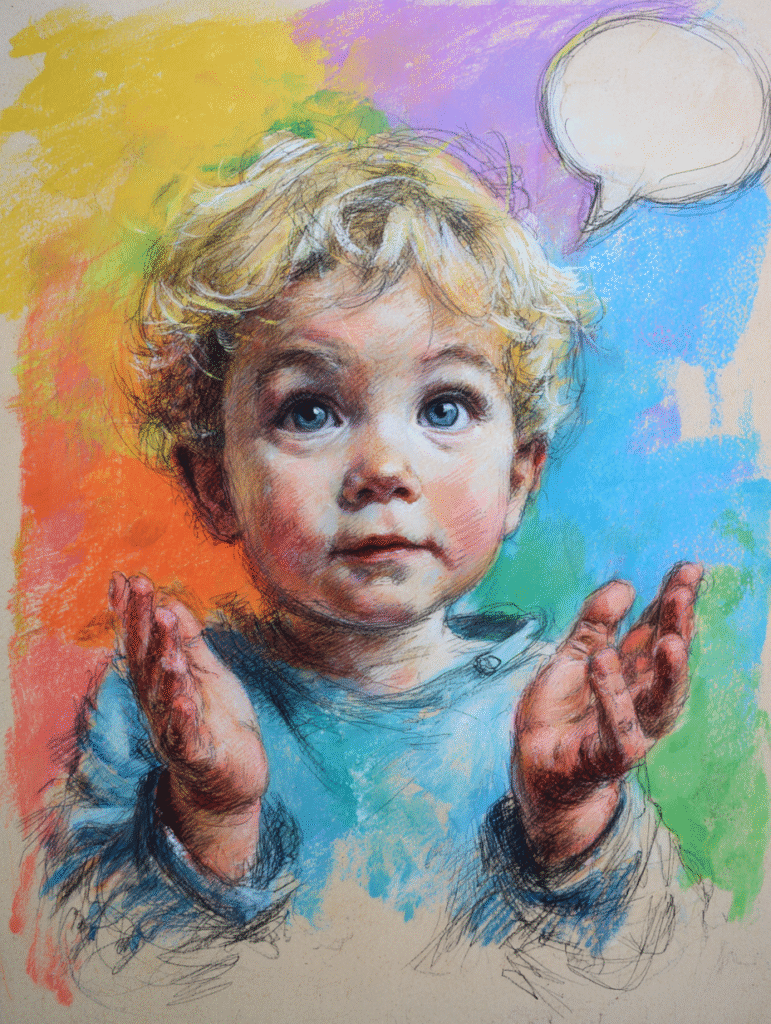
Phrases like “want cookie” appear, marking a leap in expression. Milestones:
- Vocabulary of 50+ words.
- Combining two words into simple sentences.
- Naming familiar objects and body parts.
- Following two-step directions (“Pick up the toy and give it to Mommy”).
Vygotsky’s private speech emerges as toddlers narrate actions. 2023 research ties this to shared reading’s role in sentence complexity.
Activity: “Tiny Photographer” (Descriptive Language + Adjectives)
Materials: Old phone or toy camera.
How to play:
- Pretend the phone is a real camera.
- Take dramatic “photos” of objects around the room while narrating with rising intonation: “Big red car! Click!” “Soft brown teddy! Click!”
- Hand the phone to child and prompt: “Your turn! Take picture!”
- When they point the phone, enthusiastically supply 2–3 word labels: “Yes! Tall green tree! Click click!”
- Gradually fade your model so child attempts the label themselves.
- Print 4–6 real photos later and retell the adventure (“Remember the big red car?”).
Evidence: Adjective-rich input between 18–30 months is the single strongest predictor of later grammatical complexity (Hsu et al., 2023).
25 to 36 Months: Sentences Take Shape
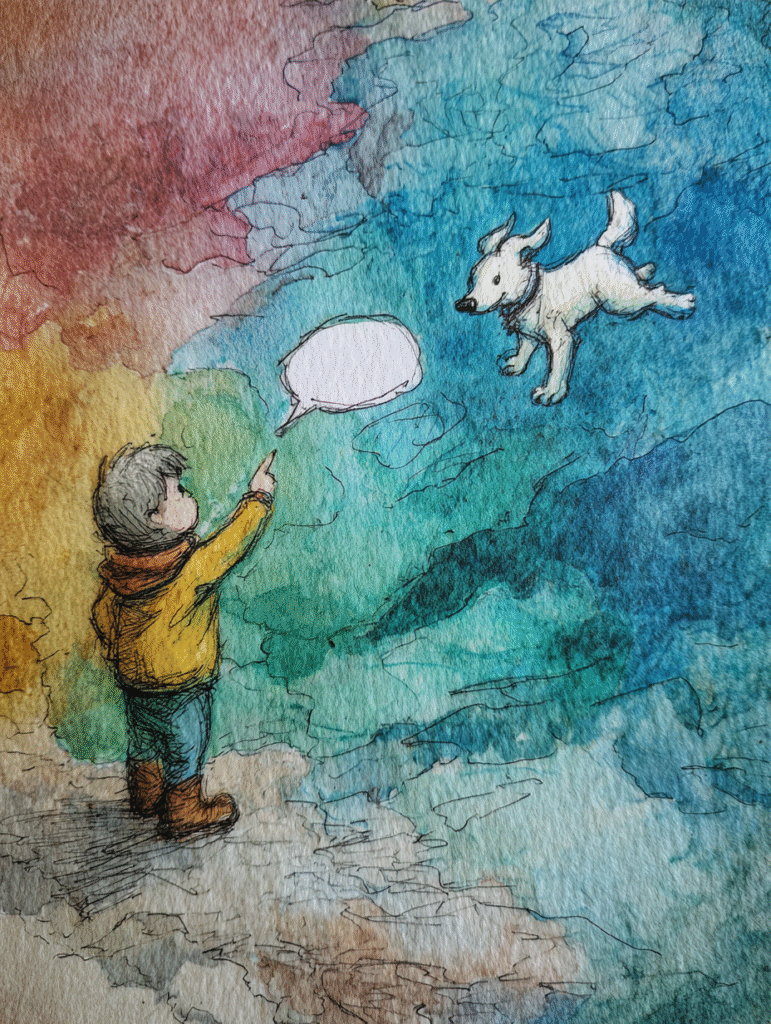
Preschoolers craft 3–4 word sentences, asking “why?” endlessly. Milestones:
- 200+ word vocabulary; most speech intelligible to strangers.
- Describing actions (“Doggy running”).
- Recalling story parts; playing simple make-believe.
- Following three-step directions.
Chomsky’s grammar unfolds, with overregularizations like “goed.” 2025 studies show behavioral regulation predicts grammar mastery.
Activity: “Feelings Detective” (Emotion Words + Perspective-Taking) Materials: 8–10 photos of children showing clear emotions (printed or on tablet) + small detective magnifying glass (toy or paper tube).
Procedure:
- Say “We’re feelings detectives! Let’s find feelings!”
- Hold up a photo behind the magnifying glass: “Look! This boy looks… (pause). He looks sad. Why is he sad?”
- Accept any answer (“toy broke,” “more,” “ow”) and expand: “Yes! His toy broke. He feels sad because his toy broke.”
- Child’s turn to be detective and choose next photo.
- Target words: happy, sad, mad, scared, surprised, tired, silly, proud.
Evidence: Emotion vocabulary at 30 months predicts social competence and fewer behavior problems at 5 years (Denham et al., 2022 longitudinal).
3 to 4 Years: Conversational Confidence
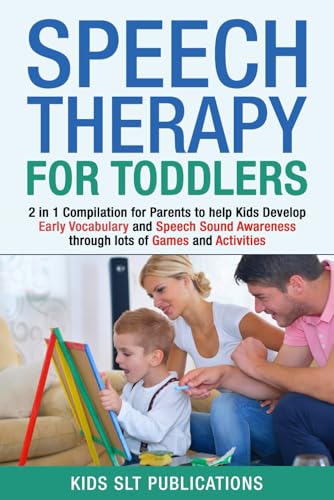
Children engage in back-and-forth chats, using pronouns correctly. Milestones:
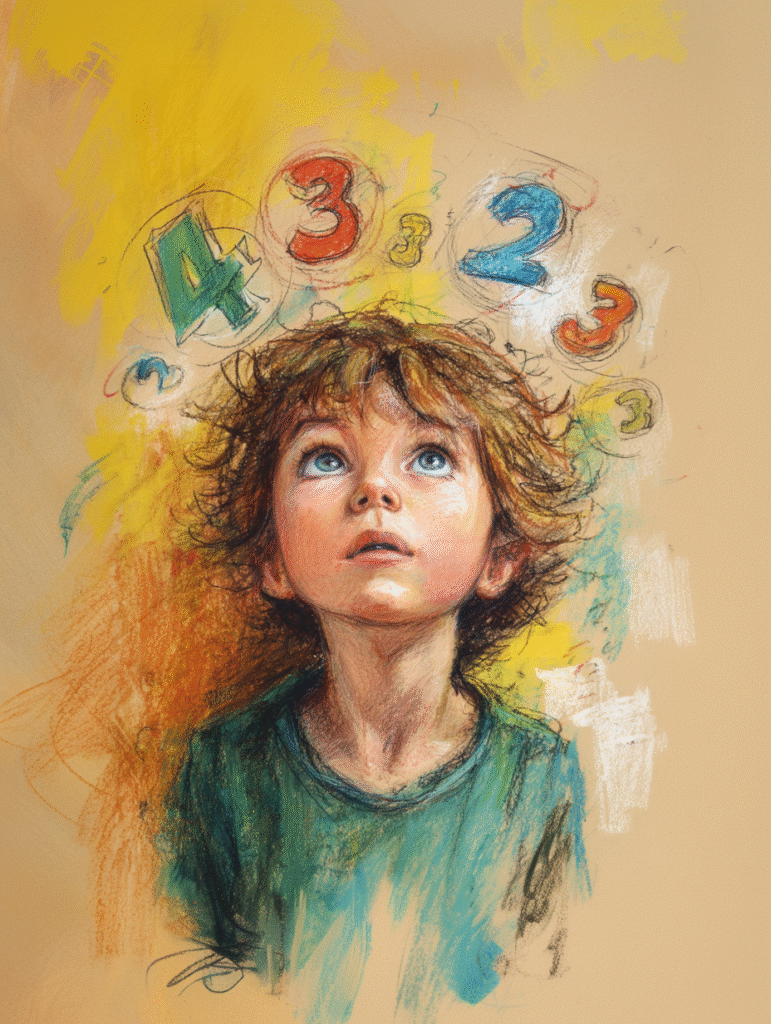
- Sentences of 4+ words; tells simple stories.
- Names colors; counts to 4.
- Understands opposites (“big/small”).
- 90% speech intelligible.
Piaget’s intuitive thought supports abstract concepts like time. Recent data emphasizes peer play’s role in pragmatics.
Activity: “What’s Wrong Silly Story” (Negation + Problem Solving) Materials: Picture book or flannel board with removable pieces.
How to play:
- Begin telling a familiar story but deliberately make absurd mistakes: “The cow jumped over the SUN!”
- Child’s job is to shout “No! That’s wrong!” and correct you: “Cow jumped over the MOON!”
- Increase complexity: “The three pigs built a house of CANDY!” → Child: “No! House of bricks!”
- After 5–6 corrections, let child be the “silly storyteller” and you correct them.
Evidence: Mastery of negation and correction at 36–48 months is strongly linked to metalinguistic awareness and reading readiness (McCabe & Marshall, 2023).
4 to 5 Years: Storytelling Savvy
Full narratives emerge, with clear beginnings and ends. Milestones:
- Complex sentences; recounts events in order.
- Uses future tense (“I will go”).
- Understands “same/different”; rhymes words.
- Nearly adult-like grammar.
Vygotsky’s inner speech internalizes for self-guidance. 2023 findings link preschool vocab to later literacy.
Game: “Tomorrow’s Adventure Planner” (Narrative + Future Tense + Planning + Rhyming)
Goal: Children practice building full stories with clear beginning–middle–end structure, heavy use of future tense (“I will…”, “Then we will…”), sequencing words (first, next, then, after that, finally), conjunctions (because, so, if, when), and optional rhyming for extra fun.
Materials (very simple):
- A big sheet of paper or small whiteboard
- Markers or crayons
- Optional: toy figures, stuffed animals, or printed pictures of places/people (park, zoo, grandma, spaceship, etc.)
How to play (10–15 minutes, repeatable daily)
- Set the magic rule Tell the child: “Today we are time travelers! We are going to plan a SUPER fun adventure that will happen TOMORROW. We have to tell the whole story of what we WILL do, from beginning to end.”
- Adult starts the story with a future-tense sentence Example: “Tomorrow I WILL wake up early BECAUSE I’m so excited.”
- Child continues with the next sentence (adult helps/scaffolds as needed) Child: “First I WILL eat pancakes with chocolate chips.” Adult: “Then what will we do AFTER we eat?” Child: “Then we WILL put on our shoes SO we can go to the zoo.”
- Keep going turn-by-turn until you have a complete little story (usually 6–10 sentences). Encourage these elements naturally:
- Future tense (“will”)
- Sequencing words (first, next, then, after, before, finally)
- Conjunctions (because, so, but, if, when)
- Same/different comparisons (“The elephant will be big, but the mouse will be tiny”)
- Rhyming for bonus fun (“We will see a bear who has lots of hair!”)
5.Draw or stick a quick picture for each sentence as you go (child can draw or choose stickers). This creates a visual “story map” strip from left (beginning) to right (end).
6. Final step – the dramatic retell Child stands up and retells the entire adventure from memory while walking along the picture strip like it’s a path: “Tomorrow I will wake up early because… First I will… Then…” This practices full narrative recall and nearly adult-like grammar in an excited, meaningful context.
- Switch roles (child becomes the “time-travel planner” and you repeat their sentences back, deliberately making tiny mistakes sometimes so they can correct you – great for self-monitoring and inner speech).
Why this works so well for 4–5 years
- Future tense is used constantly and meaningfully (rare in most games).
- Planning a real or pretend event tomorrow gives a natural reasons for conjunctions and sequencing.
- The visual strip reinforces beginning–middle–end structure.
- Rhyming can be sprinkled in playfully without forcing it.
- Retelling the whole story boosts working memory and narrative coherence—strong predictors of later literacy (2023 longitudinal studies confirm this).
- The child feels like they’re actually deciding tomorrow’s fun, so motivation is sky-high.
Conclusion: Nurturing Every Voice
Speech development is a tapestry woven from biology, interaction, and play—celebrating each thread makes the whole stronger. By tuning into your child’s cues and incorporating these joyful exercises, you’re not just teaching words; you’re building bridges to expression and connection. If milestones feel out of reach, reach out to an SLP; tools like ASHA’s checklists can guide next steps. Here’s to the stories your little one will tell.
Some of the links on this blog are affiliate links, which means I may earn a commission if you make a purchase using the link. This comes at no additional cost to you. I only recommend products or services that I believe in and think will be valuable to my readers. I am also hoping you might consider purchasing my book 101 Art Therapy Exercises for Children: A Practical Guide for Parents and Mental Health Professionals. Thank you for supporting this blog!

Rostislava Buhleva-Simeonova is a psychologist, art therapist, and gamificator. She has worked with children, adults, and the elderly within various therapeutic programmes over the past eight years, all the while providing the much-needed playful twist that art and gamified experiences can bring to this sometimes uneasy setting. But it wasn’t until the birth of her daughter, Aurora, that this work took on an even deeper personal meaning. With her academic and real-life experience, honed through numerous trainings and sessions, she is currently authoring books and articles in the field of child psychology and development, offering expertise in art and play therapy to guide parents and caregivers, as well as professionals in the fields of social work and mental health, throughout various pivotal moments in children’s lives. Last but not least, all of her books have been “peer-reviewed” by her daughter, who testifies to the efficiency of these methods.
References
- American Speech-Language-Hearing Association (ASHA). (2023). ASHA’s Developmental Milestones: Birth to 5 Years. https://www.asha.org/public/developmental-milestones/
- Bergelson, E., et al. (2024). “Everyday Language Growth in Diverse Young Children.” Proceedings of the National Academy of Sciences. https://www.psypost.org/global-psychology-study-overturns-conventional-wisdom-on-language-development-in-children/
- Chomsky, N. (1957). Syntactic Structures. Mouton.
- Foushee, R., & Srinivasan, M. (2023). “Active Learning in Language Development.” Current Directions in Psychological Science. https://journals.sagepub.com/doi/full/10.1177/09637214221123920
- National Institute on Deafness and Other Communication Disorders (NIDCD). (2025). Speech and Language Developmental Milestones. https://www.nidcd.nih.gov/health/speech-and-language
- Piaget, J. (1959). The Language and Thought of the Child. Routledge.
- Vygotsky, L. S. (1978). Mind in Society. Harvard University Press.
- Weisleder, A., & Fernald, A. (2013). “Talking to Children Matters.” Psychological Science. https://pmc.ncbi.nlm.nih.gov/articles/PMC5510534/