

Key Milestones in Babies and Toddlers (Birth–3 Years)
Early development from birth through toddlerhood is a period of rapid and profound growth across all areas of development, including cognitive, emotional, social, sensory, and physical domains. These foundational years are shaped by a child’s relationships, environment, and everyday interactions, laying the groundwork for future learning, emotional wellbeing, and self-regulation.
Cognitively, babies and toddlers learn primarily through their senses and movement. Infants begin by exploring the world through touch, sight, sound, and taste, gradually developing skills such as object permanence, cause-and-effect understanding, and early problem-solving. As toddlers grow, they become increasingly curious, experimenting through repetition—dropping objects, stacking, filling and emptying, and imitating adult actions. Research consistently highlights the importance of play-based, responsive environments in supporting healthy brain development during these early years.
Emotionally, babies and toddlers are learning how to experience, express, and regulate feelings with the support of caregivers. Infants rely entirely on co-regulation, using close relationships to feel safe, soothed, and understood. Over time, toddlers begin to recognise emotions in themselves and others, though they still need consistent, calm adult support to manage big feelings. Gentle, attuned caregiving—through naming emotions, offering comfort, and maintaining predictable routines—plays a crucial role in the development of emotional security and resilience.
Social development during this stage is rooted in attachment and connection. Babies form strong bonds with their caregivers, which provide a secure base for exploration. Toddlers gradually become more aware of others, engaging in parallel play and early social interactions. These early experiences help shape empathy, trust, and communication skills. Physically, development is marked by rapid progress in both gross and fine motor skills, from rolling and crawling to walking, climbing, grasping, and early self-feeding.
Understanding these early milestones allows parents and caregivers to offer developmentally appropriate support without rushing or overstimulating children. Trusted resources such as developmental frameworks and early childhood research can help guide caregivers in nurturing growth through simple, responsive, and play-based interactions that honour each child’s individual pace.
Recommended Books for Parents and Caregivers
This section includes a thoughtfully curated selection of book recommendations for babies and toddlers that I have found especially valuable throughout my work as a therapist. These books gently support early developmental milestones such as emotional regulation, attachment, sensory exploration, early communication, and empathy. Rooted in child psychology and informed by evidence-based, gentle parenting approaches, they provide meaningful opportunities for connection, co-regulation, and shared attention. These books help caregivers support emotional safety, language development, and early emotional understanding in ways that feel calm, nurturing, and developmentally appropriate during the earliest years of life.
Product Recommendations for Sensory Play and Early Development
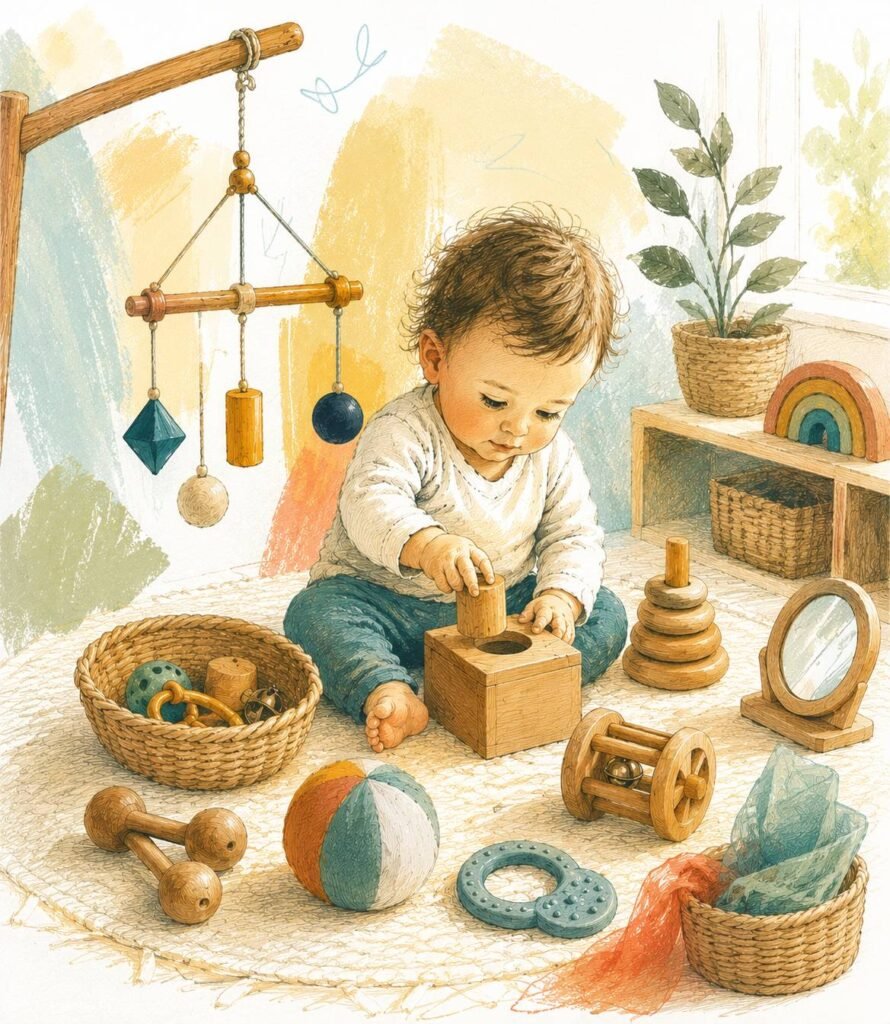
This section highlights carefully chosen toy and product recommendations designed to support babies and toddlers through developmentally appropriate, sensory-rich play. Inspired by Montessori principles and informed by play and art therapy approaches, many of these items are ones I use in my own home and have personally chosen for my daughter. Each product encourages exploration, movement, and hands-on learning while supporting key milestones such as sensory integration, motor development, early problem-solving, and emotional regulation. Grounded in child psychology and respectful, child-led play, these materials invite babies and toddlers to explore their world safely and confidently, fostering curiosity, independence, and a sense of emotional security from the very beginning.
