
As new parents, you might sometimes feel like your little one is growing too fast—or not fast enough! Between the first smiles, first giggles, and all those firsts you’ll cherish forever, your baby is quietly making huge strides in their development.
This period, from birth to around two years old, is what child psychologists call the sensorimotor stage. Don’t let the fancy term fool you—it just means that babies are learning by interacting with their world through their senses and movements. It’s a time of massive cognitive growth that sets the stage for everything that comes later.
So, what exactly are these milestones you hear about, and how can you support them? Let me walk you through what to expect at each stage, give you some practical ideas for play, and offer a few recommendations for toys and books to nurture your baby’s development.
The First Two Months: Newborn Reflexes and the Beginnings of Connection
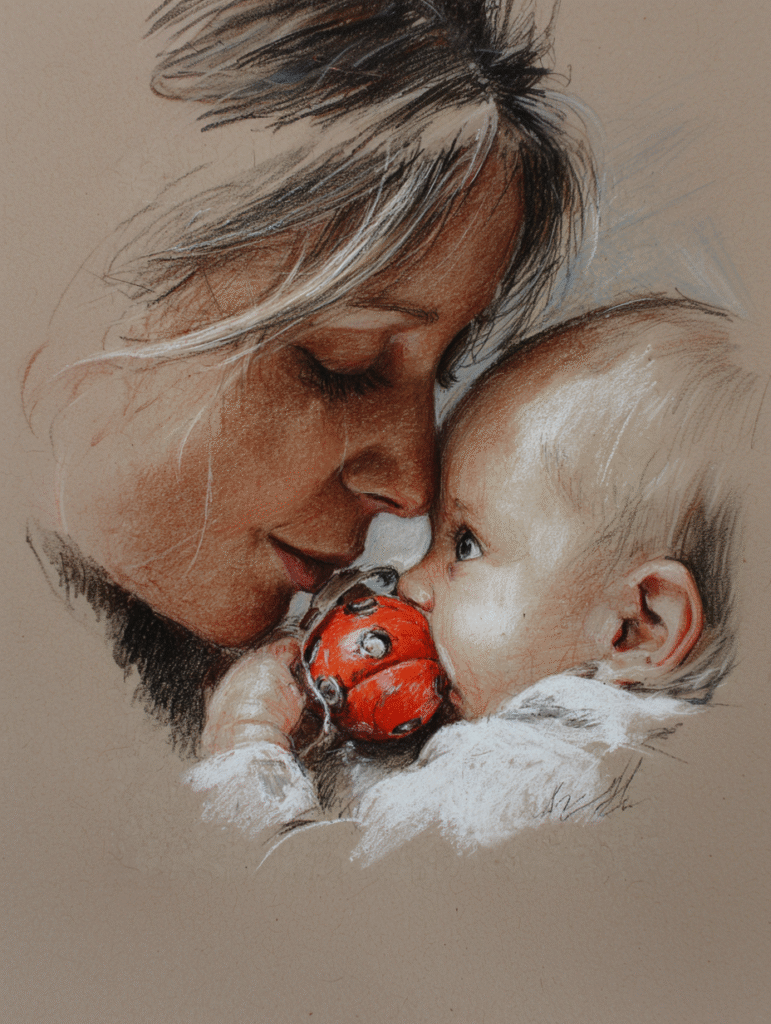
Your newborn is adjusting to the world. At first, it’s all about reflexive actions—sucking, grasping, and even the “startle reflex” when they hear a loud sound. But it’s in these small moments that your baby begins to figure out how to engage with you and their environment.
What’s happening: Newborns might not seem like they’re learning much, but they’re constantly making sense of the world through their senses—especially vision, which is still developing. At this age, they’ll be able to focus on your face and some basic high-contrast shapes. They’ll likely start responding to your voice with tiny smiles, coos, or even eye contact.
Play Idea: You gently hold your newborn in your arms, close enough for their eyes to focus on your face. With a soft smile, you slowly bring a brightly colored, high-contrast toy close to their line of sight, moving it in a slow circle. As the toy moves, you softly speak or hum, providing gentle auditory stimulation that matches the movement. You pause every few seconds, allowing your baby to track the toy and listen to your voice. As the toy rests in one spot, you gently shake it to make a quiet sound, encouraging them to focus on the noise. This simple back-and-forth of motion and sound helps your baby start to connect visual and auditory cues, all while deepening your bond through responsive, calming play.
Toy Recommendation:
For newborns in their first two months, it’s all about engaging their senses and fostering early learning through simple, sensory-rich toys. At this stage, babies are starting to focus on contrasting shapes and colours and are responding to sounds. Toys that combine both visual and auditory stimulation are ideal as they help babies track movement, strengthen their visual focus, and encourage interaction with their environment. These toys support all of these developmental milestones beautifully.


2 to 4 Months: Beginning to Repeat What Feels Good
As your baby grows, they’ll begin discovering that they can repeat actions that bring them pleasure. This might look like sucking on their thumb, kicking their legs, or simply staring at a favorite toy.
What’s happening: This stage is all about learning to use their body intentionally. They might not realize it yet, but they’re beginning to form early problem-solving skills. Babies will also start to show more interest in faces and begin to smile socially in response to you.
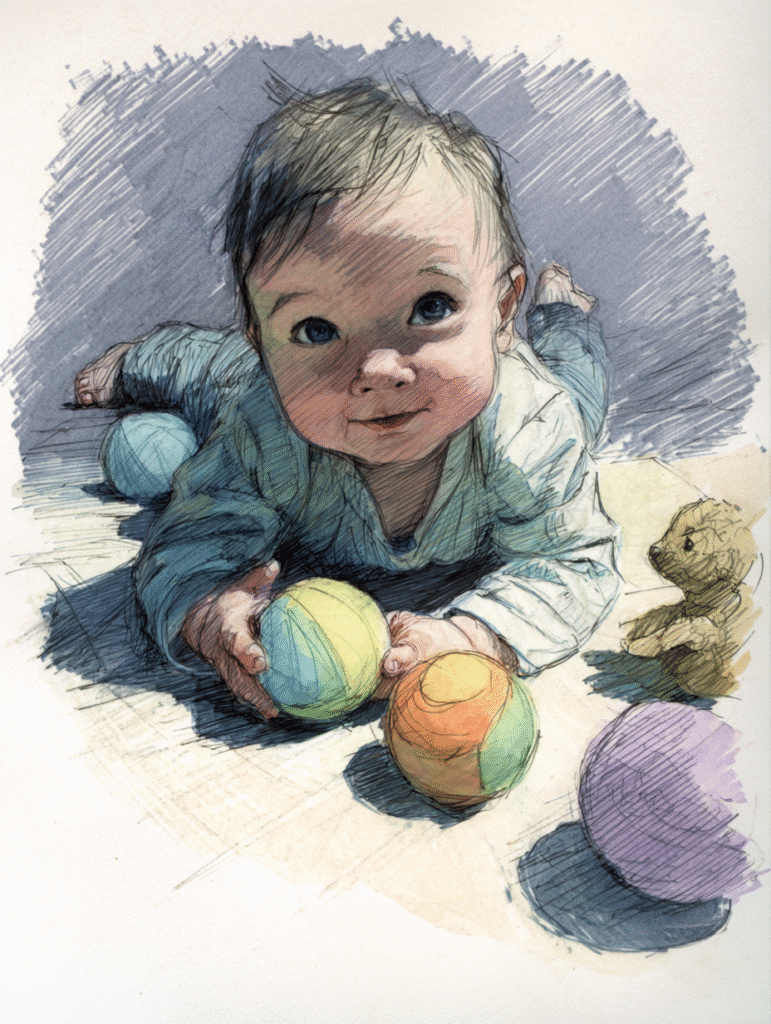
Play Idea: During tummy time, you place your baby gently on the soft blanket, positioning a few colorful, high-contrast toys just out of reach. With a gentle smile, you encourage them to stretch and reach for one of the toys. As their little hands grasp it, you shake the toy softly or let it make a soft sound, delighting in their curiosity and their growing awareness of cause and effect. Each time they drop the toy, you encourage them to reach for it again, reinforcing the joy of repetition and the excitement of discovery. As they practice reaching, you move a bit closer, offering playful expressions and eye contact to engage their social development. The toys, with their varied textures and sounds, captivate their senses, while you celebrate each successful grasp and playful moment. This cycle of reaching, grabbing, and repeating not only strengthens their muscles but also deepens their understanding of their actions, all while fostering a sense of connection with you.
Toy Recommendation:
Tummy time is your best friend here. It encourages your baby to strengthen their muscles, so they’ll eventually roll, sit, and crawl. At this stage, your baby is becoming more aware of their actions and the world around them. Toys that stimulate vision, touch, and hearing are perfect for helping them develop these senses while strengthening essential muscles for future movements like rolling and reaching.


4 to 8 Months: Exploring the Cause and Effect World
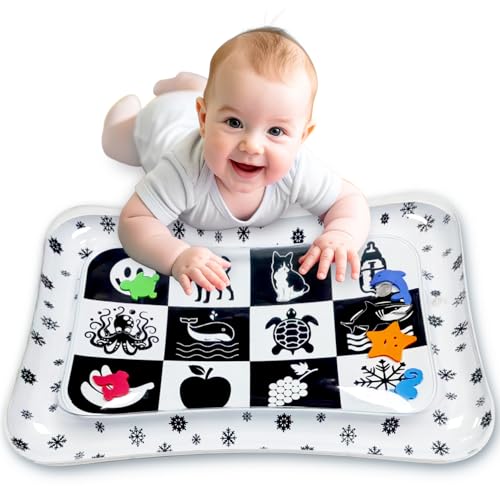
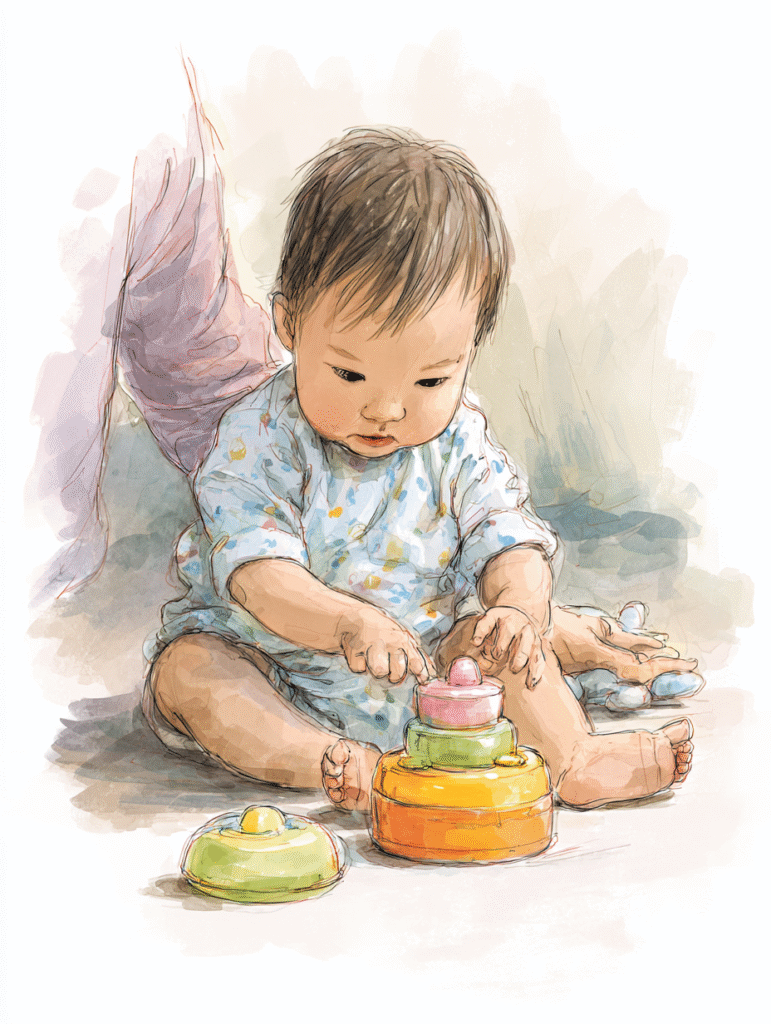
Now that your baby’s a bit older, they’re ready to start making connections between their actions and what happens around them. This is when they start experimenting with cause and effect—like shaking a rattle to hear it make noise, or dropping things just to see if they’ll fall.
What’s happening: You might notice your baby becoming more aware of their surroundings. They’ll likely be trying to sit up, looking around, and might even begin babbling to you. The real magic at this stage is that they’re learning that they can affect the world around them. That rattle? It didn’t just make a sound on its own—it was their action that caused it!
Play Idea: Sitting on the floor, you place your baby in front of a brightly colored toy with a large button on it. As they sit up, still a bit wobbly, you guide their hand to press the button, and the toy makes a cheerful sound or pops up with a fun surprise. Their eyes light up in wonder as they realize that it was their action—the pressing of the button—that caused the toy to respond. Encouraged by the result, they reach for the button again, eager to make the toy react once more. After a few successful presses, you let them explore independently, smiling as they experiment with different motions to make the toy work. With each game and action, your baby’s understanding of cause and effect grows, and so does their sense of accomplishment as they begin to see that their actions truly shape the world around them.
Toy Recommendation:
At the 4 to 8-month stage, your baby is becoming more aware of their surroundings and learning that their actions can produce outcomes—perfect for interactive toys and musical play! At this age, babies are starting to develop cause-and-effect understanding, where they begin to realize that pressing a button or moving a part of a toy will create a sound, light, or movement.


8 to 12 Months: Problem Solvers in the Making
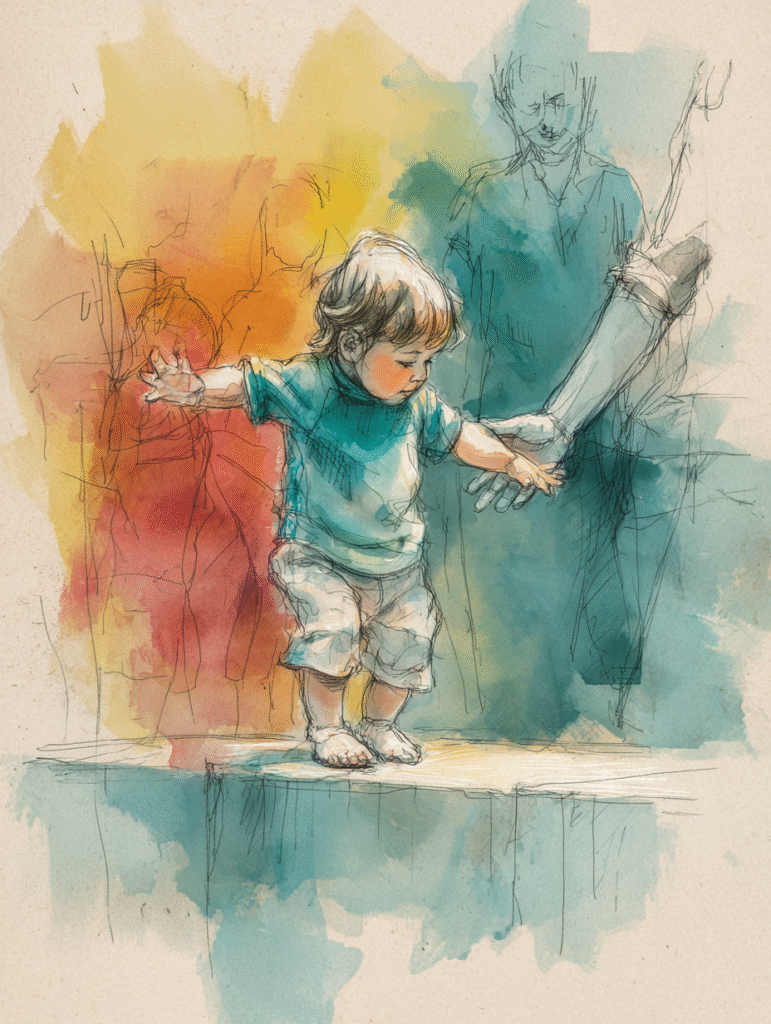
By now, your baby is getting pretty good at coordinating actions to solve problems. If a toy is just out of reach, they’ll figure out a way to move or roll to get it. You’ll also notice they’ve mastered sitting and are probably starting to explore crawling.
What’s happening: Babies at this stage are building on everything they’ve learned so far. They now understand that objects exist even when they’re hidden—a big deal in terms of cognitive development! This ability to track objects is a precursor to more complex thinking, like memory.
Play Idea: As your baby sits on the floor, you place a brightly colored toy under a plastic cup, making sure they can see it but not reach it easily. With a playful smile, you show them how to lift the cup to reveal the hidden toy. Their eyes widen in curiosity as they watch you, and after a moment of thought, they start reaching for the cup themselves, eager to discover the toy inside. You encourage their exploration with soft words of praise as they try lifting the cup on their own, realizing that their actions have a purpose. Once they successfully retrieve the toy, you can repeat the game a few times, offering the cup in different positions or slightly out of their reach to challenge their problem-solving skills. For a more physical challenge, place the toy just beyond their grasp and watch as they figure out how to roll or crawl to get it. With each successful problem-solving moment, your baby’s confidence grows, and you can see their cognitive skills and coordination blossoming. This simple game, combining both mental and physical effort, supports their developing motor skills and their growing understanding of the world around them.
Toy recommendation:
At this stage, babies are building on their motor skills and cognitive development. They’re learning how to coordinate their actions to solve problems, like reaching for a toy just out of their grasp or discovering how objects can be manipulated to achieve results. The key here is to offer toys that challenge them to think, move, and explore their environment, fostering both their fine and gross motor skills.


12 to 18 Months: Experimenting and Discovering New Ways to Play
This is the stage when toddlers begin to experiment with the world around them, their curiosity really starting to shine. They’re actively exploring and learning through trial and error, and play becomes more complex as they start to imitate and interact in new ways.
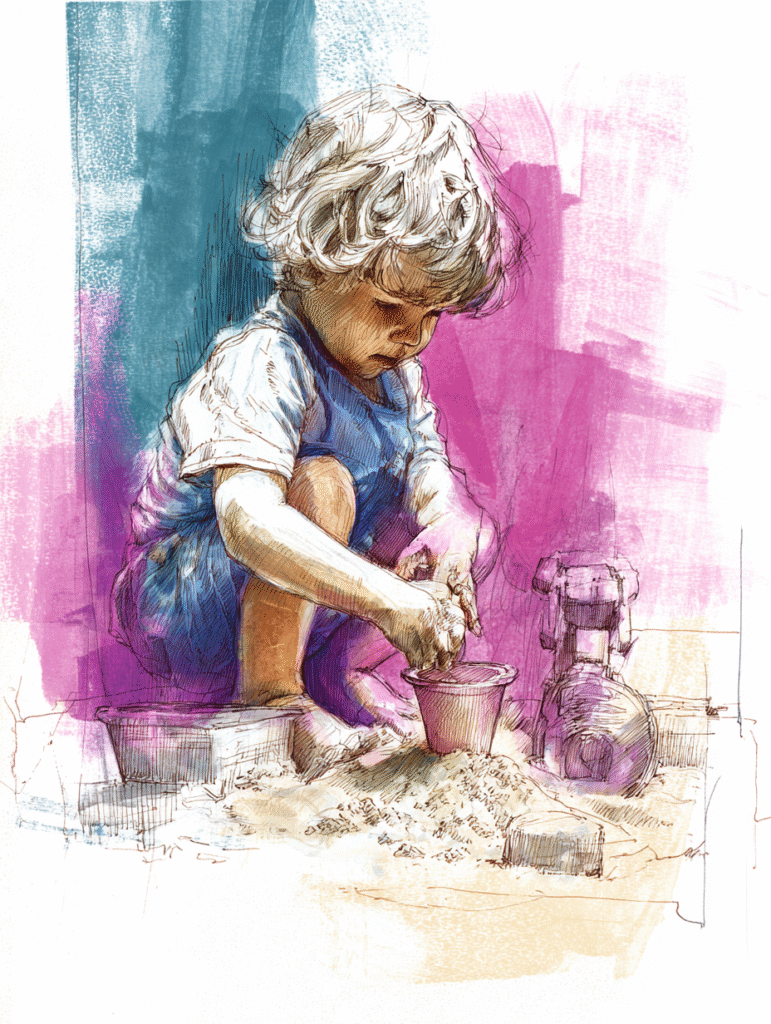
What’s happening: At this stage, your toddler is likely walking, and they’re becoming more confident in their movements. Their playtime becomes more imaginative, with activities like pretending a block is a phone or using a spoon to feed their favorite stuffed animal. They’re discovering cause and effect, but now with a bit of flair, adding their own creativity to every new exploration.
Play Idea: You decide to set up a playful, sensory-rich environment with a small tub of sand, a few plastic shovels, and a couple of small toys. As your toddler approaches, you show them how to scoop the sand into a cup and then dump it out, delighting in the simple act of pouring. They eagerly imitate your actions, grabbing their own shovel to scoop and pour, watching the sand slip through their fingers. Then, you add a plastic animal to the mix, showing them how it can be buried in the sand, prompting them to explore the idea of hiding and finding objects. The tactile experience of sand encourages them to feel and manipulate textures, while the repetitive action of scooping and pouring reinforces their understanding of cause and effect. As they play, their imagination sparks: perhaps the plastic cup becomes a “bowl” for their stuffed animal.
Toy recommendation:
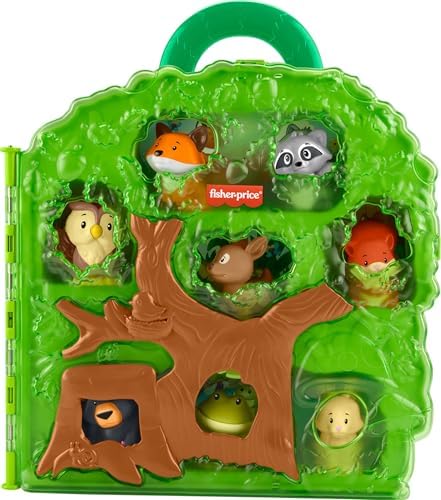
For toddlers between 12 to 18 months, interactive learning toys are ideal for sparking their curiosity and supporting their rapid development. At this stage, babies are becoming more mobile, experimenting with cause and effect, and exploring their environment through hands-on play.


18 to 24 Months: The Magic of Imagination and Pretend Play
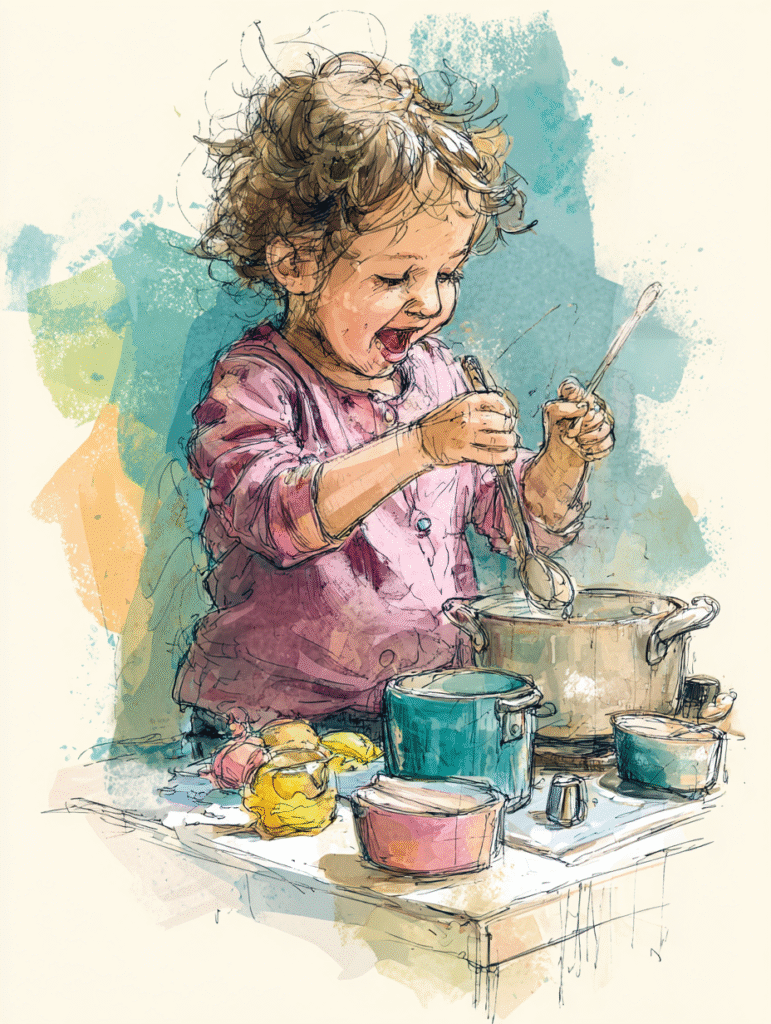
Welcome to the world of pretend play! Your toddler is now able to mentally represent objects and people. They start using their imagination more—pretending to cook, feed dolls, or even imitate your daily routines.
What’s happening: Toddlers now understand that things can stand for something else. That spoon? It can be a magic wand. That blanket? It can be a superhero cape. They’re discovering that they can pretend to be someone else, which is an important step in developing empathy and creativity.
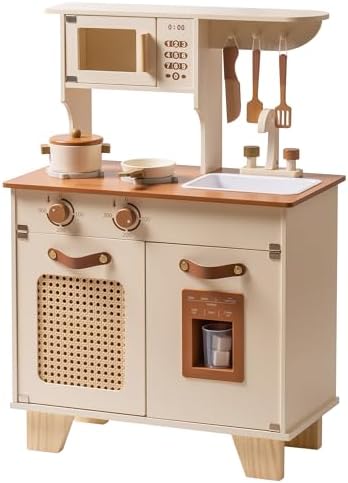
Play Idea: Your toddler, now walking with newfound confidence, is ready to dive into the world of pretend play. You set up a little toy kitchen in the corner of the room, placing a plastic spoon, some pots, and a pretend food set on the floor. With a giggle, your toddler picks up the spoon and starts stirring an imaginary pot, then offers you an imaginary taste, “Here, Mommy, yummy!” They are mimicking the daily routines they observe, adding their own flair to the action. You play along, pretending to savor the imaginary dish, which sparks their excitement. They begin to move through the motions with ease, stirring, serving, and even pretending to wash the dishes, as they act out what they’ve seen you do. As they play, their creativity grows, and the kitchen set becomes a place for endless storytelling. This kind of pretend play is more than just fun; it’s helping them understand the world around them and practice social roles, empathy, and problem-solving. By joining in and offering your own playful responses, you’re encouraging their imagination while bonding over shared moments of creativity.
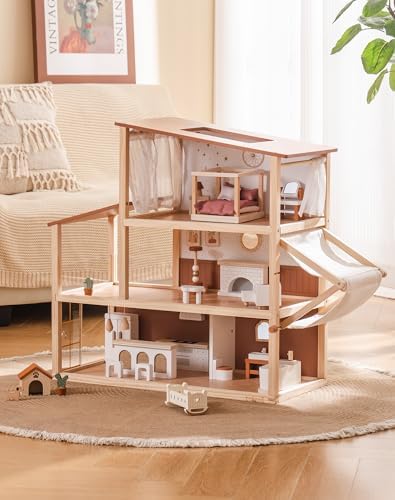
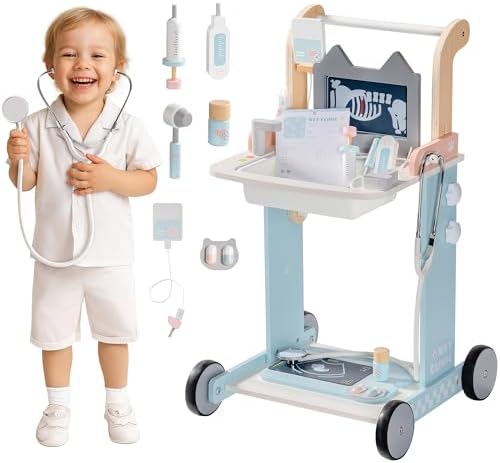
Toy Recommendation: Pretend playsets like a toy kitchen or a dollhouse are perfect at this stage.
Supporting Your Baby’s Development Beyond the Basics
Every moment in the sensorimotor stage offers an opportunity for connection. The more you engage with your baby through play and communication, the more their brain develops. Psychologists like Piaget and Vygotsky emphasize that babies learn best when they are actively engaged with their caregivers, so talk to your baby, follow their lead, and celebrate their achievements—no matter how small they seem.
Conclusion: Celebrate Each Step
Your baby is learning at an incredible rate during these early years, and each milestone is a stepping stone toward the complex thinking, problem-solving, and creativity they’ll develop later on. By providing them with safe exploration, engaging activities, and plenty of love, you’re giving them the best possible foundation for all the learning that will come in the years ahead.
So, here’s to the messy moments, the smiles, the little victories, and the big leaps in learning. These early stages may be short, but they’re filled with so much magic. Enjoy each one to the fullest!
Some of the links on this blog are affiliate links, which means I may earn a commission if you make a purchase using the link. This comes at no additional cost to you. I only recommend products or services that I believe in and think will be valuable to my readers.

Rostislava Buhleva-Simeonova is a psychologist, art therapist, and gamificator. She has worked with children, adults, and the elderly within various therapeutic programmes over the past eight years, all the while providing the much-needed playful twist that art and gamified experiences can bring to this sometimes uneasy setting. But it wasn’t until the birth of her daughter, Aurora, that this work took on an even deeper personal meaning. With her academic and real-life experience, honed through numerous trainings and sessions, she is currently authoring books and articles in the field of child psychology and development, offering expertise in art and play therapy to guide parents and caregivers, as well as professionals in the fields of social work and mental health, throughout various pivotal moments in children’s lives. Last but not least, all of her books have been “peer-reviewed” by her daughter, who testifies to the efficiency of these methods.