
In play therapy, anger is treated as a messenger with something important to say and anger issues in children as energy that can be channelled safely. Understanding anger as a signal rather than a problem to eliminate is central to anger management therapy for children. Classical developmental theory emphasizes that play is the child’s primary way to understand the world (Piaget, 1962), and attachment theory highlights safe relationships as essential for emotional regulation (Bowlby, 1969). Modern neuroscience shows that self-regulation develops through repeated experiences of co-regulation in safe environments (Siegel, 2012; Porges, 2011). Helping kids explore anger through the lens of the id, ego, and superego (Freud, 1923) allows them to understand raw impulses, practice self-regulation, and integrate their internal moral and reflective guidance.
These interventions are designed to help children practice anger management techniques for children while improving emotional awareness, problem-solving, and communication. They provide hands-on, playful ways to explore feelings safely.
Understanding Anger in Children: What Causes Anger Issues in Children
Before exploring interventions, it’s important to understand what causes anger issues in children. Anger often arises from unmet needs, frustration, fear, or feeling unheard. Stress at home, school, or with peers can intensify these feelings. Sometimes, anger is protective, signalling that a child feels unsafe or overwhelmed. Learning how to help children with anger issues starts with understanding these underlying causes. Play therapy provides children with structured ways to express these feelings safely and build coping skills.
1. Anger Has a Voice
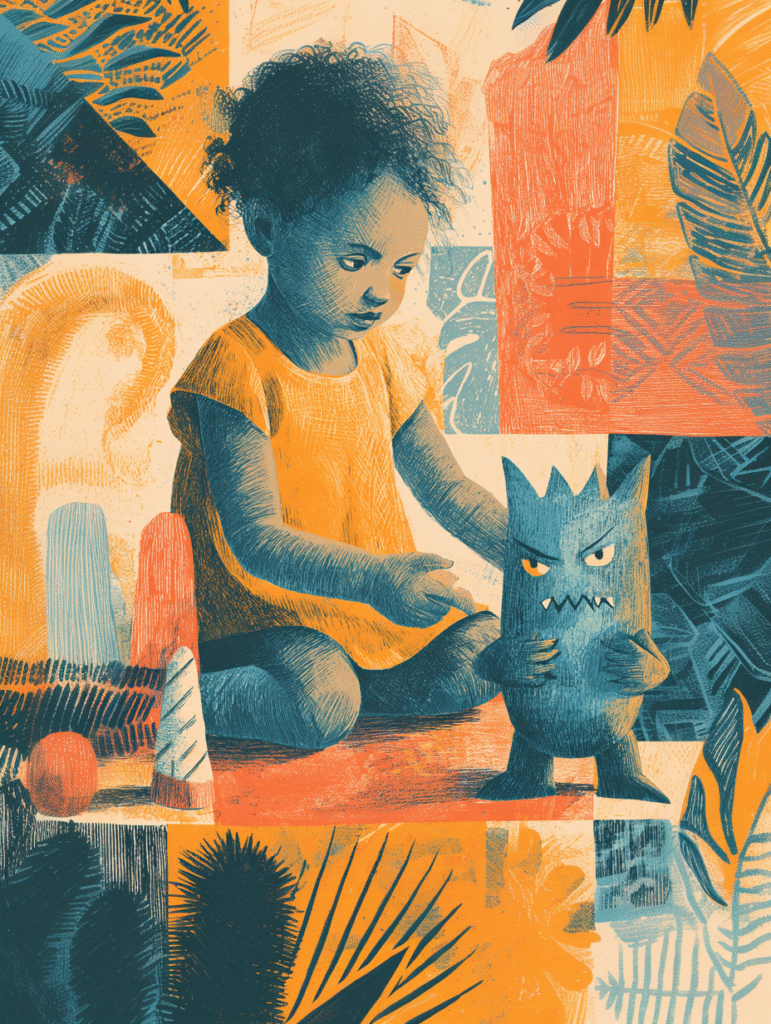
Children are invited to give their anger a tangible form using puppets, miniature figures, masks, or a sculpted monster. The key principle is that anger is a messenger with an important message, and this dialogue allows the child to reflect on and regulate their emotions safely. In this session, the figure represents the child’s anger, and as the child engages with it, they take on the role of the superego—the internal voice that observes, guides, and soothes.
The child represents the intensity, triggers, and expressions of anger in a safe, externalized way. This enactment allows the child to explore the full experience of anger without being overwhelmed. Through this interaction, children externalize their anger while practicing self-reflection and self-regulation as the guiding voice of the superego.
Questions to ask: “What does this figure feel?” “How can you help it calm down?” “What does it need to feel safe and heard?”
Parent guidance: Observe without judgment and gently invite reflection. Reinforce that anger is natural, and the superego voice is there to help channel it constructively.
Essence of the session: By taking on the role of the superego, the child learns to observe, soothe, and guide their anger, balancing raw emotional energy with internal moral and reflective guidance. This lays the foundation for healthy emotional regulation.
2. Letter From Anger
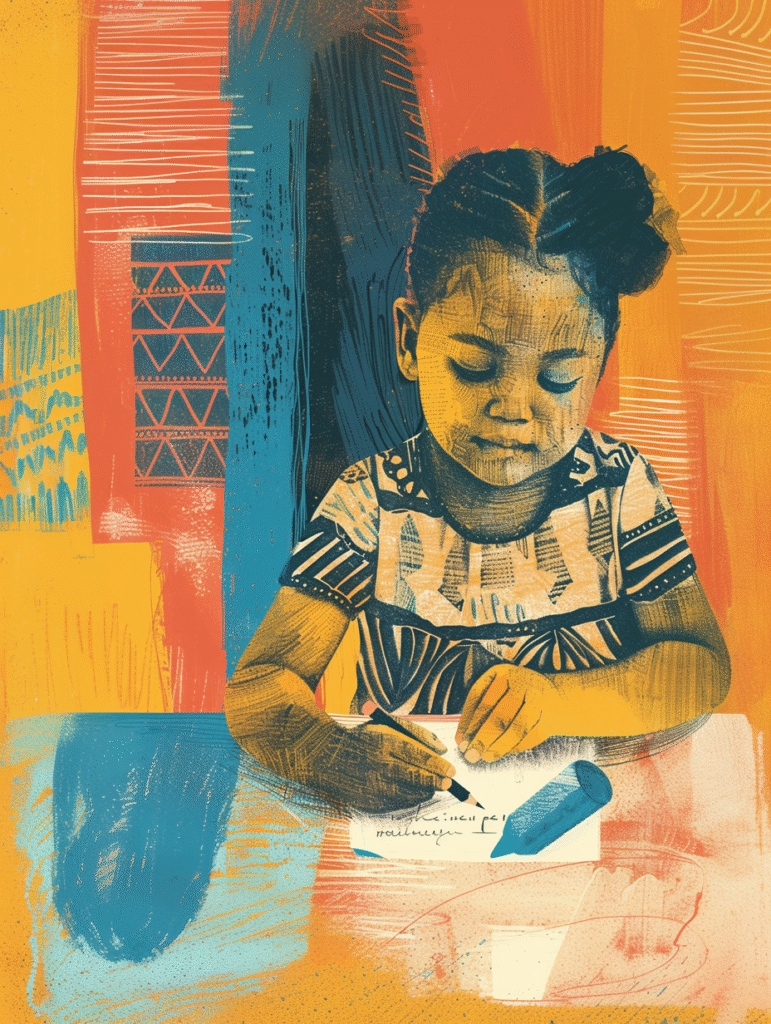
Letter From Anger transforms strong feelings into narrative expression. Children either dictate or write a letter “from their anger” describing what happened, what it feels like, and what it wants. The therapist reads the letter aloud and may model a reflective, validating response. After this, the child may write a letter back from themselves or a supportive figure, practicing safe and assertive communication.
Questions to ask: “If anger could talk to someone, what would it say?” “What does it need to feel understood?” “How can you respond without hurting yourself or others?”
Parent guidance: Encourage your child to write or draw their feelings at home. Reflect the emotion rather than debating facts. You might say: “I hear that this situation made you frustrated. That makes sense.” Avoid criticizing the intensity of their feelings.
Essence of the session: This intervention converts intense emotions into structured communication, reducing overwhelm and fostering emotional integration. Narrative reflection is a research-backed way to help children understand and regulate strong feelings (Bruner, 1990).
3. Anger Backpack
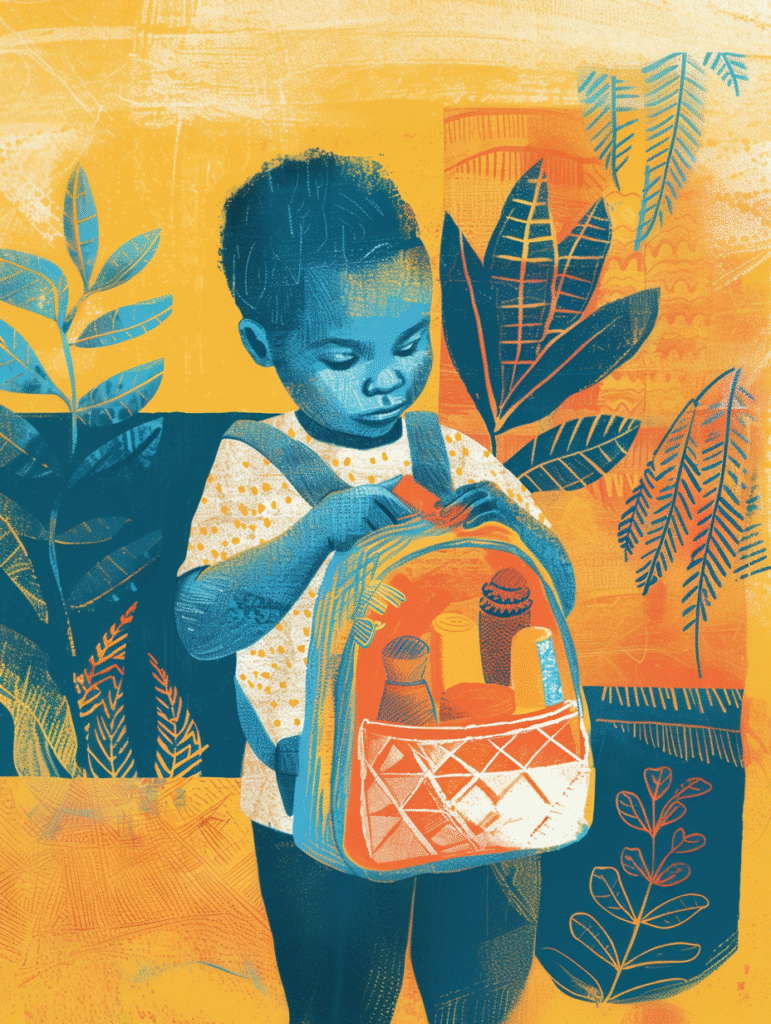
Anger Backpack helps children explore what their anger carries beneath the surface. Children fill a symbolic backpack—real or imaginary—with objects, drawings, or miniatures representing hidden feelings like fear, sadness, frustration, or hurt. Together with the therapist, the child examines which items are too heavy to carry alone and shared safely, and which can be set aside temporarily.
Questions to ask: “What is in your backpack right now?” “Which feelings need attention?” “Which can you share or put down?”
Parent guidance: At home, notice the underlying emotions behind behaviors. You might say: “I see that you are really frustrated. What do you need to feel better?” Encourage discussion of feelings without focusing solely on actions or punishment.
Essence of the session: Anger often masks deeper needs. This session allows children to externalize those needs, building self-awareness and emotional literacy while reinforcing the idea that anger is manageable.
4. Body Map of Anger
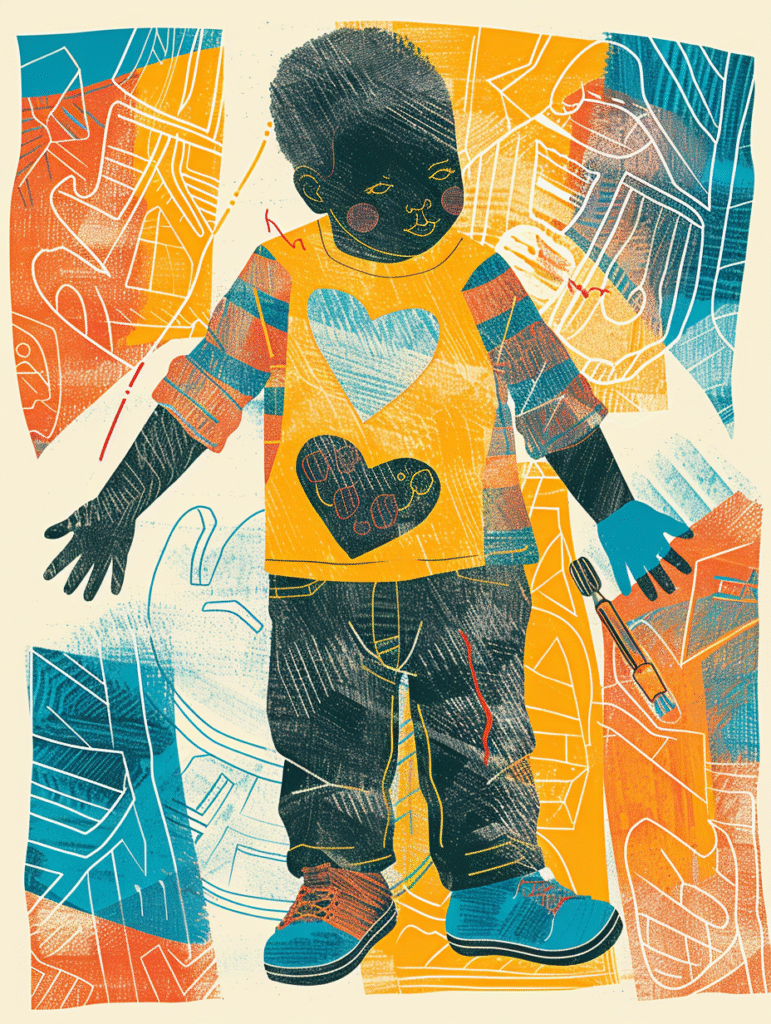
Body Map of Anger teaches children to notice how anger manifests physically. Children create an outline of their body (you can use a template) and mark where they feel anger—tight fists, a racing heartbeat, tense shoulders, a clenched jaw, or butterflies in the stomach. They then explore what happens before these sensations arise and which calming strategies help. Calming techniques, like deep breathing, gentle stretching, or progressive muscle relaxation, help children lower their physiological arousal and practice self-soothing before anger escalates. Active techniques, such as jumping, dancing, or stomping, allow children to safely release built-up energy and tension, making it easier to transition to calm regulation afterward. Children can experiment with different strategies to find what works best for their body.
Questions to ask: “Where do you feel anger first?” “What does your body want you to do?” “Which strategies calm your body when it feels tense?” “What helps your heartbeat slow down or your muscles relax?”
Parent guidance: Help your child notice these early signs at home. You could say: “I see your shoulders are tight. Can you take a deep breath with me?” or “Your hands are clenched—try stretching them slowly and see how it feels.” Encouraging awareness of bodily cues and experimenting with calming strategies strengthens emotional self-regulation and reduces reactive outbursts.
Essence of the session: This intervention links physical sensations to regulation strategies, giving children tools to respond before anger escalates. Body awareness, combined with practical calming techniques, supports early self-regulation and co-regulation.
5. Red Light Signals
Red Light Signals helps children see anger as a process with warning signs. Using a stoplight model, children identify what calm feels like (green), what early warning signs look and feel like (yellow), and what happens when anger escalates (red). Yellow-light signals can include physical cues like a racing heart, tight fists, or tense shoulders; emotional cues like frustration, irritability, or feeling “hot inside”; and behavioural cues like fidgeting, clenching teeth, raising the voice, or pacing. Red-light signals often include yelling, throwing objects, hitting, or storming out.
Children then practice responding safely at the yellow stage, using strategies such as self-talk, grounding movements, deep breaths, or asking a trusted adult for help.
Questions to ask: “What are your yellow-light signals?” “What are the physical signs your body shows?” “What emotions do you notice when you are getting frustrated?” “Who can help you when you feel this way?” “What do you need to stop red-light anger?”
Parent guidance: Notice early cues and intervene with connection rather than criticism. Reinforce the child’s ability to regulate at the yellow stage. For example: “I notice your voice getting louder. Let’s take a break together.” You can also point out subtle signals: “I see your hands are clenched—let’s stretch them slowly.”
Essence of the session: Recognizing early warning signs prevents escalation. Children learn that anger can be managed proactively, and parents play a critical role in early intervention by helping them identify and respond to these signals before they become overwhelming.
6. Anger Compass
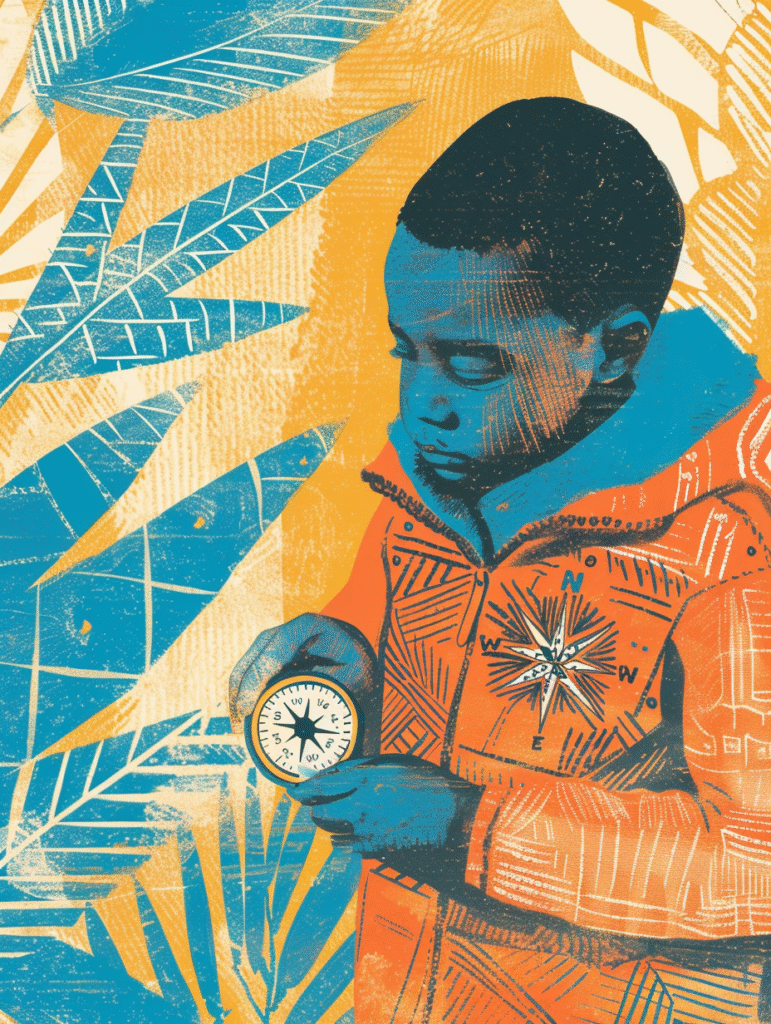
Anger Compass reframes anger as directional guidance. Children create a compass showing different paths anger might take: protecting themselves, setting boundaries, asking for help, or stepping away. You can use a a real compass and place it on top of a piece of paper where you write the different strategies down or have the child draw a compass themselves where they can label the separate outcomes.
Protecting yourself means responding to anger in ways that keep your body and emotions safe. Examples include taking deep breaths to calm your body, finding a quiet or safe space, using assertive self-talk, or practicing grounding movements like stamping feet or shaking out hands.
Setting boundaries involves communicating limits to others to prevent frustration or escalation. Children might say, “I need some space right now,” “Please don’t touch my things,” or find other ways to set the rules to be followed from this moment on.
Asking for help encourages children to seek support from trusted adults or peers when anger feels overwhelming. Examples include telling a parent, teacher, or friend, “I’m upset and need help.”
Stepping away helps children temporarily remove themselves from a triggering situation to prevent escalation. This could mean leaving a noisy room, taking a short walk, or moving to a quiet corner to regain control.
Questions to ask: “Which path keeps you safe?” “How can you protect yourself without hurting others?” “Which strategies help you calm down?” “Who can you ask for support?”
Parent guidance: Validate the purpose of anger while guiding children toward safe actions. For example: “I notice you’re frustrated. How can you take care of yourself right now?” or “It’s okay to step away until you feel calmer—what space works best for you?” Encourage children to practice these strategies in real situations.
Essence of the session: Anger Compass turns raw emotion into informed choices. By learning to protect themselves, set boundaries, seek help, or step away safely, children develop self-regulation, agency, and the ability to respond to anger constructively.
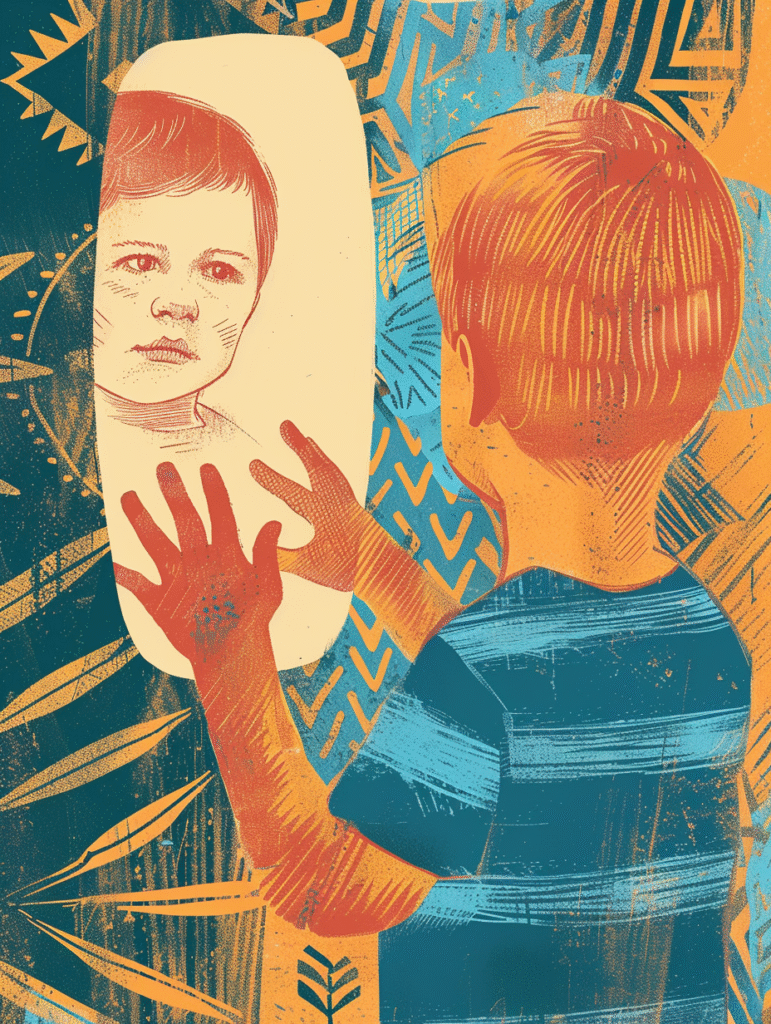
7. Mirror Talk
Mirror Talk helps children direct and elaborate their internal monologue while practicing self-soothing and coping strategies. Children use a mirror to express their anger. This is also an opportunity to introduce assertive self-talk to counter unhelpful thoughts that fuel anger, such as “I am not good enough” or “This is unfair.” Children can practice reframing these thoughts with phrases like: “I can try my best, and that is enough” or “I can handle this situation without hurting myself or others.”
Questions to ask: “What can you say to yourself when anger rises?” “Which thoughts make your anger stronger, and how can you respond to them?” “How does it feel to speak to your anger and what words help you calm down?”
Parent guidance: Model calm, reflective, and assertive self-talk aloud. For instance: “I feel frustrated, but I can focus on what I can do next.” Encourage children to repeat these phrases or create their own when upset, helping them challenge unhelpful thoughts and manage emotions constructively.
Essence of the session: Mirror Talk allows children to practice internal dialogue, combine emotional regulation with cognitive reframing, and explore coping strategies in a safe, structured way. By speaking to themselves and their anger, they learn to counter unhelpful thoughts, regulate emotions, and respond with confidence and self-control.
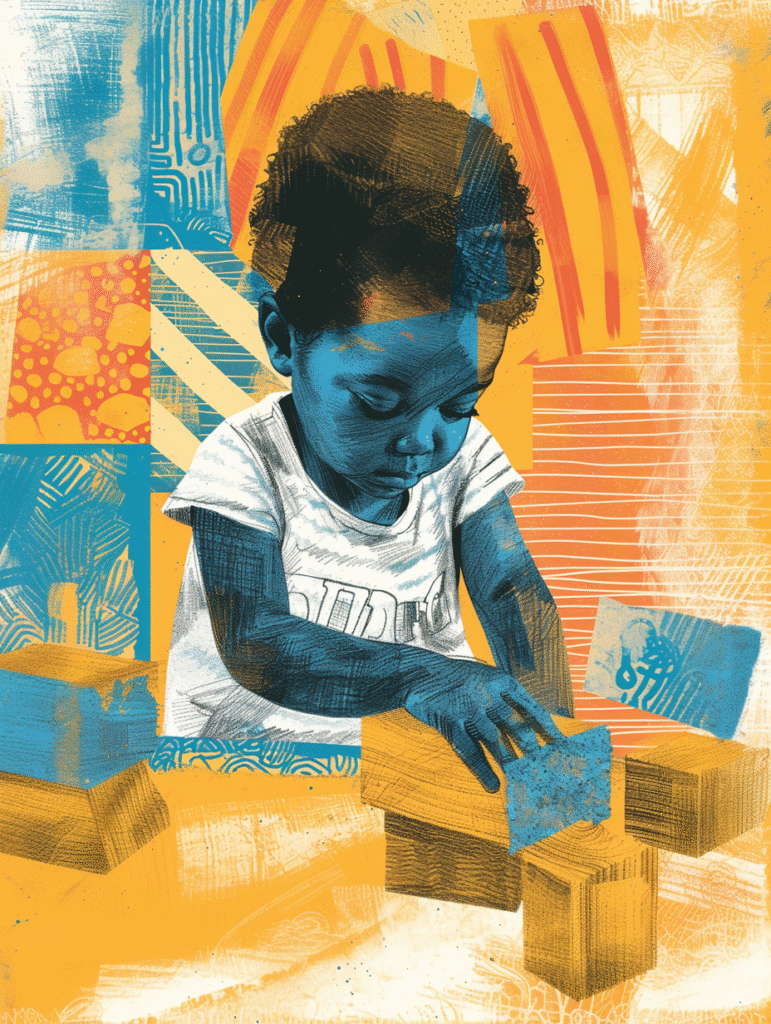
8. Build It / Break It / Repair It
In this session, children create a structure using blocks, clay, or sandtray materials, express anger by altering or breaking it, and then practice repair by rebuilding or problem-solving.
Questions to ask: “What happened when anger took over?” “How can you make things right?” “What would you do differently next time?”
Parent guidance: Focus on repair rather than punishment. At home, you might say: “Let’s fix this together. What can we do to make it better?”
Essence of the session: Build It / Break It / Repair It teaches children that mistakes happen, but they can take responsibility and restore relationships, reinforcing self-regulation and moral reasoning.
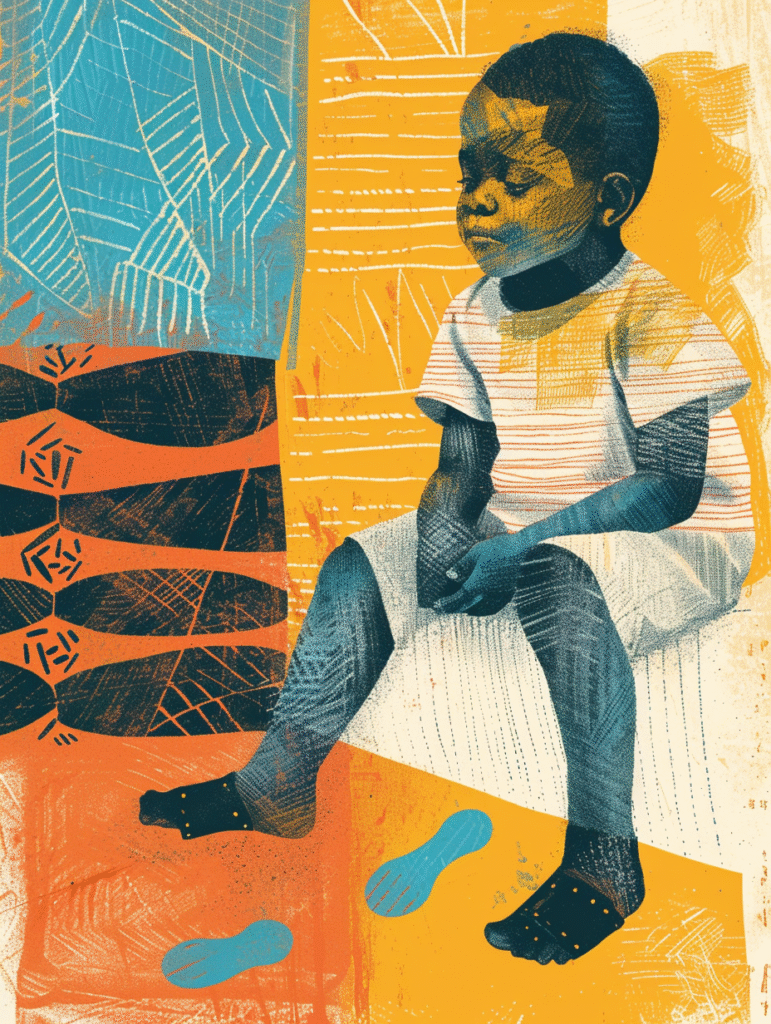
9. Footprints of Anger
Footprints of Anger helps children explore how their anger moves through situations and affects themselves and others. Children can use miniature figures, role-play, or drawings to create a “path” showing how anger emerges, what triggers it, and the consequences it has on people or events around them. They can then create a second path showing alternative responses—how they could act differently, calm themselves, or repair relationships.
This activity encourages children to reflect on cause and effect. They see that anger isn’t just an internal feeling—it has ripple effects on their environment, peers, and themselves. By enacting or drawing these scenarios, they practice perspective-taking, problem-solving, and planning for safe responses in the future.
Questions to ask: “Who or what does your anger touch?” “What happened when it moved this way?” “How could you respond differently next time?” “What steps could you take to make things right?”
Parent guidance: Encourage discussion and reflection as your child moves figures or draws the paths. You might say: “I see your figure went this way—how did it feel when you chose a different path?” Reinforce that anger is a natural emotion, but it can be expressed in ways that are safe, constructive, and restorative.
Essence of the session: Footprints of Anger teaches children to understand the effects of their anger, practice problem-solving, and explore safe ways to respond or repair relationships. By visualizing or enacting the paths of anger, children develop empathy, self-awareness, and intentionality in their emotional responses.
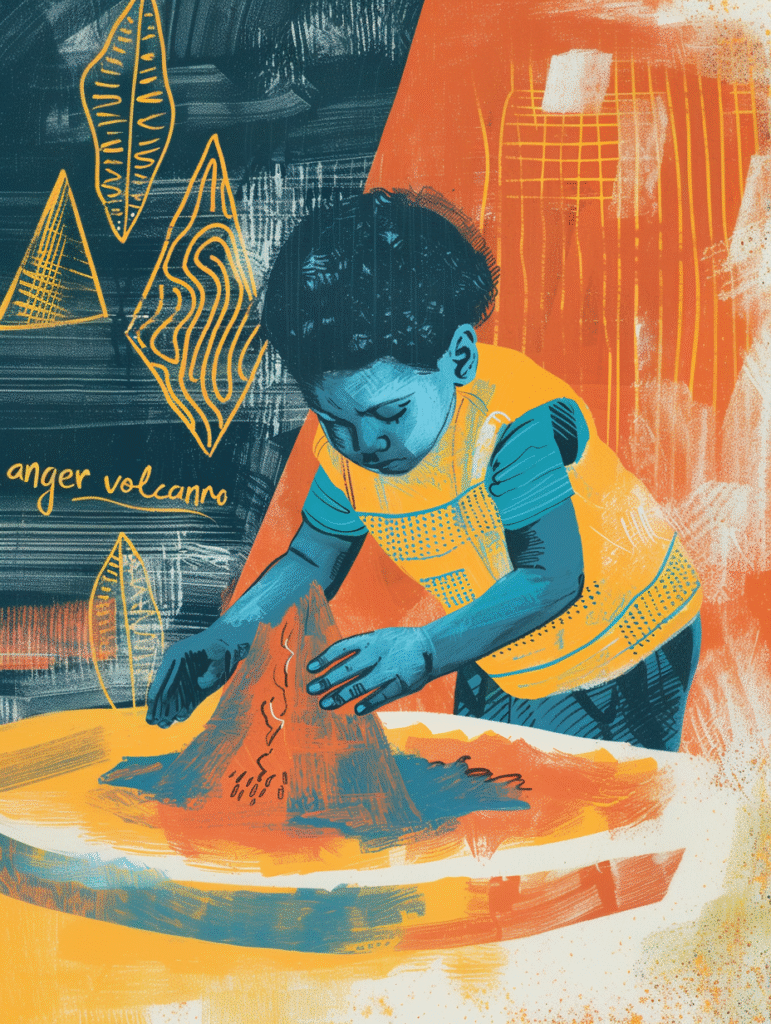
10. Anger Volcano
Anger Volcano helps children visualize, express, and safely release the build-up of anger energy. Children draw, sculpt, or build a “volcano” representing their anger and then show how it erupts—and how it cools afterward. This allows them to explore triggers, intensity, and safe expression in a symbolic way.
Questions to ask: “What makes your volcano erupt?” “How does it feel before, during, and after?” “What strategies can help the volcano cool down safely?”
Parent guidance: Encourage reflection after the activity: “I see your volcano erupted—what helped it calm down?” Reinforce that anger is normal and can be expressed safely without harming anyone.
Essence of the session: Anger Volcano teaches children to recognize rising anger, experiment with safe outlets, and practice calming strategies. It combines symbolic expression, reflection, and regulation.
Why Play Therapy Works for Anger Issues in Children
These interventions show that anger management therapy for children works best when anger is treated as a messenger. Play, enactment, and symbolic representation help children externalize, explore, and regulate emotions safely. Early recognition of cues, rehearsal of strategies, and guided reflection build self-regulation, reduce shame, and improve problem-solving. Parents play a key role by reflecting feelings, offering safety, and supporting autonomy.
By understanding what causes anger issues in children and applying these structured interventions, children can learn to manage anger constructively, strengthen emotional intelligence, and practice lifelong coping skills.
Some of the links on this blog are affiliate links, which means I may earn a commission if you make a purchase using the link. This comes at no additional cost to you. I only recommend products or services that I believe in and think will be valuable to my readers. I am also hoping you might consider purchasing my book 101 Art Therapy Exercises for Children: A Practical Guide for Parents and Mental Health Professionals. Thank you for supporting this blog!

Rostislava Buhleva-Simeonova is a psychologist, art therapist, and gamificator. She has worked with children, adults, and the elderly within various therapeutic programmes over the past eight years, all the while providing the much-needed playful twist that art and gamified experiences can bring to this sometimes uneasy setting. But it wasn’t until the birth of her daughter, Aurora, that this work took on an even deeper personal meaning. With her academic and real-life experience, honed through numerous trainings and sessions, she is currently authoring books and articles in the field of child psychology and development, offering expertise in art and play therapy to guide parents and caregivers, as well as professionals in the fields of social work and mental health, throughout various pivotal moments in children’s lives. Last but not least, all of her books have been “peer-reviewed” by her daughter, who testifies to the efficiency of these methods.