
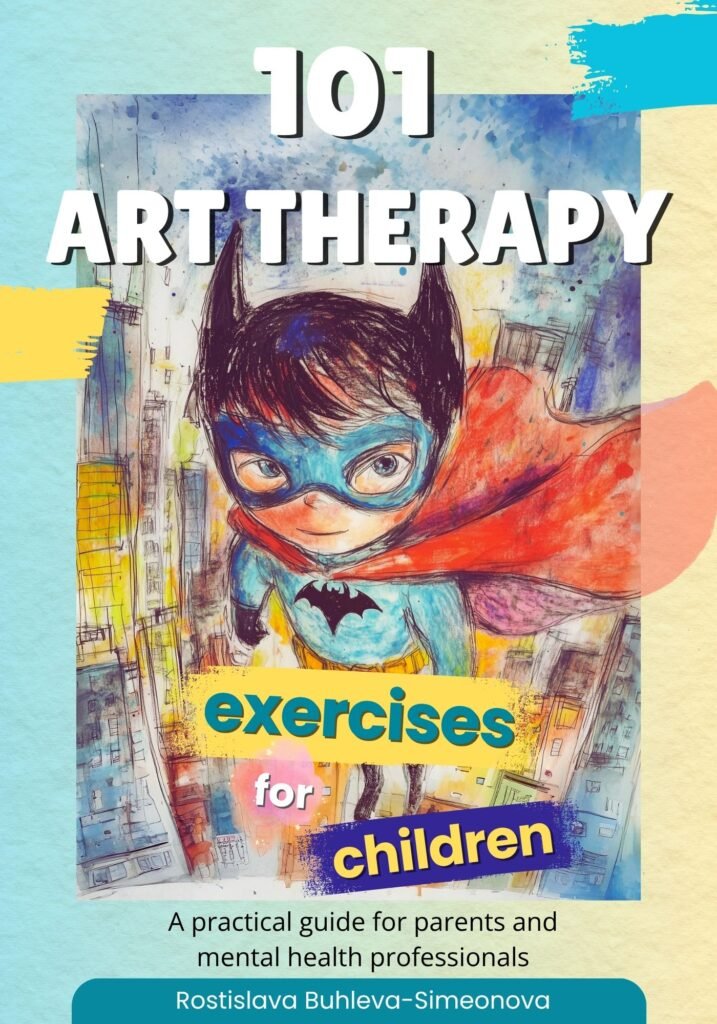
In today’s fast-changing world, children are increasingly affected by reduced creative play, digital overstimulation, and emotional disconnection. Because of this, art therapy activities for anxiety have become an essential tool for supporting emotional wellbeing. 101 Art Therapy Exercises for Children, written by a certified art therapist, offers a practical and research-based response to these challenges.
At its core, the book recognises that children communicate through images, movement, and play rather than words. Therefore, art becomes a natural outlet for expression. For children who struggle to verbalise emotions like fear or anxiety, creative activities provide a safe and accessible bridge between inner feelings and outward expression.
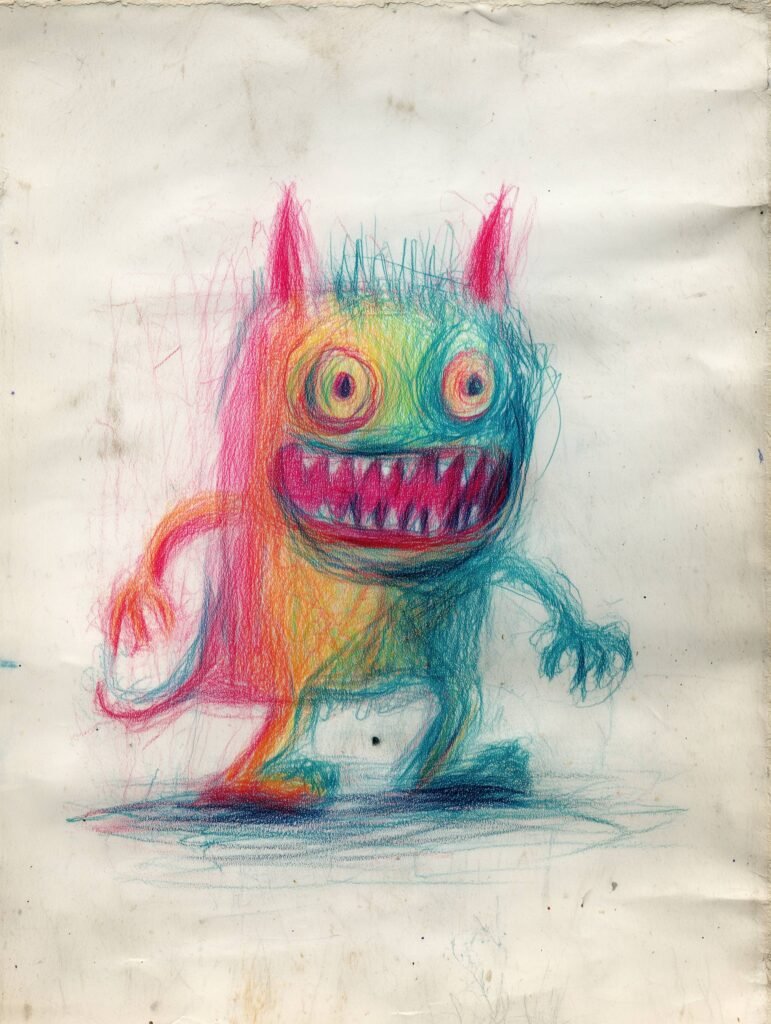
“The Not Me Monster”
The Science Behind Art Therapy Activities for Anxiety
The book is strongly grounded in neuroscience and psychological research. Each activity is designed to support emotional regulation while also enhancing cognitive development. As research suggests, creative engagement can positively influence how the brain processes stress and emotions.
For example, art-making activates the right hemisphere and engages the limbic system. As a result, children process emotions more effectively while reducing stress. At the same time, these art therapy activities for anxiety stimulate the parasympathetic nervous system, encouraging calmness and resilience.
Importantly, the book combines this scientific foundation with structured, easy-to-follow sessions. This ensures that parents, educators, and professionals can apply the activities confidently and consistently.
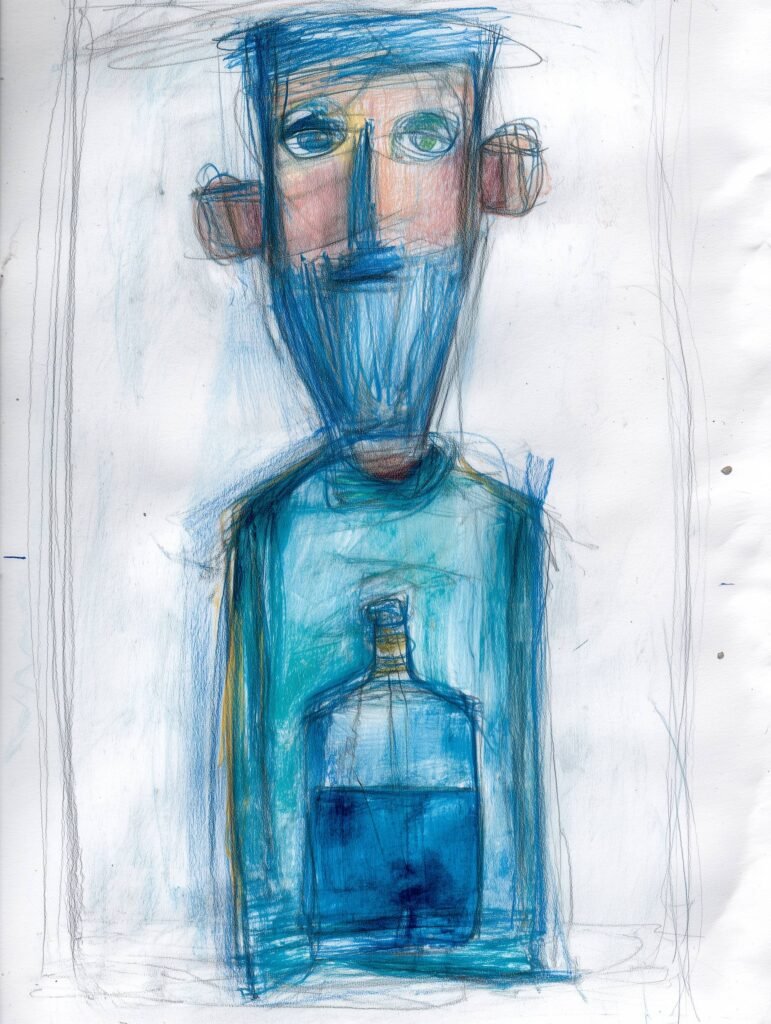
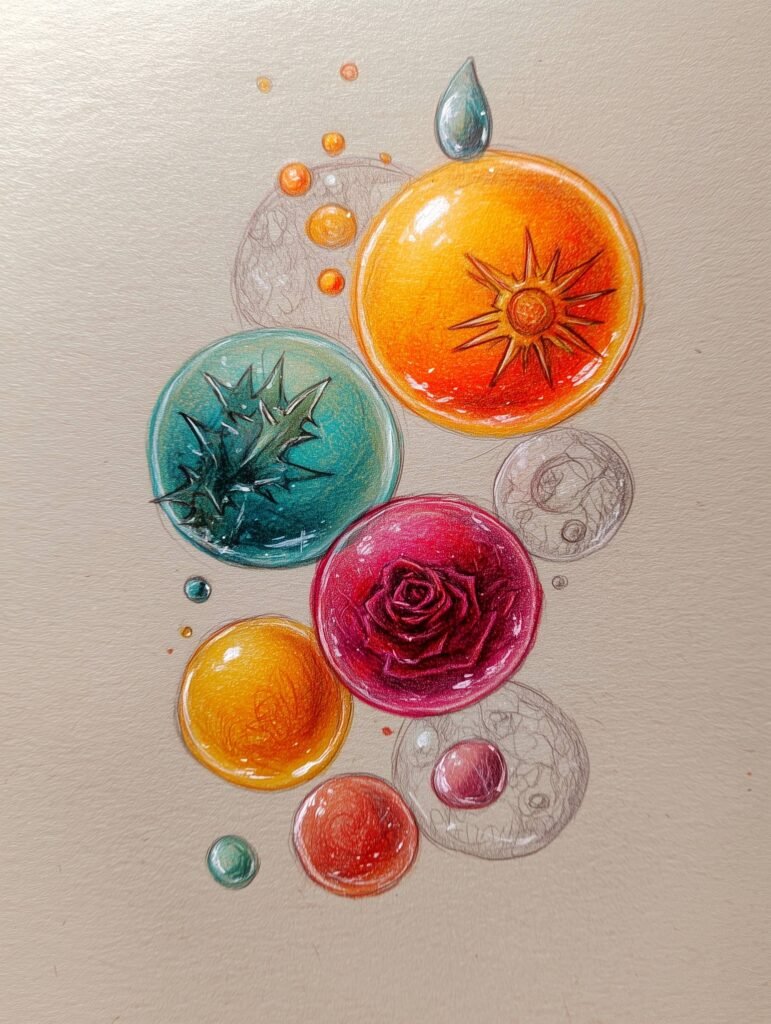
“A Genie from a Bottle”
A Preventative and Insightful Emotional Toolkit
Beyond therapy, the book serves as a preventative resource. Through regular use of art therapy activities for anxiety, caregivers can observe a child’s emotional world without pressure or judgment. This allows early support before difficulties escalate.
For instance, exercises like “A Genie from a Bottle” help children express fears and wishes symbolically. As a result, adults gain insight without forcing verbal explanations. Additionally, these activities encourage imagination, experimentation, and reflection.
Over time, children develop stronger problem-solving skills, improved attention, and greater emotional awareness. Consequently, art becomes both a creative outlet and a developmental tool.
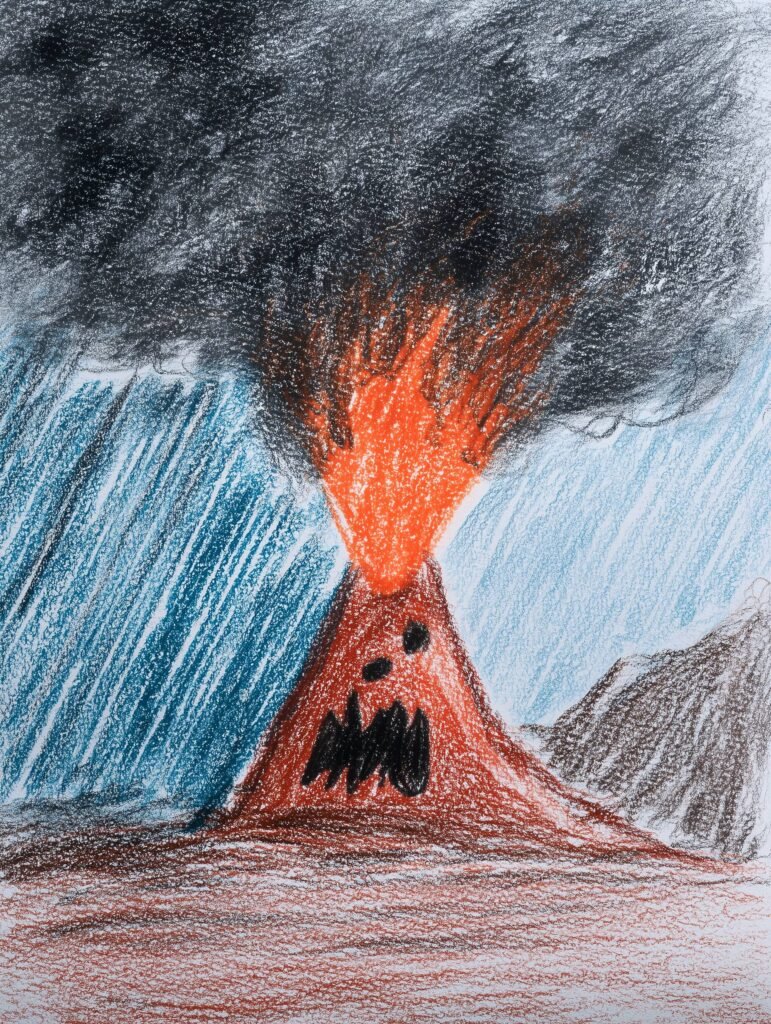
“Anger Volcano”
Strengthening Relationships Through Shared Creativity
Another key strength of the book is its focus on connection. When caregivers participate in art therapy activities for anxiety, they create a shared space built on trust and openness. This naturally encourages communication without pressure.
For example, activities like “Anger Volcano” allow children to explore intense emotions safely. Meanwhile, adults can observe and support without judgment. As a result, emotional understanding grows on both sides.
Research shows that shared creative experiences improve attachment and reduce conflict. Therefore, these exercises not only support emotional wellbeing but also strengthen family relationships in meaningful ways.
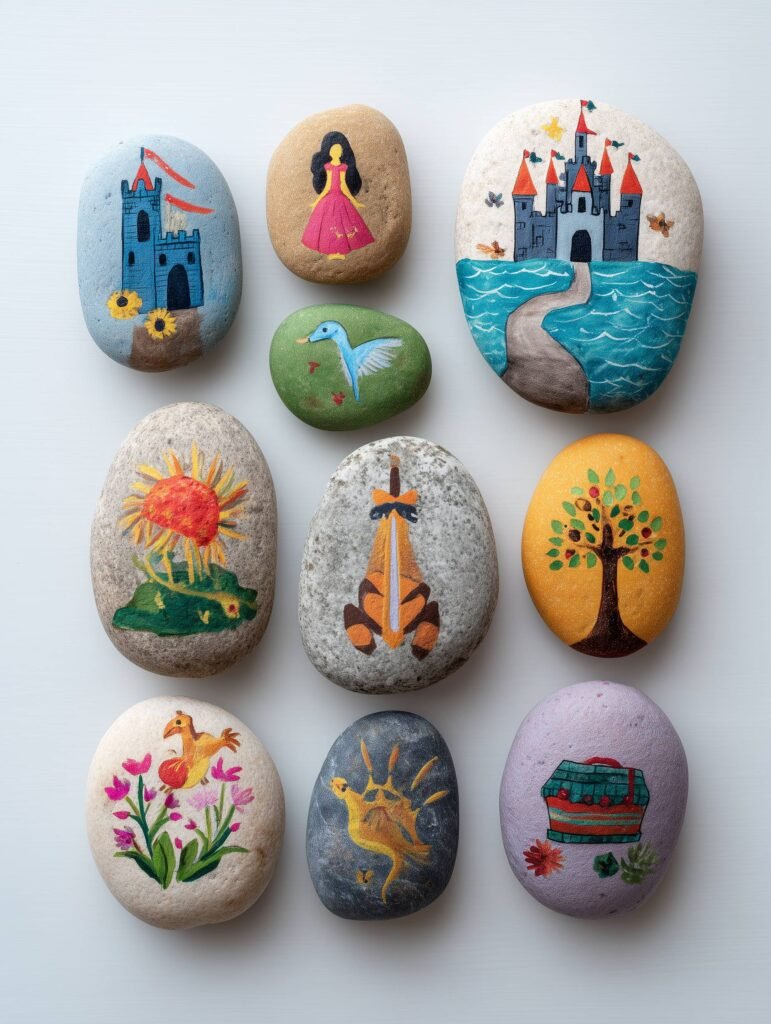
“Story Stones”
Ethical Guidance and Developmental Flexibility
The book also highlights the importance of ethical awareness. While children’s artwork can provide insight, caregivers are encouraged to remain curious rather than interpretive. Children should always guide the meaning of their creations.
In practice, adults focus on observable elements such as colour or repetition while inviting open conversation. If concerns arise, professional support is recommended rather than self-diagnosis.
Additionally, the activities are grouped by age but remain flexible. This ensures that art therapy activities for anxiety can evolve alongside a child’s development, making them relevant across different stages.
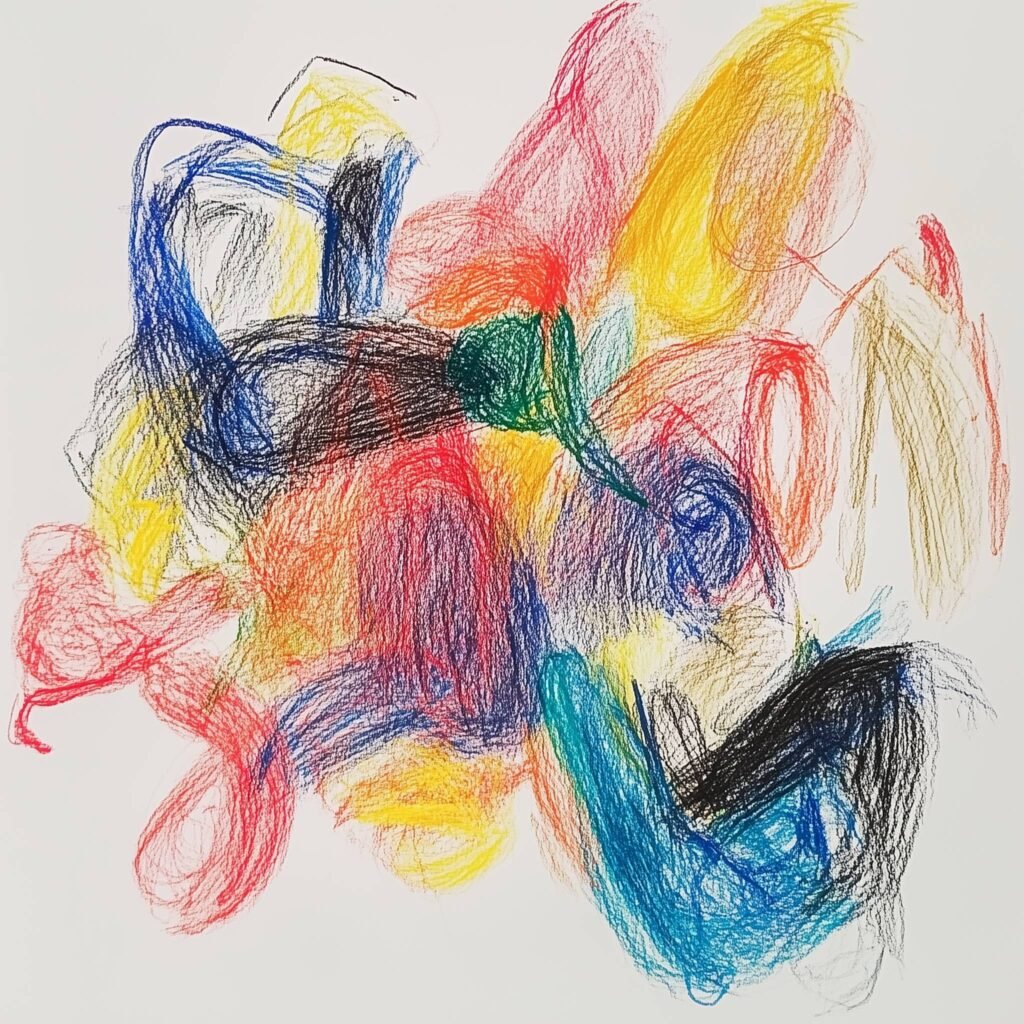
“Drawing with Non-dominant Hand”
Drawing with Non-Dominant Hand
Purpose
The “Drawing with Non-Dominant Hand” exercise invites children to embrace unpredictability and unlock playful creativity, fostering confidence and reducing self-criticism. This activity draws on the work of art therapist Cathy Malchiodi, who emphasized the role of exploratory art in promoting emotional freedom and self-expression (Malchiodi, 2012). Psychologically, it aligns with the concept of “creative self-efficacy,” where engaging in unconventional tasks enhances belief in one’s creative abilities (Tierney & Farmer, 2002). By using their non-dominant hand, children explore new ways of creating, supporting Erikson’s stage of initiative vs. guilt, where bold experimentation drives purpose (Erikson, 1963). A 2019 study found that playful, non-traditional art activities increased children’s creative confidence by 21%, as measured by self-reported comfort with artistic risk-taking (Nguyen et al., 2019). This warm-up encourages children to let go of control, celebrate unexpected outcomes, and dive into art therapy with a joyful, open mindset.
Materials Needed
- White paper (8.5×11 inches)
- Crayons, markers, or colored pencils
Session Description
Introduction (1–2 minutes): Set an encouraging tone. Explain that they’ll draw with their “other hand” (the one they don’t usually use) to see what fun things happen.
Drawing (3–4 minutes): Provide paper and art supplies. Help them hold the crayon in their non-dominant hand. Encourage them to start drawing, letting the lines be loose or shaky. If they struggle, suggest simple shapes.
Reflection (2–3 minutes): Look at the drawing together. Ask, “What do you like about your picture?” or “How did it feel to use your other hand?” Point out unique parts to build pride.
Closure (1 minute): Celebrate their courage. Ask if they want to save the drawing or move on.
How it helps
- Fostering Resilience: Encourages persistence through a challenging but playful task.
- Embracing Imperfection: Helps children accept “messy” results as part of creativity.
- Building Self-Efficacy: Boosts confidence by mastering a novel skill.
- Encouraging Flexibility: Prepares children for creative tasks by adapting to new ways of working.
- Supporting Effort: Reinforces the value of trying, even when outcomes are unpredictable.
Emotion Charades
Purpose
The “Emotion Charades” session invites children to create simple drawings or symbols of different emotions and act them out in a playful, interactive game, fostering social-emotional recognition, empathy, and social skills through art and role-play. Drawing on the work of art therapist Cathy Malchiodi, who emphasizes art’s role in externalizing emotions (Malchiodi, 2012), this activity aligns with Erikson’s initiative vs. guilt stage, where young children develop purpose through exploration and social interaction (Erikson, 1963). By creating visual representations of emotions (e.g., happy, sad, angry) and acting them out with a caregiver or peer, children practice identifying and expressing feelings, enhancing emotional literacy and prosocial behavior. Research shows that art-based emotional recognition tasks improve emotional awareness by 25% in preschoolers (Cohen et al., 2015) and boost social skills by 20% through collaborative play (Zhang & Li, 2020).
Materials Needed
- White paper (8.5×11 inches)
- Crayons, markers, or colored pencils
- Optional: Stickers (e.g., smiley faces, hearts) for embellishment
- Optional: Small props for acting (e.g., scarves, hats, or toy accessories)
- Optional: A small basket or bag to hold folded emotion drawings
Session Description
Introduction (5–7 minutes) Create a lively, playful atmosphere. Begin by asking if they’ve ever noticed how their face or body changes when they feel happy, sad, or mad, like smiling big or stomping their feet. Explain that they’ll play “Emotion Charades,” where they’ll draw pictures or symbols of different feelings, then act them out like a game for others to guess. Emphasize that their drawings can be simple (e.g., faces, shapes, or colors) and that the game is about having fun together, not being perfect. Encourage them to think of emotions they know, fostering ownership and aligning with their developmental stage (Saarni, 1999).
Creating the Emotion Drawings (15–18 minutes) Provide paper and vibrant art supplies, ensuring easy-to-use tools like crayons for young hands. Invite the child to draw 3–5 emotions they know, using faces, shapes, or colors to show each one. Prompt with gentle, open-ended suggestions: “What does happy look like to you? What about mad—what colors or shapes show that? What feelings do you want to draw?” Encourage simple designs. If they’re hesitant, suggest starting with one feeling they had today. Observe how they draw and their behavior (e.g., giggling, pausing) to gauge engagement, noting for reflection without interpreting aloud (Malchiodi, 2012). Stay non-directive, praising creativity. Fold each drawing and place it in a basket for the charades game.
Reflection and Charades Game (7–10 minutes) Sit with the finished drawings and start the game. Take turns picking a folded drawing from the basket (with the caregiver or another child, if present). Ask the child to act out the emotion shown in the drawing without words, using their face, body, or props (e.g., stomping for angry, twirling for happy). Guess the emotion together, keeping it light. Then, explore the drawings together, asking open-ended questions: “What made you draw happy like that? How did it feel to act out scared? Does this remind you of a time you felt that way?” Listen actively, reflecting their excitement or insights. If they share a related moment (e.g., feeling mad at a sibling), validate gently: “It’s okay to feel mad sometimes.” To foster empathy, ask: “What might help someone who feels this way?”
Closure (3–5 minutes) Celebrate their creativity and bravery enthusiastically: “You made such fun emotions, and your acting was amazing!” Ask if they’d like to add a final touch, like a sticker on their favorite drawing, or if they want to play another round. Offer choices: keep the drawings in a special folder, hang one up, or store them privately, respecting their autonomy.
Pivotal Moments
- Building Emotional Recognition Encourages identifying and naming emotions, enhancing emotional literacy (Saarni, 1999).
- Fostering Empathy Promotes understanding others’ feelings through acting and guessing, strengthening social bonds (Zhang & Li, 2020).
- Enhancing Social Skills Supports turn-taking and collaboration in the charades game, aligning with social development (Proulx, 2003).
- Boosting Self-Confidence Reinforces pride in expressing emotions creatively, supporting initiative (Erikson, 1963).
- Coping with Emotions Provides a safe space to explore and normalize feelings like anger or sadness (Malchiodi, 2012).
- Strengthening Relationships Enhances caregiver-child connection through shared play, fostering attachment (Bowlby, 1988).
- Sparking Playfulness Leverages young children’s love of play to make emotional exploration fun and engaging (Cohen et al., 2015).
Conclusion: A Compassionate Approach to Emotional Growth
101 Art Therapy Exercises for Children offers a balanced and practical approach to emotional development. By combining science, creativity, and relational insight, it provides tools that are both effective and accessible.
Through consistent use of art therapy activities for anxiety, children can build resilience, confidence, and self-awareness. At the same time, caregivers are supported in creating deeper, more meaningful connections.
Ultimately, the book shows that healing often begins beyond words. Through simple creative expression, children can explore emotions, strengthen relationships, and develop lifelong emotional skills.
Discalimer
Some of the links on this blog are affiliate links, which means I may earn a commission if you make a purchase using the link. This comes at no additional cost to you. I only recommend products or services that I believe in and think will be valuable to my readers. I am also hoping you might consider purchasing my book 101 Art Therapy Exercises for Children: A Practical Guide for Parents and Mental Health Professionals. Thank you for supporting this blog!

Rostislava Buhleva-Simeonova is a psychologist, art therapist, and gamificator. She has worked with children, adults, and the elderly within various therapeutic programmes over the past eight years, all the while providing the much-needed playful twist that art and gamified experiences can bring to this sometimes uneasy setting. But it wasn’t until the birth of her daughter, Aurora, that this work took on an even deeper personal meaning. With her academic and real-life experience, honed through numerous trainings and sessions, she is currently authoring books and articles in the field of child psychology and development, offering expertise in art and play therapy to guide parents and caregivers, as well as professionals in the fields of social work and mental health, throughout various pivotal moments in children’s lives. Last but not least, all of her books have been “peer-reviewed” by her daughter, who testifies to the efficiency of these methods.