
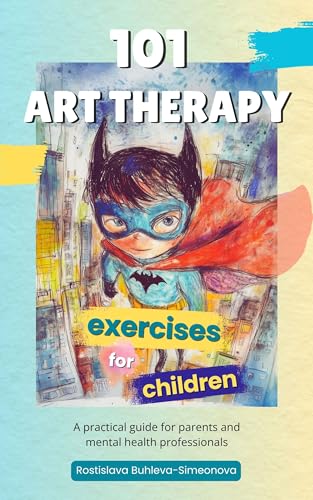
In today’s world, where digital immersion often replaces hands-on creativity and emotional connection with caregivers, art therapy books like 101 Art Therapy Exercises for Children are more important than ever. This book provides structured, age-appropriate activities that nurture both emotional expression and cognitive growth. Moreover, it offers parents, teachers, and therapists practical tools grounded in research, helping children explore feelings safely and creatively. By engaging in these art therapy activities for kids, children develop a stronger sense of self and learn healthy ways to communicate emotions.
At the heart of these art therapy books is a simple truth: children express themselves most authentically through play, imagery, and movement rather than words alone. Therefore, creative activities become a bridge between internal experiences and outward communication. For children struggling to verbalize fear, grief, or anxiety, visual expression allows insight, emotional regulation, and growth. In this way, each drawing, painting, or craft project is more than art—it’s a natural vessel for psychological expression and healing.
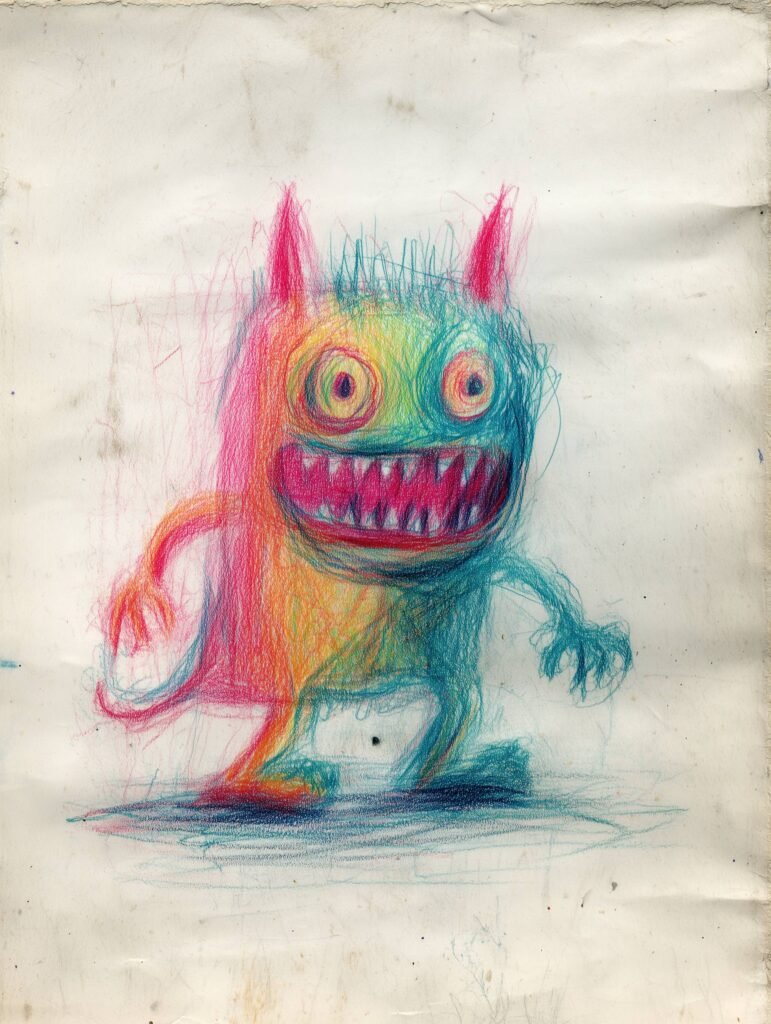
“The Not Me Monster”
A Standout Among Art Therapy Books: Scientific and Practical Insights
What makes 101 Art Therapy Exercises for Children a standout among art therapy books is the seamless integration of neuroscience, developmental psychology, and practical guidance. Research shows that creative engagement enhances neural flexibility, supports emotional regulation, and reduces stress. Furthermore, art-making stimulates emotional processing regions of the brain while encouraging physiological calm, helping children develop resilience and adaptive functioning. Consequently, these books offer more than activities—they provide a scientifically informed approach to supporting mental and emotional growth in young learners.
Importantly, this art therapy book translate theory into clear, actionable sessions that caregivers and professionals can implement confidently. It emphasizes ethical observation, encouraging adults to notice aspects of children’s drawings—like repetition, intensity, or spatial arrangement—while respecting the child’s narrative authority. This approach maintains curiosity without imposing meaning, reinforces professional boundaries, and highlights when consultation is needed, making this book a reliable bridge between research and practice.
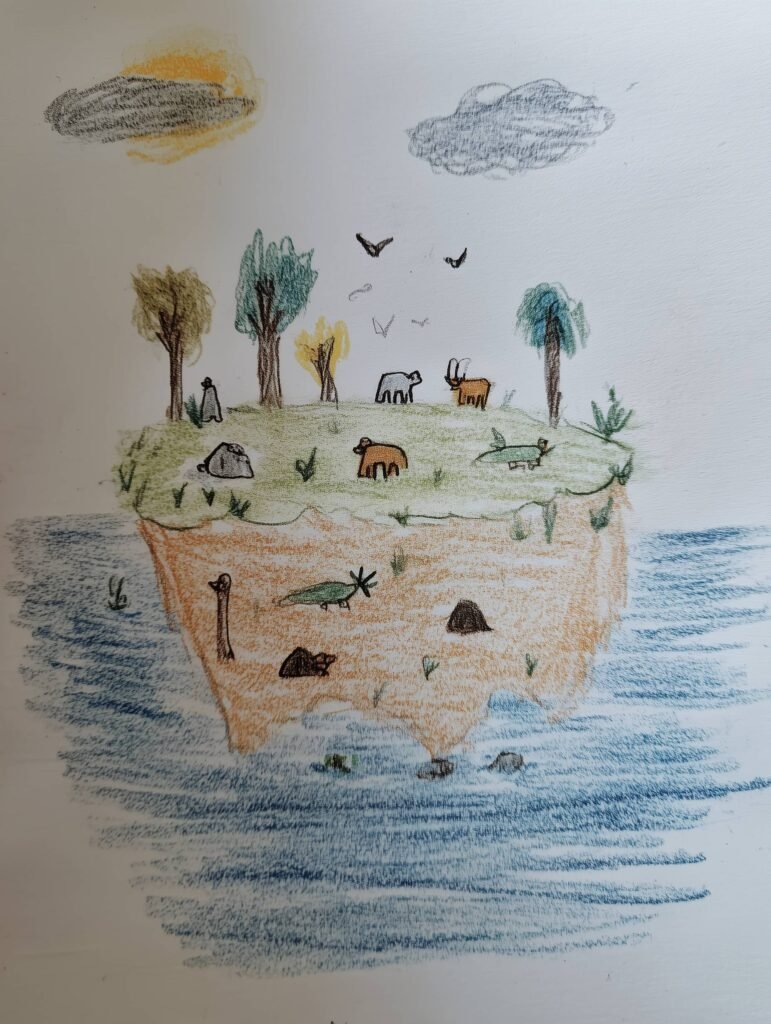
“My Own Island”
Cognitive Development and Relational Connection in This Art Therapy Book
Beyond emotional growth, art therapy books like 101 Art Therapy Exercises for Children emphasize imagination and cognitive development as essential parts of childhood. Creative activities strengthen attention, memory, and problem-solving by engaging multiple senses, while collaborative art-making supports relational attunement. When caregivers participate alongside children, art becomes a shared experience that deepens trust and emotional understanding. In these moments, children’s drawings act as bridges for dialogue, offering insight without pressure or judgment, which reinforces both communication skills and secure connections.
The book also provides exemplary sessions that bring its philosophy to life. For instance, a warm-up exercise such as “Drawing with Eyes Closed” gently reduces perfectionism and anxiety while encouraging playful sensory exploration. This prepares children for more immersive activities like “My Secret Treasure Map,” which promotes self-esteem, confidence, and resilience. Through imaginative role creation, children access inner resources, rehearse coping strategies, and engage in joyful, empowering creative expression—all central benefits highlighted in leading art therapy books.
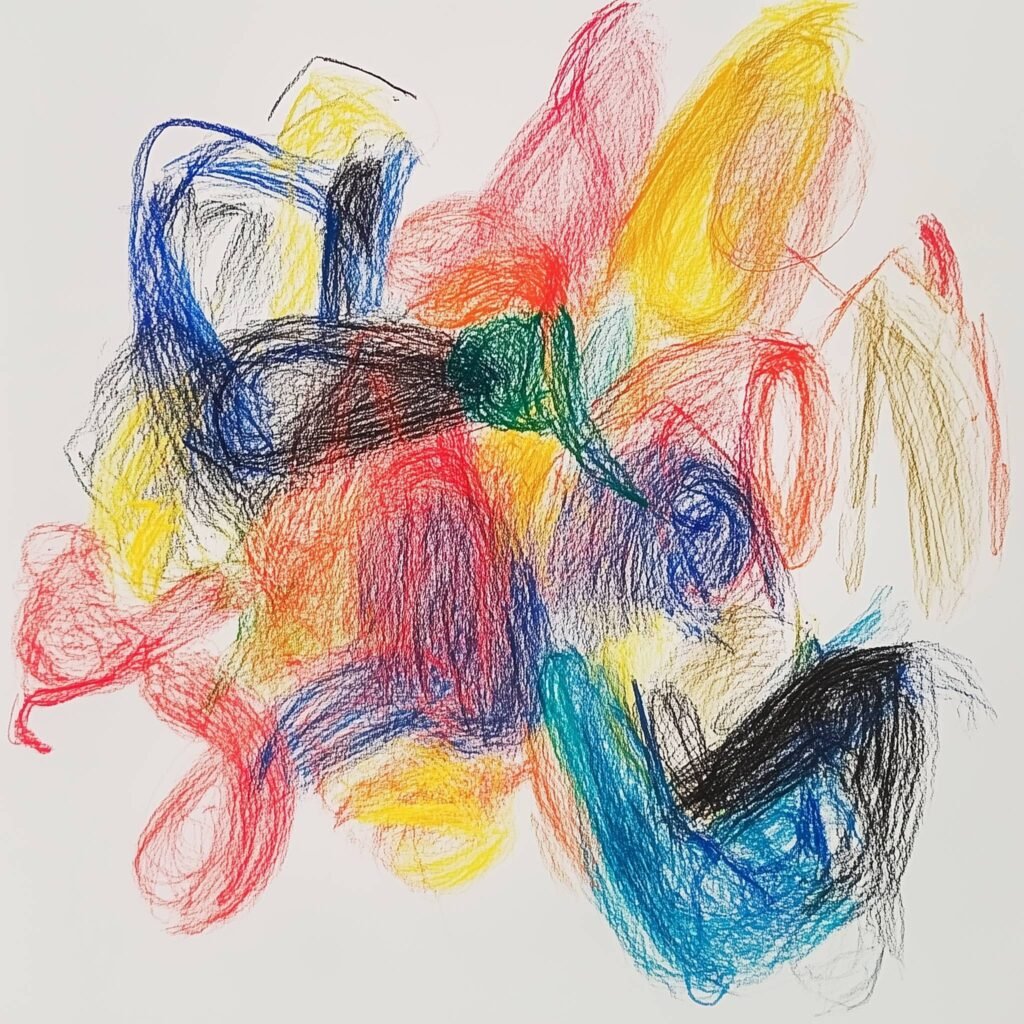
“Drawing with Eyes Closed”
Warm-up Exercise: Drawing with Eyes Closed
Purpose:
The “Drawing with Eyes Closed” activity gently guides children away from perfectionism and toward spontaneous expression. By prioritizing process over outcome, it reflects the art therapy philosophy of Edith Kramer, who viewed creative engagement as inherently therapeutic. Psychologically, the exercise encourages immersion similar to the “flow” state described by Mihaly Csikszentmihalyi, in which focused activity reduces anxiety and enhances enjoyment. Without visual control, children rely on sensation and intuition, fostering initiative-building processes outlined by Erik Erikson. Research on non-directive, sensory-based art activities demonstrates measurable gains in creative confidence. As a result, this exercise helps children relax, take creative risks, and engage fully with art therapy activities for kids as a meaningful form of emotional expression.
Materials Needed:
- White paper (8.5×17 inches)
- Crayons, markers, or colored pencils
- Optional: Blindfold or scarf
Session Description:
Introduction (1–2 minutes):
Create a relaxed, playful atmosphere. Explain that the goal is exploration rather than accuracy. Encourage the child to move their hand freely, making lines and shapes without planning. Emphasize curiosity by inviting them to “let your hand move however it wants,” helping them approach art therapy activities for kids as open-ended exploration.
Drawing (3–4 minutes):
Provide paper and drawing tools. Invite the child to close their eyes or wear a blindfold. Encourage continuous, fluid movement across the page. Offer gentle prompts like, “What kind of line wants to appear next?” or “Try a large sweeping motion.” If hesitation occurs, suggest bold, simple movements to get started.
Reflection (2–3 minutes):
Have the child open their eyes and observe their drawing. Invite open-ended reflection: “What do you notice?” or “Does anything stand out?” Celebrate all responses, highlighting the uniqueness of the image. If needed, gently point out shapes or patterns to inspire interpretation.
Closure (1 minute):
Acknowledge the child’s willingness to try something unfamiliar. Offer the choice to keep the drawing or continue to another activity.
How it helps:
- Overcoming Perfectionism: Encourages freedom from rigid expectations and supports exploratory creativity.
- Building Confidence: Reinforces risk-taking and self-trust within creative expression.
- Stimulating Imagination: Supports symbolic thinking through abstract mark-making.
- Preparing for Future Art Tasks: Establishes comfort and readiness for deeper therapeutic work.
- Reducing Anxiety: Provides a calm, playful entry point into expressive activity.
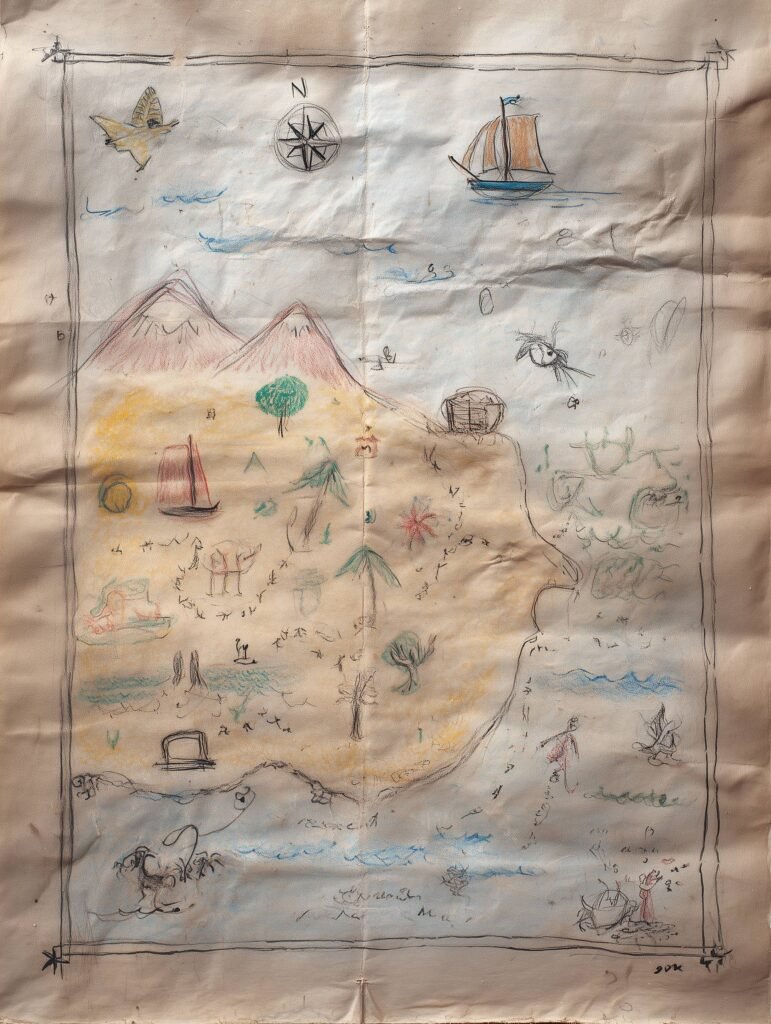
“My Secret Treasure Map”
Purpose
The “My Secret Treasure Map” session invites children to create a detailed treasure map using drawings, symbols, or mixed media, representing their personal goals, values, or strengths. This engaging activity fosters self-discovery, confidence, and a sense of accomplishment by encouraging children to reflect on what they aspire to achieve or cherish. Drawing on Cathy Malchiodi’s narrative art therapy techniques from the 1990s, which use symbolic journeys to articulate inner strengths and ambitions (Malchiodi, 2012), this session aligns with self-determination theory, emphasizing autonomy and competence as key drivers of intrinsic motivation (Deci & Ryan, 2000). Psychologically, it supports Erikson’s industry vs. inferiority stage, where children develop a sense of competence through meaningful tasks and social interactions (Erikson, 1963). By designing a map to a “treasure” that symbolizes something personally significant, children strengthen their sense of agency, self-worth, and problem-solving skills.
Materials Needed
- White paper (8.5×11 inches or larger)
- Crayons, markers, coloured pencils and watercolours
- Paintbrushes and sponges
- Optional: Stickers, glitter glue, or small paper shapes for decoration
Session Description
Introduction (5–7 minutes): Create an adventurous atmosphere, perhaps by playing soft “explorer” music to evoke a treasure-hunting vibe. Ask, “If you could go on a treasure hunt, what would you want to find?” Share an example (e.g., “I’d find a chest full of magic artefacts that I could use to become a magician.”). Explain that they’ll draw a secret treasure map to a special treasure, like something they love or dream about. Emphasize that their map can lead anywhere.
Drawing the Map (15–30 minutes): Lay out the paper and art supplies, ensuring a variety of colors and tools. Invite the child to draw their treasure map, starting with the treasure and a path leading to it. Suggest adding landmarks like rivers, trees, or caves, and challenges like bridges or mazes. Prompt with questions like, “Where does your map start?” “What’s the treasure?” or “What do you pass on the way?” Encourage details about the journey, like who’s traveling or what helps them reach the treasure. Let them add stickers, glitter glue, or paper shapes for flair (e.g., a sticker for a “magic key”). Stay engaged, praising their creativity.
Reflection (5–7 minutes): Sit with the finished map and explore the story together, noting the treasure’s significance and the journey’s challenges. Ask specific questions: “What’s your treasure, and why is it special?” “What’s the journey like—easy or tricky?” “Who’s going to find the treasure—you or someone else?” “What helps you get to the treasure?” Listen attentively, reflecting their excitement or aspirations. If they share challenges, like a scary part of the map, validate them.
Closure (3–5 minutes): Ask if there is anything they would like to change. Praise their creation, saying, “Your treasure map is so incredible and full of adventure!” Offer to display the map in their room or keep it in a special folder.
Pivotal Moments
- Exploring Aspirations: Helps children articulate dreams or values, fostering a sense of purpose.
- Building Confidence: Reinforces self-esteem as children imagine overcoming challenges to reach their treasure.
- Developing Initiative: Encourages skill-building and self-efficacy through creative goal-setting, aligning with Erikson’s developmental stage.
- Coping with Challenges: Provides a symbolic way to navigate obstacles, like trying new activities or facing fears.
- Navigating Transitions: Supports confidence during changes, like starting school or moving.
- Celebrating Achievements: Highlights successes, like mastering a skill, by symbolizing them as treasures.
- Fostering Self-Discovery: Enhances awareness of personal strengths and desires through the map’s story.
A Trusted Resource Among Art Therapy Books
101 Art Therapy Exercises for Children brings together science, creativity, and relational insight in a way few art therapy books achieve. It offers a practical framework for supporting children’s emotional, cognitive, and social development through structured, meaningful activities. Equally important, the book centers connection. When parents and caregivers participate alongside children, shared art-making fosters trust, emotional attunement, and open communication. As a result, children gain a safe space to express feelings, while adults observe and respond with curiosity rather than judgment. In this way, art therapy books like this one help strengthen relationships while supporting healthy development.
Ultimately, this resource functions as both a preventative guide and a supportive companion. It empowers adults to nurture confident, emotionally aware, and creatively engaged children through accessible, research-informed practice.

Rostislava Buhleva-Simeonova is a psychologist, art therapist, and gamificator. She has worked with children, adults, and the elderly within various therapeutic programmes over the past eight years, all the while providing the much-needed playful twist that art and gamified experiences can bring to this sometimes uneasy setting. But it wasn’t until the birth of her daughter, Aurora, that this work took on an even deeper personal meaning. With her academic and real-life experience, honed through numerous trainings and sessions, she is currently authoring books and articles in the field of child psychology and development, offering expertise in art and play therapy to guide parents and caregivers, as well as professionals in the fields of social work and mental health, throughout various pivotal moments in children’s lives. Last but not least, all of her books have been “peer-reviewed” by her daughter, who testifies to the efficiency of these methods.