
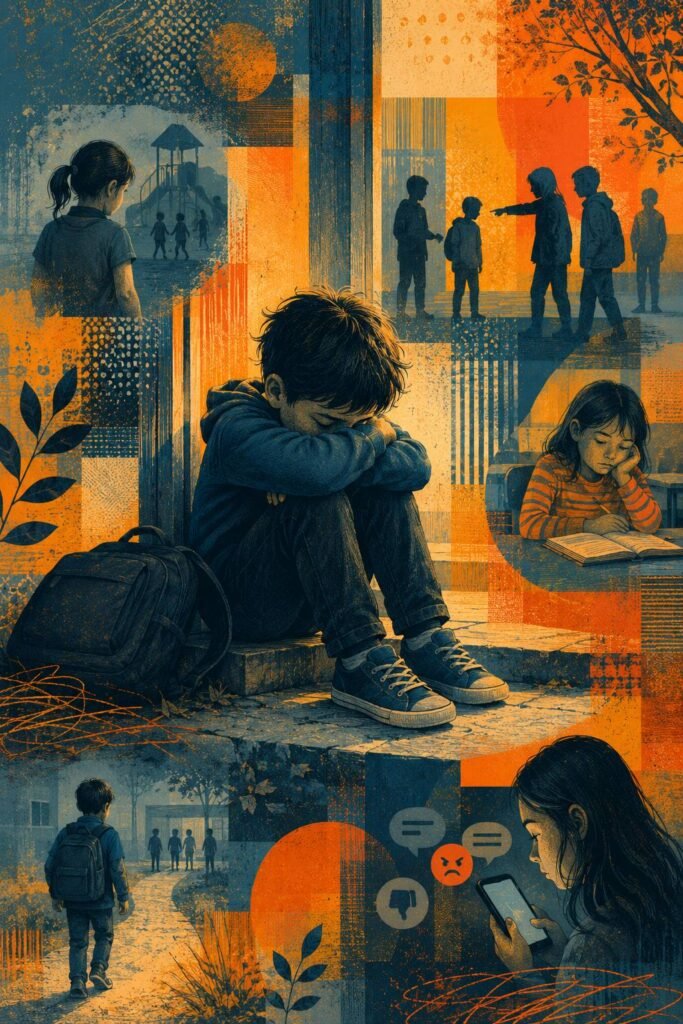
Every parent has seen the signs. The child who comes home quieter than they left. The one who no longer wants to go to school, whose stomach hurts on Sunday evenings, who has stopped mentioning the friend they used to talk about constantly. The one who sits at the dinner table and says everything is fine in the particular tone that means everything is not. And the one who does not say anything at all — who has learned, through the particular cruelty of sustained social rejection, that telling someone what is happening might make it worse.
Bullying is not a childhood rite of passage. It is not something children simply need to toughen up and manage. It is a form of repeated, intentional harm — physical, verbal, relational, or increasingly digital — that the research has now confirmed causes measurable neurological, psychological, and developmental damage. And helping children deal with bullying effectively requires understanding not just what bullying is, but what it does — to the brain, to the body, to the child’s developing sense of who they are and whether the world is safe enough to belong there.
The Scale of the Problem
The research on the prevalence of bullying makes uncomfortable reading — and it has been getting more uncomfortable.
The United Nations highlights that approximately 2.46 billion children and young people experience school violence and bullying on an annual basis. That figure encompasses every form of bullying — physical, verbal, relational, and digital — across every educational context globally. It is not a figure that allows for the comfortable conclusion that bullying is someone else’s problem, or someone else’s child.
A five-year epidemiological study published in Frontiers in Public Health in 2025 found that emotional bullying increased from 10.5% in 2020 to 14.6% in 2024 among school-aged children — with significant increases in teasing, extortion, and social exclusion across the study period. The upward trend in emotional and relational bullying is particularly significant, because it is the form of bullying most likely to be missed by adults, most difficult for children to name and report, and most directly targeted at the child’s sense of social belonging — which the research has now identified as a neurologically critical need rather than a social preference.
What Bullying Does to the Brain
Helping children deal with bullying requires understanding what bullying actually does at the neurological level — because this understanding changes both the urgency and the nature of the appropriate response.
Research published in Nature Mental Health in 2024 confirmed that threats to social connection, including peer bullying and social rejection, engage neural circuits that upregulate components of the immune system involved in inflammation — which accelerates wound healing in the short term but causes hypervigilance, anxiety, depression, and health-damaging oxidative stress over the long term. This is not metaphor. Social pain and physical pain activate overlapping neural systems. The child who is excluded from a group is not being oversensitive. They are experiencing something that their brain processes in ways that have measurable physiological consequences.
A 2025 study published in the Journal of Neuroscience mapped the neural, affective, and attentional responses to simulated bullying in adolescents aged eleven to fourteen years using functional MRI — and found that exposure to bullying engaged the socioemotional and threat response systems, as well as regions related to social cognition, sensory and interoceptive processing, and motor control. The bullied child’s brain is not simply registering an unpleasant social experience. It is activating the same systems it uses to process physical threat — the same alarm circuits, the same stress hormones, the same neurological cascade that prepares the body for danger.
Research on the neural signatures of social exclusion in teenagers has found that social exclusion activates frontal brain areas including the anterior cingulate cortex and the dorsolateral prefrontal cortex — and that the extent of prior bullying experience is positively related to increased neural sensitivity to subsequent social exclusion. In other words: the more a child is bullied, the more sensitised their brain becomes to future social threat. The experience of bullying does not simply cause distress in the moment. It recalibrates the child’s threat-detection system in ways that make them more reactive, more vulnerable, and more likely to experience subsequent social interactions as threatening — even when they are not.
A 2024 longitudinal study found a peak in aggression following social rejection during late childhood — and individual differences in this developmental phase — suggesting a sensitive window for addressing responses to social rejection across the childhood years. This sensitive window is precisely where timely, developmentally appropriate intervention is most likely to reshape the child’s neural and behavioural responses rather than simply manage their symptoms.
What Bullying Does to the Child
Beyond the neurological consequences, the psychological and developmental impact of bullying is now well established in the research literature — and it extends considerably further than the visible distress of the immediate experience.
Bullying is associated with social anxiety, low self-esteem, loneliness, sadness, and depressive symptoms — and has been identified as one of various factors relevant for the maintenance of depression in children and adolescents. The child who is bullied is not simply having a hard time socially. They are developing a relationship to themselves and to other people that will shape how they navigate every subsequent social environment they encounter.
A 2025 study confirmed that bullying makes victims feel powerless, face rejection from their peers, and have low social competence — and is associated with higher levels of psychological distress and low emotional wellbeing. The powerlessness is particularly significant. A child who has repeatedly experienced harm they could not prevent, in a social environment they cannot escape, develops a relationship to their own agency that is fundamentally different from a child who has not. That relationship — to power, to helplessness, to the gap between what they need and what they believe they can do about it — will persist long after the bullying itself has stopped.
What Children Need When They Are Being Bullied
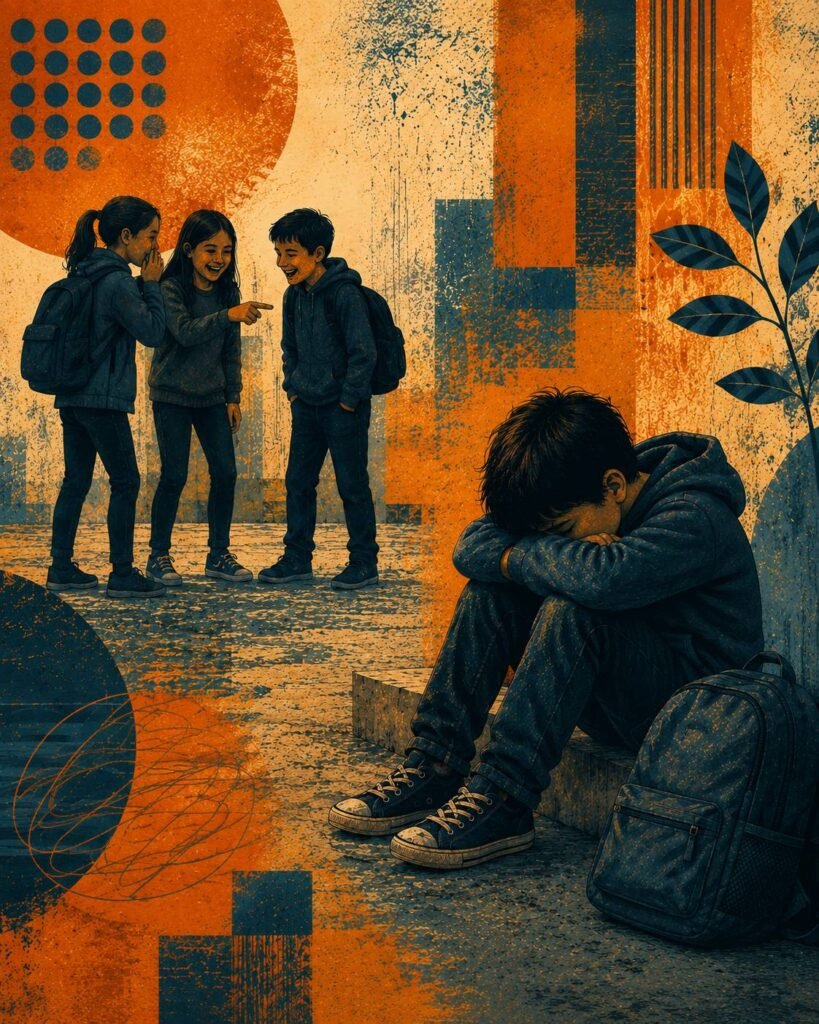
Helping children deal with bullying is not primarily a matter of advice-giving, problem-solving, or the transmission of strategies for managing difficult social situations — though all of these have their place. It is, first and most fundamentally, a matter of relationship: the child who is being bullied needs to experience, with reliable consistency, that there is at least one adult in their world who sees what is happening, takes it seriously without minimising or catastrophising, and remains warmly and steadily present through the full difficulty of what the child is carrying.
This matters because bullying specifically targets the child’s sense of social belonging — their conviction that they are valued, that they matter, that there is a place for them in the groups they inhabit. An adult response that dismisses, minimises, or moves too quickly to solution reinforces the child’s sense that their experience is not worth serious attention. An adult response that is warm, specific, genuinely curious about what the child is experiencing, and steady in the face of it begins to repair, through the quality of the relationship itself, some of what the bullying has eroded.
Beyond the relational foundation, children who are being bullied benefit from several specific kinds of support. They need help naming and externalising what they are feeling — because bullying generates a complex, often confusing mixture of shame, anger, sadness, confusion, and the particular pain of not understanding why they have been chosen. They need help rebuilding a sense of agency and social competence — because bullying specifically targets and erodes both. They need help identifying and strengthening the sources of safety, belonging, and positive identity that exist outside the bullying environment. And they need the kind of creative, expressive, play-based work that gives these processes a concrete, accessible, developmentally appropriate form.
Why Play Therapy Is Particularly Effective for Bullied Children
The case for play therapy as a response to bullying is grounded in the same neurological reality that makes bullying so damaging in the first place. Bullying activates the threat-detection system, moves the child’s nervous system out of the ventral vagal state of social engagement and safety, and makes the kind of verbally mediated, cognitively directed processing that most adult interventions depend on significantly less available. A bullied child sitting across from an adult being asked to talk about what happened and how it made them feel is being asked to access exactly the cognitive resources that their current neurological state has compromised.
Play bypasses this barrier. It operates through the right hemisphere — through image, symbol, sensation, and story — in the same register that the distressed nervous system is already using. A meta-analysis of 93 controlled play therapy studies identified moderate to substantial treatment effects across a diverse array of child emotional and behavioural issues — confirming play therapy as a broadly effective intervention for the kinds of psychological difficulties that bullying generates.
Research supports that well-implemented social-emotional learning initiatives — including role-playing and interactive storytelling — can lead to measurable improvements in social-emotional skills, creating safer educational environments and helping children navigate complex social situations while fostering empathy. These are precisely the skills that bullying most directly erodes — and precisely the skills that play-based therapeutic approaches are best positioned to rebuild.
Play therapy has been proven effective in reducing aggressive behaviour in children through various approaches and methods — which is significant both for children who are victims of bullying and for those whose own bullying behaviour reflects an unmet need that therapeutic intervention can address more effectively than punishment.
A 2024 scoping review of anti-bullying interventions confirmed that anxiety, despair, low self-esteem, and suicidal ideation are signs of bullying’s traumatic effect — and that the social environment’s support proved critical in reducing these outcomes. The therapeutic relationship at the centre of play therapy is itself a form of social environment support — one that communicates, through the quality of its consistent, warm, genuinely interested presence, that the child is valued, that their experience matters, and that they are not alone in what they are carrying.
What Play Therapy for Bullied Children Looks Like
Play therapy for a child experiencing bullying addresses the full range of what bullying does — not only the immediate distress but the longer-term impacts on identity, agency, social competence, and the child’s relationship to their own emotional experience.
Externalisation techniques — giving the bullying experience a form outside the child’s body, through drawing, sandtray, or narrative play — allow the child to approach material that is too overwhelming to engage with directly. The child who cannot talk about being excluded can often draw the experience, give it a character, and begin to explore it from the safety of a symbolic distance. That distance is not avoidance. It is the therapeutic condition that makes genuine engagement possible.
Identity and strengths-based work — helping the child identify, name, draw, and articulate what is genuinely and specifically theirs — directly addresses the identity erosion that sustained bullying produces. A child who has been told repeatedly, through the actions and words of peers, that they are not enough, not wanted, not belonging, needs a different kind of evidence. Play-based activities that help them discover and claim their particular strengths, qualities, and sources of meaning provide that evidence in the only form that genuinely reaches the part of the self that bullying has targeted.
Social skills and empathy development — through role-play, dramatic enactment, and collaborative play — rebuild the social competence that bullying erodes. The child who has come to fear social situations, who has learned to read ambiguous social cues as threatening, who has retreated from the social engagement that their development requires, needs repeated safe experiences of social interaction that produce different outcomes from the ones they have come to expect. The play therapy setting offers exactly this: a relational environment that is consistently safe, consistently warm, and consistently free from the dynamics of power and exclusion that characterise the bullying experience.

Before You Begin: A Note on Professional Support
Before attempting any therapeutic activities at home with a child who is experiencing bullying, I would sincerely recommend consulting a qualified mental health professional. The impact of bullying on children’s neurological, psychological, and developmental wellbeing is significant and deserves specialist assessment — both to understand the full scope of what the child is carrying and to ensure that the support offered is appropriate to that particular child’s needs. The frameworks described in this article are offered as a supportive resource for parents, caregivers, and educators — not as a substitute for clinical care.
Helping Children Deal With Bullying: The Play Therapy Toolbox
The Play Therapy Toolbox: 123 Simple Play Therapy Activities and Therapeutic Games Supporting Every Stage of Child Development from Age 3 to 12 was built around the understanding that children who have been bullied need to be met in the language their nervous systems are actually speaking — the language of play, image, story, and sensory experience — within the safety of a warm, consistently present, genuinely attuned relationship.
The bullying and social exclusion chapters address the full range of what bullying does to a child: the erosion of self-worth and social confidence, the hypervigilance that makes ordinary social situations feel threatening, the shame that keeps the child from telling anyone what is happening, the anger that has nowhere safe to go, the grief of a friendship or a social world that was lost, and the particular developmental task of rebuilding a sense of belonging and identity in the aftermath of sustained social harm.
Every activity comes with a therapeutic rationale grounded in peer-reviewed research, step-by-step guidance on how to conduct the session and exactly what to say, questions to use with the child, and a parent guidance note written in the same warm, accessible language as this article. The activities grow with the child — because a six-year-old being excluded on the playground and a twelve-year-old being ostracised online are both experiencing bullying, but the therapeutic approach needs to be completely different. And a comprehensive annex cross-references all 123 activities by presenting condition, age group, and page number — so you can navigate directly to the right tool for the right child at the right moment, without searching.
Three Things Worth Knowing
Bullying is not just a social problem — it is a neurological one.
The most important reframe available to any adult helping a child deal with bullying is this: what the child is experiencing is not simply social difficulty. It is a threat-response activation that is reshaping their brain’s calibration to the social world. The child who has been bullied needs support that reaches the nervous system — not only advice that reaches the rational mind. Play, creative expression, and the regulated presence of a warm, attuned adult are not soft alternatives to real intervention. They are the most direct routes into the neurological reality of what the child is carrying.
The child needs help rebuilding agency — not just surviving the experience.
Bullying specifically targets and erodes the child’s sense of power and social competence. An intervention that focuses only on helping the child manage the experience — to cope, to survive, to endure — leaves the central damage unaddressed. The most effective therapeutic response helps the child rebuild what was taken: the sense that they have something worth offering, that they can navigate social situations with some degree of effectiveness, and that who they are is not defined by what the bullying told them about themselves.
You are the most important tool in the room.
The research on what helps bullied children recover consistently identifies one factor above all others: the consistent presence of at least one warm, attuned adult who takes what is happening seriously and remains steadily present through the full difficulty of it. The activities in the Toolbox are the invitation. You are the reason the child believes their experience is worth bringing into the room. And that belief — that what they carry is worth someone’s genuine, unhurried attention — is where the healing begins.


Rostislava Buhleva-Simeonova is a psychologist and game design specialist. She has worked with children, adults, and the elderly within various therapeutic programmes over the past eight years, all the while providing the much-needed playful twist that art and gamified experiences can bring to this sometimes uneasy setting. But it wasn’t until the birth of her daughter, Aurora, that this work took on an even deeper personal meaning. With her academic and real-life experience, honed through numerous trainings and sessions, she is currently authoring books and articles in the field of child psychology and development, offering expertise in art and play therapy to guide parents and caregivers, as well as professionals in the fields of social work and mental health, throughout various pivotal moments in children’s lives. Last but not least, all of her books have been “peer-reviewed” by her daughter, who testifies to the efficiency of these methods.
References
Alfath, et al. (2025). Meta-analysis study: Effectiveness of play therapy to reduce children’s aggressiveness. Volume 13, No. 1.
Casseus, M., et al. (2025). Trends in childhood anxiety and depression 2016–2022. Infant and Child Development.
Hosokawa, R., et al. (2025). Social-emotional role-play model for bullying mitigation. TPM, 32(S5).
Kiefer, M., Sim, E.-J., Heil, S., Brown, R., Herrnberger, B., Spitzer, M., Grön, G., & Li, H. (2021). Neural signatures of bullying experience and social rejection in teenagers. PLOS ONE. https://doi.org/10.1371/journal.pone.0255681
Morese, R., et al. (2025). Neurobiology of emotional regulation in cyberbullying victims. Frontiers in Psychology, 16. https://doi.org/10.3389/fpsyg.2025.1473807
Palamarchuk, I. S. (2022). Integrative brain dynamics in childhood bullying victimization: Cognitive and emotional convergence associated with stress psychopathology. Frontiers in Integrative Neuroscience, 16. https://doi.org/10.3389/fnint.2022.782154
Pratiwi, et al. (2024). School-based interventions for bullying reduction: A systematic review. Journal of Public Policy.
Qu, Y., et al. (2025). The rising trend of emotional bullying in an Eastern Chinese city: A five-year epidemiological study among school-aged children (2020–2024). Frontiers in Public Health. https://www.ncbi.nlm.nih.gov/pmc/articles/PMC12630124/
Rohman Hikmat, et al. (2024). A scoping review of anti-bullying interventions: Reducing traumatic effects of bullying among adolescents. Journal of Multidisciplinary Healthcare, 17, 289–304. https://doi.org/10.2147/JMDH.S443841
Slavich, G. M., & Tsomokos, D. I. (2024). Social threats, immune upregulation, and health outcomes. Nature Mental Health, 2, 328–336.
Srivastava, A., et al. (2024). Behavioral and neural responses to social rejection: Individual differences in developmental trajectories across childhood and adolescence. PMC. https://pmc.ncbi.nlm.nih.gov/articles/PMC10958064/
Usta, E., et al. (2025). Exposure to bullying engages social distress circuits in the adolescent and adult brain. Journal of Neuroscience, 45(44). https://doi.org/10.1523/JNEUROSCI.0738-25.2025