
Every parent has been told that play is important. It comes from paediatricians and teachers and parenting books, usually delivered as a reassurance — don’t worry, play is how children learn — in a way that somehow manages to make play sound like a consolation prize for the fact that children will not sit still and do something more obviously educational. The message lands as a permission slip rather than a clinical finding. And it significantly undersells what the research actually shows.
Play is not important for child development in the way that vegetables are important for nutrition — a necessary background condition that supports what is really going on elsewhere. Play is the mechanism. It is the primary neurobiological driver of brain development, executive function, emotional regulation, and social cognition. Not one of several contributors. The primary driver. And understanding what that means — specifically, at the level of what play actually does to the developing brain — changes not only how we think about play but how we think about everything that is built from it.
What the 2026 Review Confirms
A 2026 narrative review published in Frontiers in Neuroscience synthesised current neuroscientific literature from both animal and human studies to examine the neurobiological underpinnings of play behaviour across developmental stages. The review was conducted by researchers at the University of Genoa’s Department of Neuroscience, Ophthalmology, Genetics and Mother-Child Health — and its findings are worth examining carefully, because they provide the most comprehensive and most clinically specific account yet of what play actually does inside the developing brain.
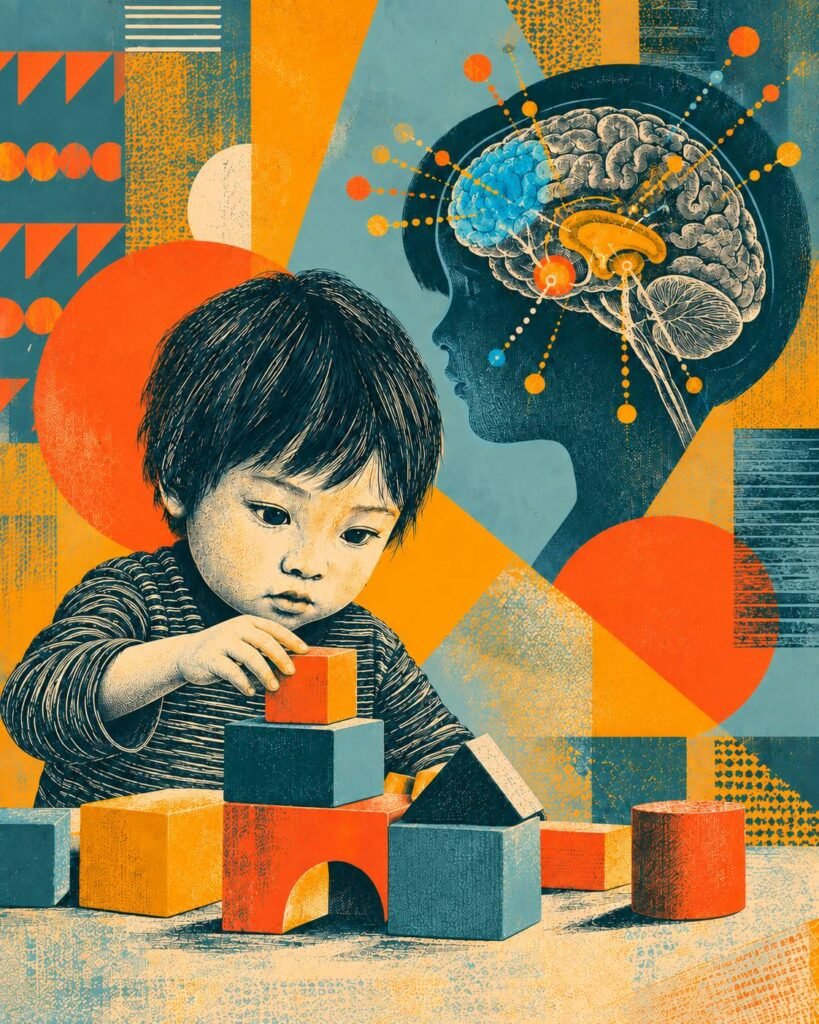
The review confirmed that play activates and strengthens specific brain regions — the prefrontal cortex, the amygdala, and the striatum — alongside neurochemical systems including dopamine and the opioid system. Each of these findings has direct practical significance, and understanding them changes the clinical picture of play from something broadly beneficial to something specifically and precisely productive.
The prefrontal cortex — the region responsible for planning, impulse control, working memory, decision-making, and the regulation of emotion — is activated and strengthened through play in ways that no other activity in childhood replicates with the same consistency or the same developmental breadth. The prefrontal cortex is also the region most consistently implicated in the difficulties that bring children to therapeutic attention: the child who cannot regulate their anger, who acts before thinking, who struggles to hold a goal in mind across a sequence of actions. And it is the region most directly built by exactly the kind of play that therapeutic approaches like the Play Therapy Toolbox are designed to provide.
The amygdala — the brain’s threat-detection and emotional processing system — is engaged by play in a way that supports the gradual calibration of the emotional response system. A child who plays regularly, who experiences manageable challenges within a safe relational context, who navigates pretend threats and social friction and competitive dynamics within the protective frame of play, is building the amygdala’s capacity to distinguish genuine threat from manageable challenge — precisely the calibration that anxiety disorders represent a failure of.
The striatum — the region most directly involved in the brain’s reward system and in the processing of motivation, habit formation, and the reinforcement of behaviour — is activated by play through the dopaminergic pathways that generate the felt sense of enjoyment, curiosity, and intrinsic motivation. The review confirmed that dopamine release during play is not simply the neurochemical signature of enjoyment. It is the mechanism through which play-based experiences are consolidated into learning, into habit, and into the neural patterns that shape behaviour long after the play itself has ended.
What Executive Function Has to Do With It
One of the most important findings in the 2026 review is the specific confirmation that play trains executive function — and that social playfulness in particular holds unique potential for interventions aimed at training executive function in primary school children, as it is highly enjoyable and easy to integrate into daily activities.
Executive function is the cluster of cognitive capacities — including working memory, cognitive flexibility, and inhibitory control — that underlies virtually everything we ask children to do in educational and therapeutic settings. It is what allows a child to hold a goal in mind while navigating the steps to reach it, to shift attention from one thing to another without losing track of the first, and to inhibit an immediate impulse in favour of a longer-term outcome. It is also one of the strongest predictors of academic achievement, social competence, and long-term mental health outcomes available in the developmental literature.
And it is built by play. Not as a side effect. Not incidentally. Specifically and directly, through the particular cognitive demands that play makes on the developing brain — the need to hold the rules of a pretend scenario in mind, to adapt when a play partner changes direction, to inhibit the impulse to simply grab the toy and instead negotiate for it, to plan the next move in a game while tracking what has already happened.
A 2025 study published in Scientific Reports, cited in the Frontiers review, found that playful interaction — as distinct from physical activity — improved attentional performance in children and enhanced positive mood and social bonds with the co-player. The specificity of the finding is significant: it was playful interaction that produced the effect, not exercise or general activity. The social, imaginative, emotionally engaged quality of play is what activates the executive function circuitry — not the physical movement alone.
Play, Emotional Regulation, and the Therapeutic Significance
The 2026 review’s confirmation that play produces measurable improvements in emotional regulation is, from a clinical perspective, the most directly significant finding for therapeutic practice with children.
Emotional regulation — the capacity to notice what one is feeling, tolerate its intensity, and respond in a way that does not overwhelm oneself or others — is the developmental capacity most consistently implicated in the difficulties that bring children to therapeutic attention. Anxiety, trauma responses, anger and behavioural difficulties, social withdrawal, the particular presentations of ADHD and neurodevelopmental difference — all of these involve, at their neurological root, a regulatory system that has been disrupted, underdeveloped, or overwhelmed.
Play and brain development in children are connected through the specific regulatory mechanisms that play activates. The child who engages in pretend play is practising the felt regulation of imagined emotional states — inhabiting the experience of a frightened character, a powerful character, a lost character finding their way home — and building, through that practise, the neural pathways for recognising, tolerating, and modulating emotional experience. The child who plays collaboratively with peers is practising the interpersonal regulation of emotional arousal — managing frustration, negotiating conflict, calibrating excitement to the level that keeps the game running — and building the social regulatory capacities that all genuine human connection depends on.
Research published in Developmental Science confirmed that maternal sensitivity during play — the quality of the adult’s attuned, responsive engagement during shared play activities — is directly associated with the development of neural responses in the prefrontal cortex that underlie cognitive control and self-regulation. This finding establishes a direct neurobiological link between the quality of adult engagement in play and the development of the regulatory brain systems most critical for children’s mental health. The adult’s presence in play is not simply a warm backdrop. It is a developmental intervention at the neurological level.

What Happens When Play Is Restricted
Understanding play and brain development in children requires also understanding what the research shows about what happens when play is restricted — because the consequences are both specific and clinically significant.
The 2026 Frontiers review confirmed that play deprivation — the systematic absence of the play experiences that drive neurobiological development — produces measurable deficits in exactly the brain regions and capacities that play is designed to build: the prefrontal cortex, executive function, emotional regulation, and social cognition. These are not soft outcomes. They are the neurological foundations of the child’s capacity to learn, to relate, to regulate, and to navigate the challenges of growing up.
Children whose access to play has been restricted — by early adversity, by chronic stress, by environments that prioritise compliance over creative engagement, or by the developmental disruptions that trauma produces — are children whose play and brain development has been specifically and measurably impacted. And this is precisely the population most likely to come to therapeutic attention — and most in need of the specific neurobiological restoration that structured, attuned, therapeutically designed play can provide.
The review’s particular emphasis on children who have experienced early adversity as the population for whom play-based neurorehabilitation is most significant is directly relevant to therapeutic practice. For these children, play is not simply a pleasant activity that supports general development. It is a neurobiological intervention that targets precisely the brain regions and regulatory systems that adversity has most specifically impacted.
Play and Brain Development in Children: What This Means for the Toolbox
The Play Therapy Toolbox: 123 Simple Play Therapy Activities and Therapeutic Games Supporting Every Stage of Child Development from Age 3 to 12 was built on exactly the neurobiological understanding that the 2026 Frontiers review has now articulated most comprehensively: that play is not a vehicle for delivering therapeutic content but the primary neurobiological mechanism through which the therapeutic change happens.
Every activity in the Toolbox is designed to activate the specific brain regions and regulatory systems that the research identifies as central to healthy development and therapeutic recovery: the prefrontal cortex, through activities that require planning, sequencing, and the regulation of impulse within a meaningful creative or narrative frame; the dopaminergic reward system, through the intrinsic motivation and genuine enjoyment that well-designed play activities generate; the amygdala’s calibration system, through the graduated, safe exposure to emotional material that play’s protective frame provides; and the social regulatory systems, through the consistent, attuned, co-regulating presence of the adult within the play activity.
The parent guidance notes across the Toolbox reflect the research finding that maternal and caregiver sensitivity during play is a direct neurobiological moderator of outcome — because the adult who understands what a play activity is doing neurologically is an adult who can bring the quality of engaged, attuned presence that turns a well-designed activity into a genuine developmental and therapeutic intervention.
Before You Begin: A Note on Professional Support
The neuroscience of play confirms that structured, adult-engaged, therapeutically designed play activities produce genuine and measurable neurobiological benefits for children. Before using the Toolbox with a child who is experiencing significant emotional, behavioural, or developmental difficulties, I would sincerely recommend consulting a qualified mental health professional. The activities are designed to be accessible to non-specialist adults — but they are most effective as part of a broader support plan that includes professional guidance where it is needed.
Three Things Worth Knowing
Play is the mechanism, not the medium.
The most important shift any adult can make in their understanding of play and brain development in children is this: play is not the vehicle through which children learn and develop — it is the process through which the brain is built. The prefrontal cortex, the amygdala, the striatum, the dopaminergic pathways that underlie motivation and consolidate learning — these are not developed by play in the way that a muscle is developed by exercise. They are developed through play because play is the activity for which these systems were neurobiologically designed. Restricting play does not simply remove a pleasant activity. It removes the primary driver of the neurological development that everything else depends on.
The adult’s presence is the most powerful variable.
The 2026 review’s finding that maternal sensitivity during play is directly associated with the development of prefrontal regulatory systems in infants is the research equivalent of something every good play therapist has always known: the quality of the adult’s engaged, attuned, genuinely interested presence in the play is the single most powerful moderator of its developmental and therapeutic effect. The activities are the structure. The adult’s warm, unhurried, genuinely curious engagement is what activates the neurobiological mechanism.
Play-based neurorehabilitation is most significant for children who have experienced adversity.
The 2026 review’s specific identification of children with early adversity as the population for whom play-based neurobiological intervention is most important is not an incidental finding. It is the clinical justification for structured, therapeutically designed play as the primary intervention modality for the children who most need support — not because it is gentler than other approaches, but because it specifically and precisely targets the neurological systems that adversity has most directly impacted. For these children, play and brain development in children are not simply connected. They are the same project.
Available Now for $5.99 — For a Limited Time
If this exploration of play and brain development in children gave you a sense of why play is not preparation for the important things but the neurobiological mechanism through which the most important things are built, The Play Therapy Toolbox gives you 123 activities designed around exactly that understanding. The ebook is available now on Amazon at $5.99 for a limited time — with immediate access to 123 activities and 75+ full-colour printable worksheets for children aged 3 to 12.
Play is not preparation for life. It is life — in its most honest, most essential, most healing form.

Disclaimer: This article is intended as an educational and supportive resource for parents, caregivers, educators, and mental health professionals. It is not intended to diagnose, treat, or replace professional therapeutic or medical care. If a child is experiencing significant emotional, behavioural, or developmental difficulties, please seek guidance from a qualified mental health professional.

Rostislava Buhleva-Simeonova is a psychologist and game design specialist. She has worked with children, adults, and the elderly within various therapeutic programmes over the past eight years, all the while providing the much-needed playful twist that art and gamified experiences can bring to this sometimes uneasy setting. But it wasn’t until the birth of her daughter, Aurora, that this work took on an even deeper personal meaning. With her academic and real-life experience, honed through numerous trainings and sessions, she is currently authoring books and articles in the field of child psychology and development, offering expertise in art and play therapy to guide parents and caregivers, as well as professionals in the fields of social work and mental health, throughout various pivotal moments in children’s lives. Last but not least, all of her books have been “peer-reviewed” by her daughter, who testifies to the efficiency of these methods.
References
American Academy of Pediatrics. (2018, reaffirmed 2025). The power of play: A pediatric role in enhancing development in young children. Pediatrics, 142(3), e20182058. https://doi.org/10.1542/peds.2018-2058
Canepa, M. E., & Ramenghi, L. A. (2026). The neurobiology of play: A narrative review of evidence from mice and humans for advancing neurorehabilitation. Frontiers in Neuroscience, 19, 1729411. https://doi.org/10.3389/fnins.2025.1729411
Gelo, O. C. G., et al. (2025). Specific and common therapeutic factors in psychodynamic psychotherapy for children and adolescents: An overview. Frontiers in Psychology, 16, 1525849. https://doi.org/10.3389/fpsyg.2025.1525849
Stern, J. A., et al. (2024). Love on the developing brain: Maternal sensitivity and infants’ neural responses to emotion in the dorsolateral prefrontal cortex. Developmental Science. https://doi.org/10.1111/desc.13497
Therapas. (2025). 2025 literature summary: Play therapy for psychologists and OTs. https://therapas.com.au/literature-summary-play-therapy/
Veraksa, A. N., et al. (2025). Non-therapeutic play to overcome negative emotional symptoms and improve emotional intelligence in children aged 3–7: A systematic review. Frontiers in Psychology. https://doi.org/10.3389/fpsyg.2025.1475387
Yaffe, Y., et al. (2025). Playful interaction improves attentional performance and positive mood in children. Scientific Reports.