
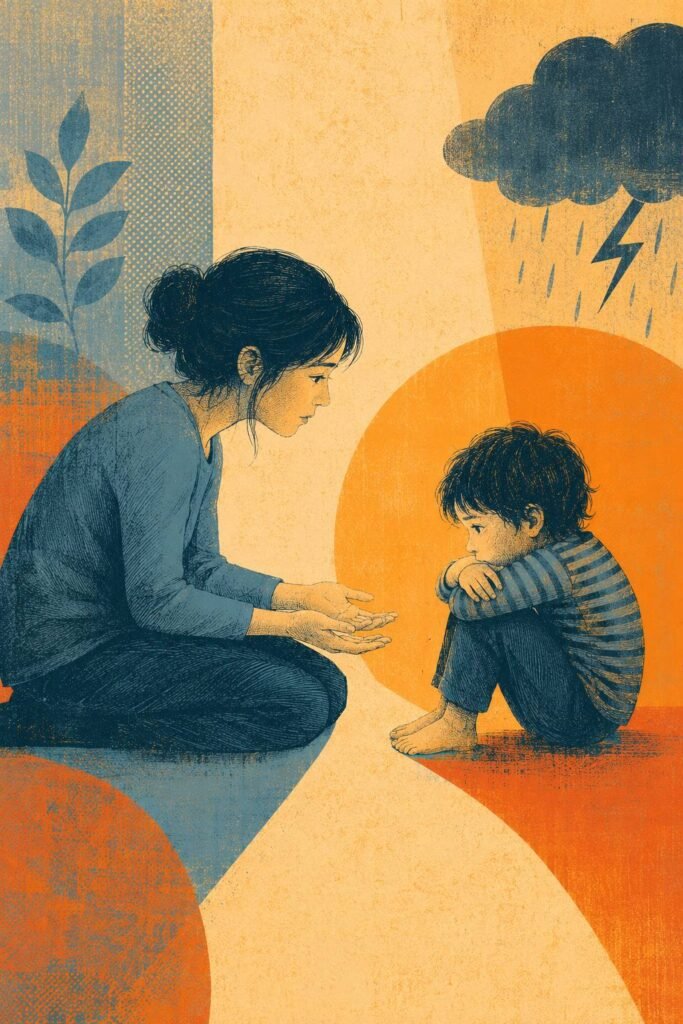
Every parent has stood in that moment — something has happened to their child, something that should not have happened, and the child before them is not quite the same as the child who was there before. Not because they are broken. Not because the damage is permanent and irreversible. But because a nervous system that has encountered something overwhelming has changed its settings — become more watchful, more reactive, more defended — in exactly the way a nervous system is designed to do.
Childhood trauma is not rare. It is not confined to extreme circumstances. And it does not always look the way adults expect it to look. The child who is persistently irritable, who struggles to sleep, who cannot concentrate in school, who regresses to earlier behaviours, who flinches at unexpected sounds, who has become quiet in a way that is qualitatively different from their ordinary quiet — that child may be carrying something that deserves more than time and patience, however generously both are offered.
What that child needs is the right kind of support — delivered in the right language, at the right developmental stage, within the right kind of relationship. And the research is increasingly clear on what that looks like.
How Prevalent Is Childhood Trauma?
The scale of childhood trauma is considerably larger than most adults realise — and its effects considerably more far-reaching than the visible presenting symptoms tend to suggest.
According to SAMHSA (2024), more than two thirds of children report encountering at least one traumatic event by the age of sixteen. These are not only the children in clinical settings, the ones whose presentations have become severe enough to generate a referral. They are children in classrooms, in families, in communities — carrying experiences that have altered their neurological, emotional, and cognitive development in ways that may not be immediately visible but are no less real for that.
The persistent reactions that follow traumatic experiences disrupt daily life long after the traumatic incidents cease — encompassing emotional distress, behavioural shifts, self-regulation challenges, impaired social interactions, regression in skills, academic difficulties, nightmares, and disrupted sleep and eating patterns. This profile is not simply the child being difficult. It is the child’s nervous system doing exactly what it was designed to do — maintaining a level of vigilance appropriate to the threat it has encountered, long after the threat itself has passed.
What Trauma Does to the Developing Brain
Understanding play therapy for childhood trauma requires first understanding what trauma actually does to the developing brain — because the treatment logic follows directly from the neurological reality.
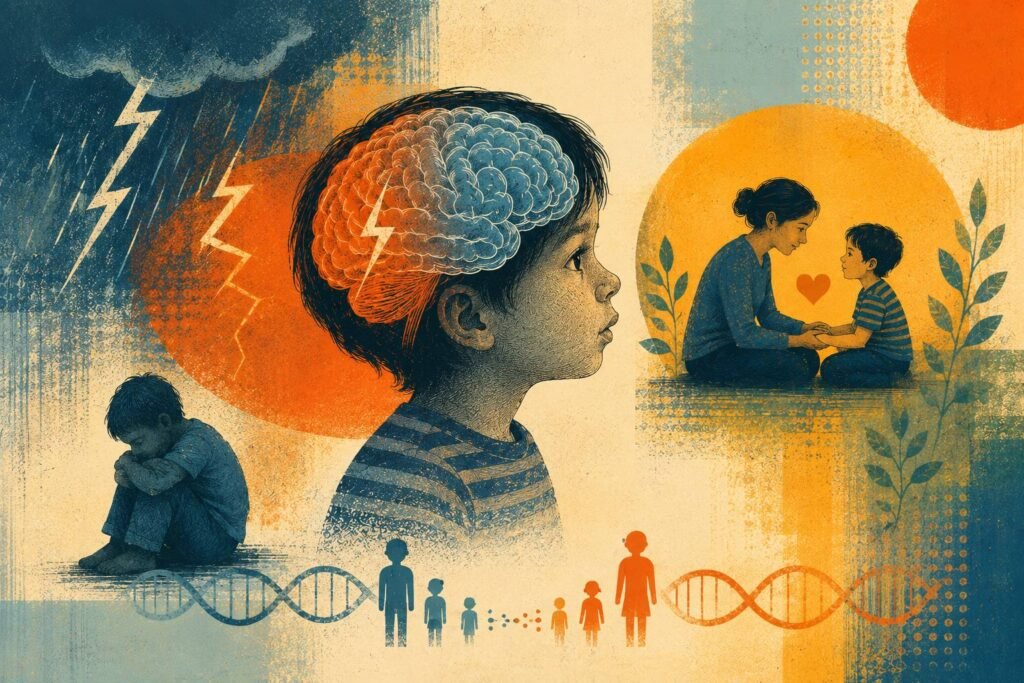
The brain processes threatening experiences through the amygdala — the threat-detection system — which activates the body’s stress response with a speed and completeness that bypasses the slower, more deliberate processes of the prefrontal cortex. In a single overwhelming experience, or across repeated exposures to threatening or neglectful conditions, the amygdala’s sensitivity becomes calibrated to a world that is consistently dangerous. The threshold for activation drops. The stress response fires more readily, more intensely, and is slower to return to baseline. And the prefrontal cortex — responsible for language, logic, emotional regulation, and the capacity to distinguish past threat from present safety — becomes less available precisely when it is most needed.
A 2025 systematic review and meta-analysis published in the Annals of Medicine found that early childhood trauma has profound, long-term effects on multiple cognitive domains, including processing speed, attention, memory, and executive functioning. These are not peripheral effects. They are central to everything the child will be asked to do in school, in relationships, and in the daily cognitive and emotional demands of growing up.
A 2025 paper in Frontiers in Psychology confirmed that adverse, neglectful, and traumatic exposures impact individuals’ emotional wellbeing, quality of adult relationships, and growth — and that the parent-child relationship is highly impactful for the holistic development of children and young people. And a 2025 review in MDPI Behavioural Sciences confirmed that childhood trauma is linked to depressive and anxiety disorders, ADHD, PTSD, and personality disorders — and introduced a model encompassing behavioural transmission of negative parenting, neural encoding of traumatic stress, and mechanisms of epigenetic remodelling.
The word epigenetic here is worth pausing on. Trauma does not only alter the brain’s functional patterns. It can alter gene expression — changing the way stress-response genes are switched on and off in ways that can persist across the lifespan and, in some cases, across generations. This is not a counsel of despair. It is a clinical imperative: the earlier the intervention, the more plastic the nervous system, and the more completely the effects of early trauma can be addressed.
Why Children Cannot Simply Talk It Through
The most important thing to understand about play therapy for childhood trauma — and the thing that most distinguishes it from adult-oriented therapeutic approaches — is this: the part of the brain most compromised by trauma is the part that talk therapy most depends on.
Language is a prefrontal cortex function. It requires the ability to retrieve, sequence, and articulate experience in a way that is orderly, linear, and available to conscious reflection. A child whose nervous system is in a chronic state of low-level activation — whose amygdala is calibrated to a world that is consistently threatening — does not have reliable access to these functions. Asking them to talk about what happened, to describe how it felt, to reflect on what it means, is asking them to use precisely the tool that trauma has made least available.
Unlike many adult talk therapies, child-centered play therapy works through symbolic and sensory channels, making it especially effective for addressing preverbal trauma and attachment disruptions. Play, drawing, storytelling, movement, and sensory engagement are the tools most available to a traumatised child’s nervous system — the languages through which emotional and experiential processing can happen without requiring the verbal, linear, consciously directed engagement that trauma specifically disrupts.
This is not simply a matter of developmental appropriateness. It is a neurological necessity. And the research on play therapy for childhood trauma reflects this with increasing consistency.
The Evidence for Play Therapy With Traumatised Children
The evidence base for play therapy as a treatment for childhood trauma has grown substantially in the past decade — and while the field continues to call for more rigorous methodologies and larger randomised controlled trials, the existing research is both consistent and compelling.
The Association for Play Therapy has conducted over twenty randomised controlled trials on the effectiveness of play therapy, including studies exploring the impact of play therapy with attention problems, aggression, anxiety, depression, academic achievement, social and emotional skills, relationship stress, and adverse childhood experiences. Play therapy is recognised as an evidence-based practice by professional organisations for anxiety, disruptive behaviours, and victims of domestic violence.
A systematic review by Parker and colleagues (2020) included 32 studies and reported that child-centred play therapy reduced behavioural symptoms resulting from trauma — and noted that trauma presentations in children are often confused with ADHD, particularly in children experiencing poverty, systemic discrimination, and attachment difficulties. This confusion has significant clinical implications: a child whose trauma presentation is read as a behavioural disorder and treated accordingly will not receive the intervention that actually addresses the underlying neurological reality.
A 2023 study published in the Journal of Practice in Clinical Psychology found that play therapy combined with trauma-focused cognitive behavioural therapy significantly reduced trauma symptoms and feelings of loneliness in children aged 8 to 12 who had experienced abuse. The combination of play-based and cognitive approaches — meeting the child in their natural medium while also engaging the developing prefrontal cortex as it becomes available — reflects the kind of integrative, developmentally attuned practice that the research increasingly supports.
A 2025 comprehensive content analysis of play therapy research on childhood trauma, published in the International Journal of Play Therapy, examined 18 studies from 2010 to 2023 and confirmed play therapy as a structured and evidence-based intervention for childhood trauma — while calling for continued development of rigorous methodological frameworks to further consolidate the evidence base.
The Neuroscience of Why Play Therapy Works
The theoretical framework that has most substantially advanced the clinical understanding of why play therapy works with traumatised children is polyvagal theory — developed by Stephen Porges and now extensively applied in trauma-informed therapeutic practice with children.
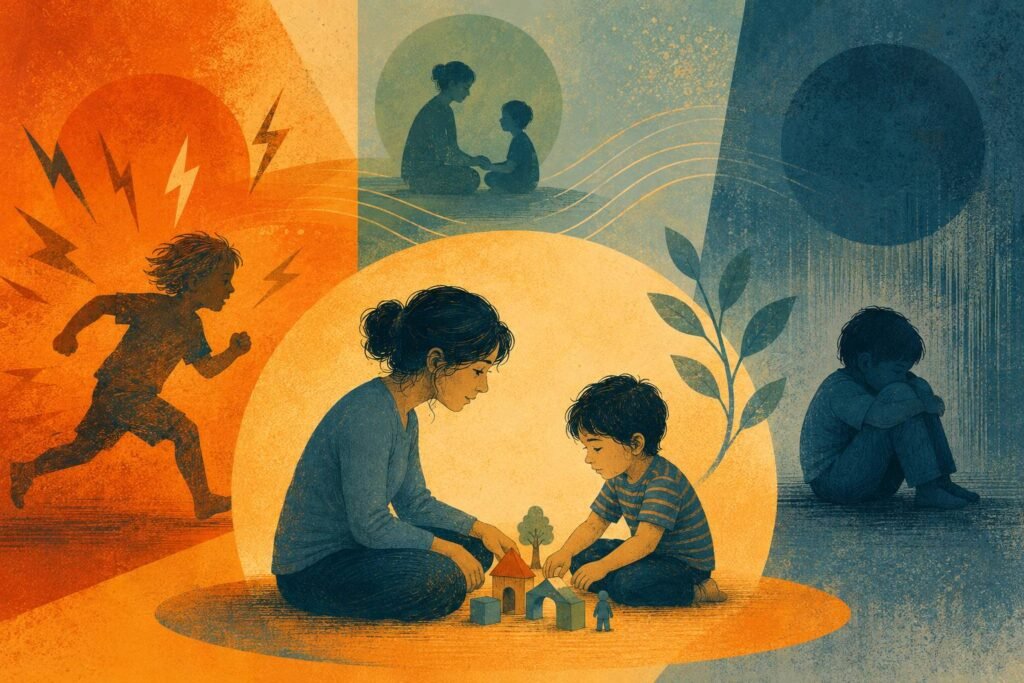
Polyvagal theory proposes that the autonomic nervous system operates in a hierarchy of three states: the ventral vagal state of social engagement and safety; the sympathetic state of fight or flight; and the dorsal vagal state of freeze and shutdown. Trauma moves the nervous system out of the ventral vagal state — the state in which genuine learning, connection, and therapeutic engagement are possible — and into the defensive states of sympathetic or dorsal vagal activation. The therapeutic task is not simply to address the content of the trauma but to restore the nervous system’s capacity to access the ventral vagal state reliably and sustainably.
Child-centred play therapy facilitates safety, engagement, co-regulation, understanding of self, regulatory expansion, and exploration — the precise elements emphasised in polyvagal theory. This process expands emotional regulation, which is particularly helpful for children who have experienced trauma, and offers a neurobiologically informed understanding of how play therapy heals the wounds left by adverse childhood experiences.
A 2024 paper in Frontiers in Psychology confirmed that polyvagal theory offers significant opportunities for strengthening resilience by treating emotion-regulation problems, stress, and trauma — and for restoring regulation of the autonomic nervous system through creative, somatic, and play-based therapeutic modalities. The paper notes that approximately 80% of nerve signals travel from the body to the brain, rather than from brain to body — which means that interventions that engage the body directly, through play, movement, and sensory experience, have a more direct route to the nervous system than verbal, cognitively directed approaches.
Research highlights that adaptive, flexible approaches yield the best outcomes in trauma-informed care for children — and that combining play therapy, somatic practices, and polyvagal-informed interventions enhances the therapeutic experience, particularly for young clients, by addressing their unique needs and building self-regulation skills they can carry into adulthood.
What Play Therapy for Childhood Trauma Looks Like in Practice
Play therapy for childhood trauma is not free play observed from a distance. It is a structured, theoretically grounded, clinically directed process in which the therapist uses the child’s natural medium — play, drawing, storytelling, symbolic enactment, sensory engagement — as the primary vehicle for therapeutic intervention.
The therapeutic relationship is the container within which all of this happens. A child whose nervous system has learned, through traumatic experience, that the world is not safe and that people cannot be trusted, does not become available for therapeutic work through technique alone. They become available through the accumulated experience of a consistent, warm, attuned adult presence — a therapeutic relationship that communicates, through repeated small moments of attentiveness and genuine interest, that this space is different from the ones that hurt them.
Within that relationship, the therapist reads the child’s nervous system moment to moment — tracking the signs of activation and withdrawal, adjusting the pace and the nature of the work in response to what the child’s body is communicating rather than only what their words are saying, and ensuring that the child’s window of tolerance — the zone of activation within which genuine therapeutic processing is possible — is maintained rather than exceeded.
Activities that engage the body directly — movement, rhythm, sensory play, somatic regulation exercises — are particularly important with traumatised children because they address the nervous system at the level where trauma is stored: not in narrative memory, which may be fragmented or unavailable, but in the body’s patterns of activation and response. Symbolic play — sandtray, puppet work, role-play and dramatic enactment — allows the child to approach traumatic material from a protective distance, externalising and exploring experience that would be too overwhelming to engage with directly.

The Role of the Caregiver
One of the most consistent findings in the contemporary research on play therapy for childhood trauma is the significance of the caregiver relationship — not only as a context for the child’s healing but as an active therapeutic medium in its own right.
Grief reactions — and trauma responses more broadly — unfold within the child’s caregiving context, as children rely heavily on the adults in their environment to navigate and cope with overwhelming experiences. A child whose primary caregiver is themselves regulated, attuned, and capable of receiving the child’s distress without being overwhelmed by it has a fundamentally different recovery trajectory than one whose caregiver is themselves dysregulated, frightened, or unable to remain present to the child’s emotional reality.
This is not a judgement of caregivers — many of whom have themselves been affected by the same events that traumatised the child, or who carry their own histories of unresolved trauma that are activated by the child’s distress. It is a clinical observation with direct practical implications: supporting the caregiver is not secondary to the child’s treatment.
The Play Therapy Toolbox addresses this directly. Every activity includes a parent guidance note — written in the same warm, plain, practical language as the activity itself — that helps the caregiver understand what the activity is doing therapeutically, how to be present alongside it, and what to do with what emerges. Because the adult who sits beside a traumatised child during a therapeutic activity is not simply facilitating an exercise. They are offering their regulated nervous system as the most powerful co-regulatory resource available.
Play Therapy for Childhood Trauma: The Play Therapy Toolbox
Before attempting any therapeutic activities at home, I would sincerely recommend consulting a qualified mental health professional experienced in childhood trauma. The tools described here are offered as a supportive framework — not as a replacement for the clinical assessment and ongoing care that a trained therapist provides.
The Play Therapy Toolbox: 123 Simple Play Therapy Activities and Therapeutic Games Supporting Every Stage of Child Development from Age 3 to 12 was built around the understanding that the most effective trauma intervention for a child is one that meets them in their own language — the language of play, image, story, and sensory experience — within the safety of a warm, attuned, consistently present relationship.
The trauma and difficult experiences chapter addresses the full range of presentations children bring: the hypervigilance of the child whose nervous system remains on high alert long after the threat has passed; the emotional flooding that arrives without warning and subsides without resolution; the regression to earlier developmental behaviours; the nightmares and sleep disruption; the disconnection from learning and from relationships; the particular clinical presentations of children who have experienced abuse, neglect, family violence, loss, or the accumulated weight of chronic adversity.
Every activity comes with a therapeutic rationale grounded in peer-reviewed research, step-by-step guidance on how to conduct the session and exactly what to say, questions to use with the child, and a parent guidance note written in the same warm, accessible language as this article. The activities grow with the child — because a three-year-old and an eleven-year-old may carry the same traumatic experience but require completely different therapeutic approaches to reach it. And a comprehensive annex cross-references all 123 activities by presenting condition, age group, and page number — so you can navigate directly to the right tool for the right child at the right moment, without searching.
Three Things Worth Knowing
Trauma responses are not behaviour problems.
The child who is persistently irritable, who cannot concentrate, who explodes over small provocations, who flinches at unexpected sounds, who seems unreachable in the moments when connection matters most — that child is not choosing these responses. They are the product of a nervous system doing its job with extraordinary fidelity to the experiences it has been given. The most important reframe any adult can make when supporting a traumatised child is this: what happened to them, not what is wrong with them.
Early intervention is significantly more effective than later treatment.
The research on this point is consistent and clear. The developing nervous system is more plastic — more capable of genuine reorganisation — than the adult nervous system. An intervention that reaches a traumatised child at age six is not simply earlier than one that reaches them at sixteen. It is operating on a system that is categorically more responsive to change. Every month that passes without appropriate support is not neutral time. It is time during which the nervous system’s trauma-adapted patterns are consolidating. The most important thing any adult can do when they recognise the signs of childhood trauma is to act — warmly, promptly, and with the right kind of help.
You are the most important tool in the room.
Play therapy for childhood trauma is not delivered by worksheets or activities or techniques. It is delivered through the quality of the relationship within which those tools are offered. A child whose nervous system has learned that the world is not safe becomes available for healing primarily through the repeated, consistent, embodied experience of a relationship that is different — one in which their distress is met with warmth rather than alarm, their play is received with genuine interest rather than assessment, and their particular way of being in the world is held with the kind of steady, unhurried regard that begins, over time, to give the nervous system new evidence about what the world is actually like.
Disclaimer: This article is intended as an educational and supportive resource for parents, caregivers, educators, and mental health professionals. It is not intended to diagnose, treat, or replace professional therapeutic or medical care. If a child is experiencing significant emotional, behavioural, or developmental difficulties, please seek guidance from a qualified mental health professional.


Rostislava Buhleva-Simeonova is a psychologist, art therapist, and gamificator. She has worked with children, adults, and the elderly within various therapeutic programmes over the past eight years, all the while providing the much-needed playful twist that art and gamified experiences can bring to this sometimes uneasy setting. But it wasn’t until the birth of her daughter, Aurora, that this work took on an even deeper personal meaning. With her academic and real-life experience, honed through numerous trainings and sessions, she is currently authoring books and articles in the field of child psychology and development, offering expertise in art and play therapy to guide parents and caregivers, as well as professionals in the fields of social work and mental health, throughout various pivotal moments in children’s lives. Last but not least, all of her books have been “peer-reviewed” by her daughter, who testifies to the efficiency of these methods.
References
Conroy, J., & Perryman, K. (2022). Treating trauma with child-centered play therapy through the SECURE lens of polyvagal theory. International Journal of Play Therapy, 31(3), 143–152. https://doi.org/10.1037/pla0000172
Fan, X., & Kang, Y. (2025). Early childhood trauma and long-term cognitive outcomes: A systematic review and meta-analysis. Annals of Medicine, 57(1).
Haeyen, S. (2024). A theoretical exploration of polyvagal theory in creative arts and psychomotor therapies for emotion regulation in stress and trauma. Frontiers in Psychology, 15, 1382007. https://doi.org/10.3389/fpsyg.2024.1382007
Jafarzade, M., Mohammadpanah Ardakan, A., & Rezapour Mir Saleh, Y. (2023). The effectiveness of play therapy combined with trauma-focused cognitive behavioral therapy on trauma symptoms and the loneliness feeling. Journal of Practice in Clinical Psychology, 11(3), 211–222. https://doi.org/10.32598/jpcp.11.3.614.2
Moon, J., et al. (2025). Exploring play therapy and childhood trauma: A recent content analysis (2010–2023). International Journal of Play Therapy, 34(4), 182–194. https://doi.org/10.1037/pla0000240
National Child Traumatic Stress Network (NCTSN). (2025). Trauma types and effects. https://www.nctsn.org
Parker, M. M., Hergenrather, K., Smelser, Q., & Kelly, C. T. (2020). Exploring child-centered play therapy and trauma: A systematic review of literature. International Journal of Play Therapy, 30(1), 2–13. https://doi.org/10.1037/pla0000136
Porges, S. W. (2017). The pocket guide to the polyvagal theory: The transformative power of feeling safe. W. W. Norton & Company.
Ray, D. C. (2020). Why play therapy is appropriate for children with symptoms of PTSD. Association for Play Therapy.
Saladino, V., et al. (2025). Adverse childhood experiences, parent-child relationship, and emotional wellbeing. Frontiers in Psychology.
SAMHSA. (2024). Trauma and violence. Substance Abuse and Mental Health Services Administration. https://www.samhsa.gov
MDPI Behavioral Sciences. (2025). Childhood trauma and psychiatric outcomes: Behavioural transmission, neural encoding, and epigenetic mechanisms. Behavioral Sciences.