
Most parents have stood in a doorway listening to a fight they can’t quite make out. A toy has been taken, a rule has been broken, an accusation has been made, and a raised voice says “It’s not FAIR.” The instinct is to end it quickly, with a ruling or a “stop it, both of you.”
Underneath the noise, something else is going on. Siblings spend a great deal of time together, they know each other intimately, and they fight, plot, play and comfort one another in ways that are hard to find elsewhere in a child’s life. Researchers have been studying what that does to development for decades. The research on sibling relationships and child development offers some solid findings, some modest and mixed ones, and a few cautions, and it says as much about how a sibling pair is doing as about the fact of having one.
What Makes the Sibling Relationship Distinctive
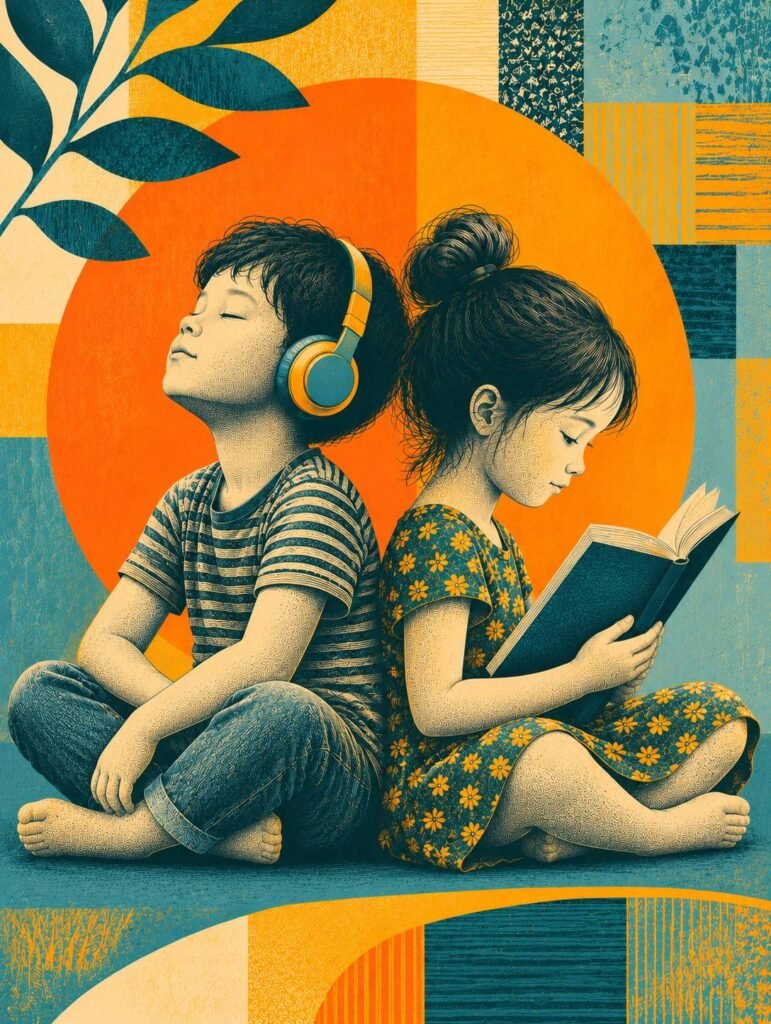
Most children grow up with at least one sibling. In the United States, around 78 percent of children do, according to Census-based figures cited by Dirks and colleagues (2015). Feinberg, Solmeyer and McHale (2012) note that siblings spend considerable time together, and that their characteristics and dynamics substantially influence developmental trajectories.
What sets the sibling relationship apart from friendships and from the parent-child relationship is its mix of features. Whiteman, McHale and Soli (2011) describe it as having both hierarchical and reciprocal elements: an older child often takes a more powerful role, but siblings are also peers who give and take. Siblings share a long history and an emotionally intense bond (Dunn, 2002). They can influence each other directly, as companions and playmates, and indirectly, through their place in the family: who is compared to whom, who gets which role, and how parents treat each of them (McHale, Updegraff & Whiteman, 2012).
Warmth and conflict are not opposites here. The same sibling relationship can contain a great deal of both, which is one reason a single fight tells you little about the relationship as a whole.
Siblings and Social Understanding
One of the most studied questions is whether siblings help children understand other people’s minds. A key milestone is false-belief understanding, around age four, when children grasp that someone else can believe something that isn’t true.
In an influential 1994 study, Perner, Ruffman and Leekam found that children with siblings were more likely to pass false-belief tasks than children without them. Ruffman and colleagues (1998) then pooled data from 444 children in England and Japan. They found that understanding rose with the number of older siblings, and found no helpful effect of younger siblings at any age. A longitudinal study by McAlister and Peterson (2013) found that advanced theory of mind went with having siblings and with having more child-aged siblings.
Why might siblings help? One idea is that sibling life is a natural laboratory for mental states: there are mistakes, tricks, imagination and disagreement, all of which make it obvious that people see things differently. Howe and colleagues (1998) observed that sibling pairs who engaged in frequent pretend play used more high-level negotiation and more talk about internal states, such as thoughts and feelings.
Before treating this as proof that every child needs a sibling, it helps to know how modest the picture is:
- A meta-analysis by Devine and Hughes (2018) of 93 studies of children aged 3 to 7 found modest links between false-belief understanding and four family factors: socioeconomic status, number of siblings, parents’ mental-state talk and parental mind-mindedness. The links held even after verbal ability was taken into account.
- Parents’ talk about thoughts and feelings is on that list too. Parents matter for social understanding, and siblings are one influence among several.
- Findings on older versus younger siblings are mixed across studies.
Siblings and Conflict
Sibling conflict is frequent, and it is also an unusual practice ground. Children have to argue, negotiate and sometimes give way, with someone who isn’t going away.
Howe, Rinaldi, Jennings and Petrakos (2002) recorded 40 pairs of siblings, each including a kindergarten-age child, and found that the way siblings fought was linked to how they played and talked about feelings, and to the quality of their relationship. Constructive conflict and destructive conflict looked different, and they were associated with different things.
Recchia and Howe (2009) studied 62 sibling pairs (average ages about 8 and 6). Older children used more constructive strategies, especially when they negotiated alone. The parents’ role was more subtle. When caregivers, in a conflict discussion, talked about how to avoid a repeat in future, or about what had already happened, children tended to negotiate in similar ways when they were later on their own. This was most evident when the siblings’ relationship was warm. It is one study, and the findings are associations, but it fits the idea that how a parent talks through a conflict may be a model that children carry into their own.
The practical point is that conflict by itself is not the problem. What matters is how it is handled, how intense it gets, and what the rest of the relationship looks like.
Siblings and Identity
Siblings are also a mirror and a comparison point. Alfred Adler argued that social comparison and rivalry for family resources shape personality development (as summarised in McHale et al., 2012), and sibling research has continued to find that children often define themselves partly in contrast to a sibling.
Feinberg, McHale, Crouter and Cumsille (2003) followed 185 pairs of first- and second-born adolescents for two years. For reports of parent-child warmth, growing differences between siblings over time were linked to decreasing sibling conflict (reported by firstborns) and increasing warmth (reported by second-borns). The authors suggested that sibling differentiation may be a way of managing conflict and rivalry. This was a study of adolescents and family relationships, so it is a step to read it as identity, but it suggests that differences between siblings can serve a purpose.
A meta-analysis by Buist, Deković and Prinzie (2013) also found that differential treatment, meaning children’s perception that parents treat them unequally, was linked to more problem behaviour. For parents, the lesson is not to treat children identically, which is neither possible nor desirable, but to be alert to labels (“the clever one,” “the difficult one”) and comparisons that can harden into roles.
When Sibling Relationships Harm
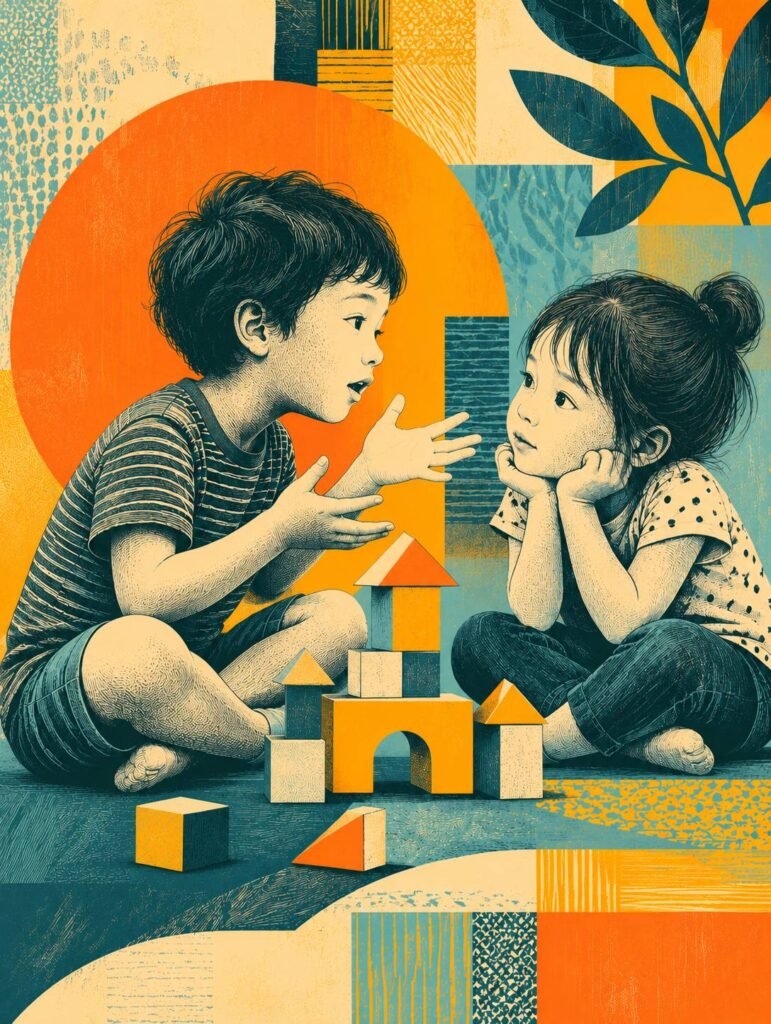
Siblings can be a source of risk as well as support. Buist and colleagues (2013) analysed 34 studies (12,257 children and adolescents) and found that warmer, less conflictual sibling relationships went with fewer internalising and externalising problems, with stronger links in childhood than in adolescence. Conflict showed the strongest association with problem behaviour. These are correlations, not proof of cause.
The sharpest evidence on harm concerns sibling bullying. Bowes and colleagues (2014) analysed data from a large UK birth cohort. Children who reported being bullied frequently by a sibling at age 12 were about twice as likely to have depression and self-harm at age 18, even after accounting for family risk factors, though the study can show only an association. About one in ten children in the sample reported being bullied several times a week.
Dirks and colleagues (2015) reviewed the evidence and concluded that siblings can be both a risk and a protective factor, and that telling normal sibling conflict from harmful conflict would help clinical decisions. Signs that conflict has crossed a line include aggression that is one-sided or repeated, a sibling who is afraid, a clear power imbalance, and conflict that escalates and never resolves.
“They’re just siblings” is not a safe assumption. Sibling bullying is worth taking as seriously as bullying elsewhere.
What About Children Without Siblings?
If siblings matter, are only children disadvantaged? The evidence says no. Falbo and Polit’s (1986) review of more than 100 studies found that only children were indistinguishable from firstborns and children from small families across adjustment, sociability, achievement and intelligence.
So siblings offer a distinctive practice ground, but not a necessary one. Children without siblings also practise social understanding and conflict with friends, cousins, classmates and parents, and parents of only children can make sure those opportunities exist.
Supporting Sibling Relationships Without Refereeing Every Fight
The research suggests that you can influence how siblings get along, though the evidence is modest and no approach guarantees harmony. These habits fit what we know.
Expect conflict, and learn the difference. Disagreements are normal. Aggression, fear and one-sided harm are not, and are worth acting on.
Coach, don’t just judge. In ordinary conflicts, try asking each child to say what happened and how they felt, then help them think about how to settle it or avoid it next time. Recchia and Howe’s findings suggest that talking through conflicts in this way may help children handle future ones on their own.
Step in when it isn’t safe or fair. Physical aggression, threats and persistent targeting need an adult, whatever the age gap.
Watch for comparisons and labels. Fair does not mean identical. Time alone with each child and appreciation for each child’s differences help avoid fixed roles.
Talk about feelings and perspectives. Parents’ talk about thoughts and feelings is linked to children’s social understanding (Devine & Hughes, 2018). “What do you think your sister was feeling?” is a simple version.
Make room for shared play. Pretend play between siblings gives practice in negotiating (Howe et al., 1998). Don’t overmanage it.
Repair after fights. A calm check-in, an apology that is meant and a chance to make it right teach more than a punishment.
Model it. Children learn conflict resolution partly by watching how the adults around them disagree.
Sibling Relationships and The Play Therapy Toolbox
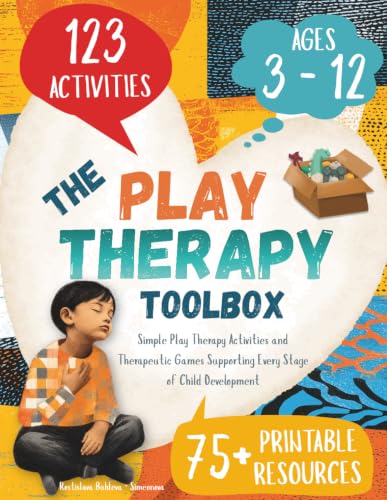
The Play Therapy Toolbox: 123 Simple Play Therapy Activities and Therapeutic Games Supporting Every Stage of Child Development from Age 3 to 12 contains activities on emotions, empathy, conflict, family and identity that families can use with one child or with siblings together. Each comes with step-by-step guidance on how to run it and what to say, questions to ask, and a parent guidance note that encourages the curious, non-judging stance this article describes. The book includes 123 activities and 75+ printable worksheets, with a cross-referenced annex to find activities by age and presenting concern.
Before You Begin: A Note on Professional Support
Most sibling conflict is part of ordinary family life. If one child is repeatedly hurt, frightened or controlled by a sibling, if aggression is escalating, or if sibling conflict is part of wider family distress, I would sincerely recommend consulting a qualified mental health professional or family therapist. The strategies here are a supportive resource and not a substitute for assessment.
Three Things Worth Knowing
Siblings are a practice ground, not a destiny.
The research links siblings to social understanding, conflict skills and identity, but the effects are modest, the findings mixed, and children without siblings do well too. There is no single “right” family shape.
Conflict isn’t the enemy. Harmful conflict is.
Children can learn from disagreements that are managed well. Aggression, bullying and persistent one-sidedness are a different matter and deserve a real response.
You are the most important tool in the room.
How you respond to your children’s fights, comparisons and rivalries shapes the climate they work out their relationship in. A calm, curious adult who takes both children’s feelings seriously and keeps everyone safe is the best support the research can point to.
Available Now for $7.99 — For a Limited Time
If this look at sibling relationships and child development gave you a clearer picture of what siblings do for each other, and how you can help, The Play Therapy Toolbox gives you 123 activities built on the same approach. The ebook is available now on Amazon at $7.99 for a limited time, with 123 activities and 75+ full-colour printable worksheets for children aged 3 to 12.
Play is not preparation for life. It is life, in its most honest, most essential, most healing form.
Disclaimer: This article is intended as an educational and supportive resource for parents, caregivers, educators, and mental health professionals. It is not intended to diagnose, treat, or replace professional therapeutic or medical care. If a child is experiencing significant emotional, behavioural, or developmental difficulties, please seek guidance from a qualified mental health professional.

Rostislava Buhleva-Simeonova is a psychologist and game design specialist. She has worked with children, adults, and the elderly within various therapeutic programmes over the past eight years, all the while providing the much-needed playful twist that art and gamified experiences can bring to this sometimes uneasy setting. But it wasn’t until the birth of her daughter, Aurora, that this work took on an even deeper personal meaning. With her academic and real-life experience, honed through numerous trainings and sessions, she is currently authoring books and articles in the field of child psychology and development, offering expertise in art and play therapy to guide parents and caregivers, as well as professionals in the fields of social work and mental health, throughout various pivotal moments in children’s lives. Last but not least, all of her books have been “peer-reviewed” by her daughter, who testifies to the efficiency of these methods.
References
Bowes, L., Wolke, D., Joinson, C., Lereya, S. T., & Lewis, G. (2014). Sibling bullying and risk of depression, anxiety, and self-harm: A prospective cohort study. Pediatrics, 134(4), e1032-e1039. https://doi.org/10.1542/peds.2014-0832
Buist, K. L., Deković, M., & Prinzie, P. (2013). Sibling relationship quality and psychopathology of children and adolescents: A meta-analysis. Clinical Psychology Review, 33(1), 97-106. https://doi.org/10.1016/j.cpr.2012.10.007
Devine, R. T., & Hughes, C. (2018). Family correlates of false belief understanding in early childhood: A meta-analysis. Child Development, 89(3), 971-987. https://doi.org/10.1111/cdev.12682
Dirks, M. A., Persram, R., Recchia, H. E., & Howe, N. (2015). Sibling relationships as sources of risk and resilience in the development and maintenance of internalizing and externalizing problems during childhood and adolescence. Clinical Psychology Review, 42, 145-155. https://doi.org/10.1016/j.cpr.2015.07.003
Dunn, J. (2002). Sibling relationships. In P. K. Smith & C. H. Hart (Eds.), Blackwell handbook of childhood social development (pp. 223-237). Blackwell.
Falbo, T., & Polit, D. F. (1986). Quantitative review of the only child literature: Research evidence and theory development. Psychological Bulletin, 100(2), 176-189.
Feinberg, M. E., McHale, S. M., Crouter, A. C., & Cumsille, P. (2003). Sibling differentiation: Sibling and parent relationship trajectories in adolescence. Child Development, 74(5), 1261-1274. https://doi.org/10.1111/1467-8624.00606
Feinberg, M. E., Solmeyer, A. R., & McHale, S. M. (2012). The third rail of family systems: Sibling relationships, mental and behavioral health, and preventive intervention in childhood and adolescence. Clinical Child and Family Psychology Review, 15(1), 43-57.
Howe, N., Petrakos, H., & Rinaldi, C. M. (1998). “All the sheeps are dead. He murdered them”: Sibling pretense, negotiation, internal state language, and relationship quality. Child Development, 69(1), 182-191.
Howe, N., Rinaldi, C. M., Jennings, M., & Petrakos, H. (2002). “No! The lambs can stay out because they got cozies”: Constructive and destructive sibling conflict, pretend play, and social understanding. Child Development, 73(5), 1460-1473. https://doi.org/10.1111/1467-8624.00483
McAlister, A. R., & Peterson, C. C. (2013). Siblings, theory of mind, and executive functioning in children aged 3-6 years: New longitudinal evidence. Child Development, 84(4), 1442-1458. https://doi.org/10.1111/cdev.12043
McHale, S. M., Updegraff, K. A., & Whiteman, S. D. (2012). Sibling relationships and influences in childhood and adolescence. Journal of Marriage and Family, 74(5), 913-930. https://doi.org/10.1111/j.1741-3737.2012.01011.x
Perner, J., Ruffman, T., & Leekam, S. R. (1994). Theory of mind is contagious: You catch it from your sibs. Child Development, 65(4), 1228-1238. https://doi.org/10.1111/j.1467-8624.1994.tb00814.x
Recchia, H. E., & Howe, N. (2009). Sibling relationship quality moderates the associations between parental interventions and siblings’ independent conflict strategies and outcomes. Journal of Family Psychology, 23(4), 551-561. https://doi.org/10.1037/a0014980
Ruffman, T., Perner, J., Naito, M., Parkin, L., & Clements, W. A. (1998). Older (but not younger) siblings facilitate false belief understanding. Developmental Psychology, 34(1), 161-174.
Whiteman, S. D., McHale, S. M., & Soli, A. (2011). Theoretical perspectives on sibling relationships. Journal of Family Theory & Review, 3(2), 124-139.