
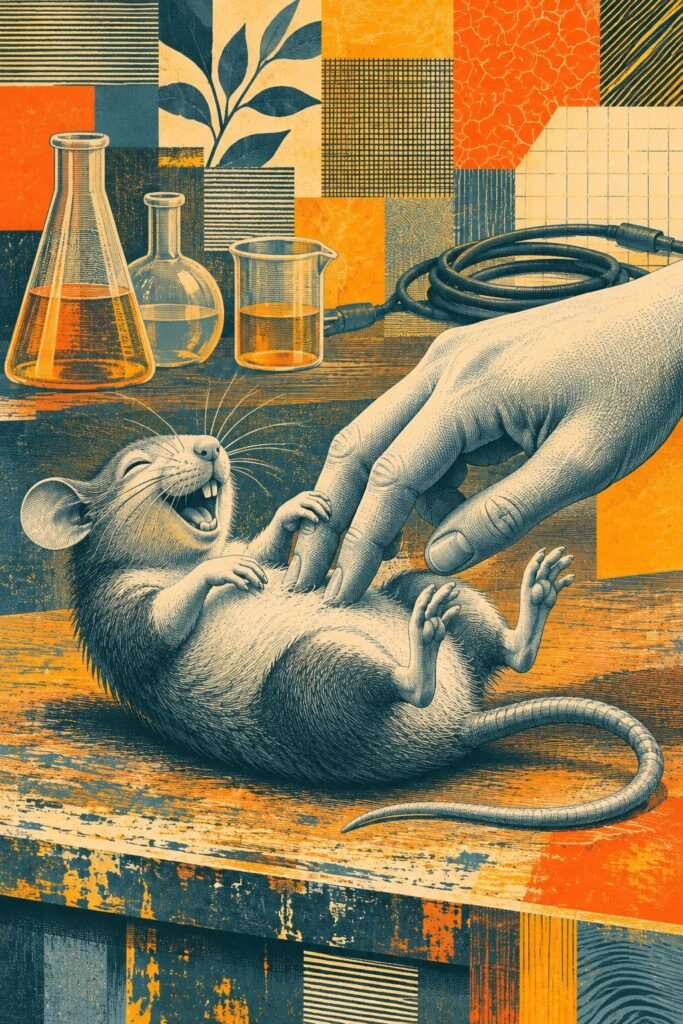
In a laboratory at Bowling Green State University, a neuroscientist named Jaak Panksepp and his assistant did something that sounds like a joke. They tickled rats. The young rats chirped at a pitch humans can’t hear, chased the tickling hand, and came back for more. Panksepp suggested that those chirps were an ancient relative of laughter, and that play is not something young mammals learn but something their brains are built to do. It is a striking idea, and it sits at the centre of this article on the importance of free play for children. The research on the importance of free play for children offers some real answers. It also contains some claims that are stronger than the evidence, and an honest article should say which are which.

What Counts as Free Play
Free play is play that children direct themselves. They choose what to do, make up the rules, and can stop whenever they like. The psychologist Peter Gray argues that its developmental value depends on exactly this: that it is self-directed and intrinsically rewarding, done because the child wants to and not because someone has asked.
That separates it from a swimming lesson, an adult-led craft, or a game an adult runs, all of which have their own value. It also separates it from guided play, where an adult sets up a purpose and lets the child explore within it. Both have their place, but this article is about the first kind, the kind that is hardest to schedule and easiest to squeeze out.
Panksepp’s PLAY System: Play as a Built-In Part of the Brain
The neuroscientist Jaak Panksepp spent decades studying the emotional systems that mammals share. He proposed that the brain has a small number of primary emotional systems, which he named in capitals: SEEKING, RAGE, FEAR, LUST, CARE, PANIC, and PLAY. In his account, PLAY is not a luxury. It is one of the basic systems that evolution built into young mammals, along with the circuits for seeking, fear, and caring for the young.
His best-known evidence comes from rats. Young rats engage in rough-and-tumble play, and during play, and when gently tickled by a researcher, they produce high-pitched 50 kHz chirps that Panksepp and Burgdorf (2003) suggested may be an evolutionary relative of human laughter. Rats chased the tickling hand and “asked for more.” The authors presented this as a working hypothesis, not a proven fact, and many neuroscientists were initially sceptical. The basic idea, that play arises from ancient subcortical systems shared across mammals, has nonetheless been influential.
For parents the useful point is simple. Children don’t play because they have been taught to. They play because their brains are built to. A child who is bursting to run, chase and invent is following something deeply programmed.
What Play Seems to Do to the Developing Brain
Much of what we know about play and the brain comes from research on rats, led by Sergio and Vivien Pellis. Their work suggests that juvenile rough-and-tumble play helps shape the prefrontal cortex, the brain region involved in planning, impulse control and social behaviour. In one study (Bell, Pellis & Kolb, 2010), rats deprived of peer play as juveniles showed differences in the development of the orbitofrontal and medial prefrontal cortices, and as adults they behaved in ways similar to animals with damage to those areas, with socially awkward and emotionally poorly regulated responses. A review by Pellis, Pellis and Bell (2010) concluded that such changes appear to mediate the effects of play on the refinement of social skills.
This is intriguing, but it needs a caution. These are rat studies. The Pellises themselves, in a later chapter, point out crucial limitations to what we know so far, including how play is measured and how play experience can be manipulated. Applying it to children is an inference, not a demonstration.
Panksepp drew a bolder inference. In a 2007 paper he suggested that one reason for the rise in ADHD diagnoses might be a decline in opportunities for natural, self-generated social play. He pointed to rat work showing that play can help growing animals develop behavioural inhibition (including a 2003 study in which play reduced hyperactivity in rats with frontal cortex damage) and proposed that play “sanctuaries” for at-risk children might support frontal lobe maturation. But he was clear about the status of this idea: whether intensive social play could alleviate ADHD symptoms “remains to be evaluated.” It is a hypothesis worth testing. It is not a treatment, and it should not be treated as one.
Free Play, Executive Function and Self-Regulation
Executive function is the cluster of mental skills that lets a person hold information in mind, resist impulses and switch flexibly between tasks. In a major review, Adele Diamond (2013) describes it as central to success in school, health and relationships, and as something that can be improved through practice.
Does free play support it? Some human evidence says yes, with qualifications.
Unstructured time. Barker and colleagues (2014) collected information from parents about the daily and weekly activities of 6- and 7-year-olds, and tested the children’s executive function. The more time children spent in less-structured activities, the better their self-directed executive function, which is the ability to decide on your own what to do and when. Time in structured activities predicted poorer self-directed executive function. The relationship held when the researchers controlled for age, verbal ability and household income, and it was specific: time use didn’t predict externally driven executive function. This was a correlational study based on parent reports, so it cannot show that free time caused the differences, but it is a clear and plausible pattern.
Make-believe. Researchers following Vygotsky’s ideas, including Laura Berk and colleagues (2006), have argued that make-believe play is a training ground for self-regulation, because children must hold roles and rules in mind and keep to them. A randomised trial by Thibodeau and colleagues (2016) tested this. One hundred and ten children aged 3 to 5 were assigned to a five-week fantastical pretend-play programme, a non-imaginative play programme, or ordinary activities. Only the fantastical pretend-play group improved on executive function measures.
A follow-up by the same team (Thibodeau-Nielsen et al., 2020) with 179 children found the effect again, but only among middle-class children. Among children from low-income families attending Head Start, the same intervention produced no change. So the effect is real in some groups, and we don’t yet know why it didn’t show in others.
Free Play and Emotional Regulation
Play is also where many children first practise handling big feelings. In free play they face small, safe versions of frustration, fear and conflict: a game that goes wrong, a friend who doesn’t want to share, a pretend monster. Gray (2011) argues that in free play children learn to regulate their emotions, make friends as equals, and experience joy.
Sandra Russ, who has studied pretend play in child development and psychotherapy for many years, has similarly proposed that pretend play is a space where children can express, explore and gradually master emotions, which is part of why play-based therapies work.
Gray goes further and argues that the long decline in children’s free play over recent decades has contributed to rising rates of anxiety, depression and feelings of helplessness in young people. The trends he documents are real, but the causal claim is a contested one. Many things changed over those decades, and the data can’t isolate play.
The Honest Picture
Strong claims about play are common, and the evidence doesn’t always support them. A widely discussed review by Lillard and colleagues (2013) in Psychological Bulletin examined more than 150 studies of pretend play and concluded that the evidence does not support strong causal claims about its unique importance for development. For language, storytelling, emotion regulation and executive function, the studies were consistent with pretend play being important, being one of several routes to the same outcomes, or merely going along with other things that matter, but they were not enough to decide between these options. Other researchers (for example Walker & Gopnik, 2013) responded that the review shows a need for better research, not that play is unimportant.
Putting it all together:
- Reasonably well supported: children are strongly motivated to play, and unstructured time and pretend play are associated with better self-directed executive function and social-emotional skills.
- Promising but still being tested: that play shapes prefrontal development in humans the way it does in rats, and that pretend-play interventions improve executive function across different groups of children.
- Still unproven: that a decline in free play caused the rise in childhood anxiety and depression, and that play can ease ADHD symptoms.
That leaves a modest conclusion, and a sound one. Free play is how children naturally learn, practise and enjoy being with other people, and it’s very unlikely to harm them. There is good reason to protect it, even though no one can yet say exactly how much is enough.
How to Protect Free Play at Home
You don’t need special equipment, and the research doesn’t suggest a precise “dose.” These habits fit the evidence:
Leave some time unscheduled. A stretch of the day with no plan, no screen and no adult agenda gives children room to choose.
Let them lead. When you join in, follow their story and their rules. “What are we doing?” works better than “Let’s do it this way.”
Resist the urge to turn play into a lesson. Counting the blocks or naming the colours can wait. The play is the point.
Allow some boredom. Children often need a little restlessness before they come up with their own game.
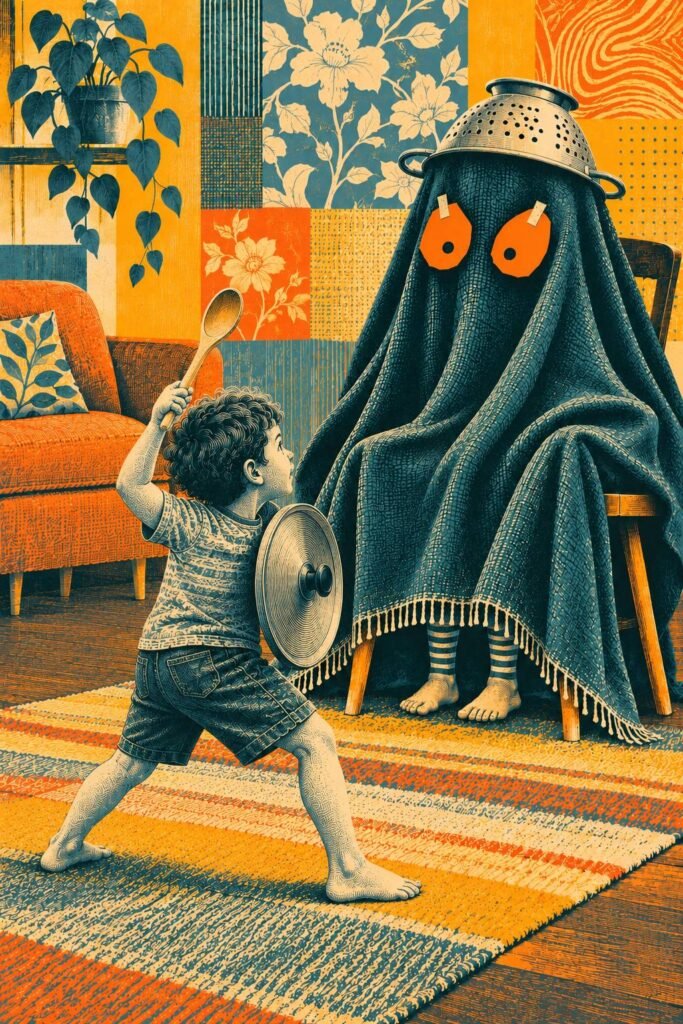
Encourage make-believe. Dress-up clothes, boxes, scarves, toy figures and household objects all work. Fantastical themes (dragons, space, magic) have the strongest research support so far.
Go outdoors and mix ages when you can. Outdoor play with other children is the kind that has declined the most.
Make room for rough-and-tumble play, with limits. Play fighting between children who are both enjoying it is a normal form of play that researchers study closely. Keep an eye on it, make sure everyone is willing, and stop it if anyone isn’t having fun or is hurt.
Join in sometimes. A few minutes of undivided attention in play, with you following the child’s lead, is good for your relationship as well as their development.
Free Play and The Play Therapy Toolbox
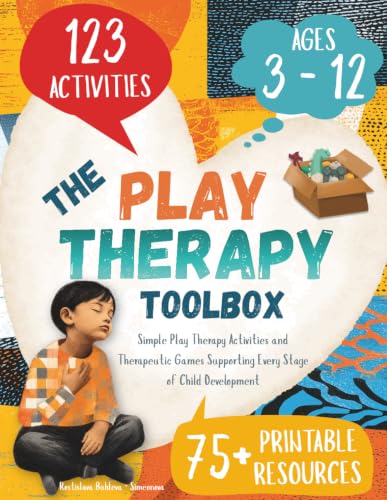
The Play Therapy Toolbox: 123 Simple Play Therapy Activities and Therapeutic Games Supporting Every Stage of Child Development from Age 3 to 12 is built on the same idea this article describes: that play is a child’s natural language, and that adults can support emotional growth by joining in with warmth and curiosity. To be clear, its activities are structured, not free play. They are designed to give play a purpose, and they work alongside the unstructured time children need and don’t replace it.
Each activity comes with step-by-step guidance on how to run it and what to say, questions to ask the child, and a parent guidance note that encourages following the child’s lead. The book includes 123 activities and 75+ printable worksheets, with a cross-referenced annex that lets you find an activity by age group and presenting concern.
Before You Begin: A Note on Professional Support
The ideas in this article are meant to support ordinary family life. If your child has been diagnosed with ADHD, please don’t change any treatment on the strength of this article. Panksepp’s ideas about play are a hypothesis and not a treatment, and decisions about ADHD care are best made with your child’s clinician. If a child seems unable to play, plays in very repetitive or distressing ways, or avoids other children persistently, I would sincerely recommend speaking with a qualified mental health professional or paediatrician.
Three Things Worth Knowing
Play is built in, and it works best when it belongs to the child.
The consistent thread across the research is that self-directed, unstructured time is where much of children’s practice at planning, regulating and relating happens. Protecting it is one of the simplest things a parent can do.
The evidence is promising, not complete.
Much of the brain research comes from rats, some effects have only shown up in certain groups of children, and claims about play and ADHD or mental health are still hypotheses. You can value play without overstating what is known.
You are the most important tool in the room.
Children play best when they feel safe, and that safety comes from the adults around them. A parent who gives children time, follows their lead, and joins in when invited is supporting more than any toy or programme could.
Available Now for $7.99 — For a Limited Time
If this look at the importance of free play for children gave you a clearer view of what the research does and doesn’t show, The Play Therapy Toolbox gives you 123 activities that put the same play-centred approach into practice. The ebook is available now on Amazon at $7.99 for a limited time, with 123 activities and 75+ full-colour printable worksheets for children aged 3 to 12.
Play is not preparation for life. It is life, in its most honest, most essential, most healing form.
Disclaimer: This article is intended as an educational and supportive resource for parents, caregivers, educators, and mental health professionals. It is not intended to diagnose, treat, or replace professional therapeutic or medical care. If a child is experiencing significant emotional, behavioural, or developmental difficulties, please seek guidance from a qualified mental health professional.

Rostislava Buhleva-Simeonova is a psychologist and game design specialist. She has worked with children, adults, and the elderly within various therapeutic programmes over the past eight years, all the while providing the much-needed playful twist that art and gamified experiences can bring to this sometimes uneasy setting. But it wasn’t until the birth of her daughter, Aurora, that this work took on an even deeper personal meaning. With her academic and real-life experience, honed through numerous trainings and sessions, she is currently authoring books and articles in the field of child psychology and development, offering expertise in art and play therapy to guide parents and caregivers, as well as professionals in the fields of social work and mental health, throughout various pivotal moments in children’s lives. Last but not least, all of her books have been “peer-reviewed” by her daughter, who testifies to the efficiency of these methods.
References
Barker, J. E., Semenov, A. D., Michaelson, L., Provan, L. S., Snyder, H. R., & Munakata, Y. (2014). Less-structured time in children’s daily lives predicts self-directed executive functioning. Frontiers in Psychology, 5, 593. https://doi.org/10.3389/fpsyg.2014.00593
Bell, H. C., Pellis, S. M., & Kolb, B. (2010). Juvenile peer play experience and the development of the orbitofrontal and medial prefrontal cortices. Behavioural Brain Research. https://doi.org/10.1016/j.bbr.2009.09.029
Berk, L. E., Mann, T. D., & Ogan, A. T. (2006). Make-believe play: Wellspring for development of self-regulation. In D. G. Singer, R. M. Golinkoff, & K. Hirsh-Pasek (Eds.), Play = Learning (pp. 74-100). Oxford University Press.
Diamond, A. (2013). Executive functions. Annual Review of Psychology, 64, 135-168. https://doi.org/10.1146/annurev-psych-113011-143750
Gray, P. (2011). The decline of play and the rise of psychopathology in children and adolescents. American Journal of Play, 3(4), 443-463.
Hirsh-Pasek, K., Golinkoff, R. M., Berk, L. E., & Singer, D. G. (2009). A mandate for playful learning in preschool: Presenting the evidence. Oxford University Press.
Lillard, A. S., Lerner, M. D., Hopkins, E. J., Dore, R. A., Smith, E. D., & Palmquist, C. M. (2013). The impact of pretend play on children’s development: A review of the evidence. Psychological Bulletin, 139(1), 1-34. https://doi.org/10.1037/a0029321
Panksepp, J. (1998). Affective neuroscience: The foundations of human and animal emotions. Oxford University Press.
Panksepp, J. (2007). Can PLAY diminish ADHD and facilitate the construction of the social brain? Journal of the Canadian Academy of Child and Adolescent Psychiatry, 16(2), 57-66.
Panksepp, J., & Biven, L. (2012). The archaeology of mind: Neuroevolutionary origins of human emotions. Norton.
Panksepp, J., & Burgdorf, J. (2003). “Laughing” rats and the evolutionary antecedents of human joy? Physiology & Behavior, 79(3), 533-547. https://doi.org/10.1016/S0031-9384(03)00159-8
Panksepp, J., Burgdorf, J., Turner, C., & Gordon, N. (2003). Modeling ADHD-type arousal with unilateral frontal cortex damage in rats and beneficial effects of play therapy. Brain and Cognition, 52(1), 97-105. https://doi.org/10.1016/S0278-2626(03)00013-7
Pellis, S. M., & Pellis, V. C. (2007). Rough-and-tumble play and the development of the social brain. Current Directions in Psychological Science, 16(2), 95-98. https://doi.org/10.1111/j.1467-8721.2007.00483.x
Pellis, S. M., & Pellis, V. C. (2009). The playful brain: Venturing to the limits of neuroscience. Oneworld Publications.
Pellis, S. M., Pellis, V. C., & Bell, H. C. (2010). The function of play in the development of the social brain. American Journal of Play, 2(3), 278-296.
Russ, S. W. (2004). Play in child development and psychotherapy: Toward empirically supported practice. Erlbaum.
Thibodeau, R. B., Gilpin, A. T., Brown, M. M., & Meyer, B. A. (2016). The effects of fantastical pretend-play on the development of executive functions: An intervention study. Journal of Experimental Child Psychology, 145, 120-138. https://doi.org/10.1016/j.jecp.2016.01.001
Thibodeau-Nielsen, R. B., Gilpin, A. T., Nancarrow, A. F., Pierucci, J. M., & Brown, M. M. (2020). Fantastical pretense’s effects on executive function in a diverse sample of preschoolers. Journal of Applied Developmental Psychology, 68, 101137.
Walker, C. M., & Gopnik, A. (2013). Pretense and possibility: A theoretical proposal about the effects of pretend play on development: Comment on Lillard et al. (2013). Psychological Bulletin, 139(1), 40-44. https://doi.org/10.1037/a0030151