
This article is not about bad parents. It is about good parents — loving, committed, trying-their-hardest parents — who are doing things that the research consistently identifies as harmful to their children’s psychological development, not because they intend harm but because these behaviours are so normalised, so culturally unsanctioned, and so deeply rooted in their own childhood experiences that they do not register as harmful at all.
Every parent reading this will recognise something of themselves in what follows. That is not an accusation. It is the point. The behaviours described here are not the province of neglectful or abusive parents. They are the ordinary, everyday patterns of well-intentioned adults who love their children deeply and whose love, in certain specific and identifiable ways, is landing differently than they intend.
The research on how parenting behaviour shapes children’s psychological development is now extensive enough to be specific. We know, in considerable detail, which parenting patterns produce which outcomes — not as statistical abstractions but as the lived psychological reality of children who grow into anxious adolescents, people-pleasers, perfectionists, adults who cannot regulate their emotions or trust their own perceptions or feel genuinely worthy of love without earning it first. Most of those outcomes were not intended by anyone. They were produced by patterns that felt, from the inside, like love.
This is what some of those patterns look like.

1. Dismissing or Minimising Feelings
“You are fine.” “It is not a big deal.” “There is nothing to cry about.” “Stop being so sensitive.”
Emotional dismissal is one of the most common and most consequential patterns in the parenting research literature — and one of the most difficult to recognise from the inside, because it so often comes from a place of genuine reassurance. The parent who tells a child they are fine is trying to help the child feel better. What the child receives is something different: the message that what they are feeling is not real, not appropriate, or not welcome.
John Gottman’s research on emotion coaching — the parenting approach most consistently associated with positive child outcomes — identifies emotional dismissal as the pattern most predictive of poor emotional intelligence in children. Children whose emotional experiences are consistently minimised or dismissed learn three things: that their inner experience cannot be trusted, that difficult feelings are dangerous or shameful, and that the adults around them are not safe recipients of emotional honesty. These lessons do not stay in childhood. They become the template for every subsequent relationship the child will have.
A 2024 meta-analysis published in Child Development confirmed that parental emotional invalidation — the dismissal, minimisation, or punishment of children’s emotional expressions — is significantly associated with internalising difficulties including anxiety and depression, externalising difficulties including aggression, and impaired emotional regulation across adolescence and into adulthood. The child whose feelings were consistently dismissed does not simply have a difficult childhood. They carry the consequences of that dismissal into every emotionally significant situation they encounter for the rest of their life.
The alternative is not to agree with the feeling or to fix it. It is simply to name it and receive it: that sounds really hard, I can see you are upset, tell me more about what happened. The child whose feelings are consistently received — even when the adult cannot solve what caused them — develops a fundamentally different relationship to their own inner experience than one whose feelings are managed away.
2. Conditional Love and Conditional Praise
“I am so proud of you — you got an A.” “I knew you could do it when you tried.” “You are my good girl/boy when you do that.”
Conditional positive regard — the experience of being loved, approved of, or valued contingent on performance, behaviour, or achievement — is one of the most insidious patterns in the parenting literature because it is so often indistinguishable, from the outside, from appropriate encouragement and high standards.
Carl Rogers, whose person-centred theory identified unconditional positive regard as a foundational condition for psychological health, proposed that the child who experiences love as conditional — who learns that approval is earned rather than given — develops what he called conditions of worth: internal rules about what they must be or do in order to deserve love. Those conditions of worth do not simply affect the child’s relationship with their parents. They become the lens through which the child evaluates their own worth in every context — in school, in friendships, in romantic relationships, in their relationship to their own achievements and failures.
Research consistently confirms that conditional parenting — praising children for outcomes rather than effort, withdrawing warmth in response to failure or misbehaviour, and expressing love contingent on the child meeting expectations — produces children who are more anxious, more perfectionistic, and significantly more dependent on external validation than children who experience love as unconditional. A 2023 study published in the Journal of Family Psychology confirmed that adolescents who perceived their parents’ love as conditional on achievement showed higher rates of depression, lower self-esteem, and greater difficulty tolerating failure than those who perceived parental love as unconditional.
The distinction between praising the child and praising the effort is not semantic. You are so smart teaches the child that their worth is located in a fixed trait. You worked so hard on that teaches them that their worth is located in something they can always choose to bring.

3. Overprotection and Helicopter Parenting
“Let me do that for you.” “Be careful — you might fall.” “I will handle it.” “Don’t worry, I will speak to the teacher.”
Overprotective parenting — the removal of challenge, risk, and difficulty from the child’s experience in the service of protecting them from harm — is perhaps the most culturally sanctioned harmful parenting pattern of the current era. It is rooted in genuine love, in the reasonable desire to protect a child from pain, and in a cultural environment that has made risk increasingly visible and increasingly frightening for parents.
The research on what overprotection actually does to children is consistent and clinically significant. A 2025 systematic review published in Clinical Psychology Review confirmed that overprotective parenting — characterised by excessive control, intrusion, and the prevention of age-appropriate challenge — is significantly associated with anxiety disorders in children and adolescents, impaired self-efficacy, poor frustration tolerance, and the particular vulnerability of the child who has never been given the opportunity to discover that they can manage difficulty.
The mechanism is straightforward: children develop confidence not through being told they are capable but through the repeated, direct experience of managing things that were difficult. The child who is consistently rescued before they have had a chance to struggle does not experience themselves as capable. They experience themselves as someone who requires rescuing — and they carry that self-perception into every new challenge they encounter.
The paradox of overprotection is this: the parent who removes every obstacle from the child’s path is not protecting the child from difficulty. They are ensuring that the child faces every difficulty without having built any of the internal resources that previous difficulties would have developed.
4. Emotional Parentification
“You are the only one who understands me.” “I do not know what I would do without you.” “Do not tell your father/mother — this is between us.” “You are so mature for your age.”
Parentification — the process by which a child is assigned the emotional role of caregiver to their parent — is one of the most damaging and most invisible patterns in the parenting literature. It is invisible because it is so often framed as closeness, as a special relationship, as the parent treating the child as a confidant rather than as a subordinate. And the child who is parentified often does not experience it as burden — at least not initially. They experience it as being needed, as being important, as being the person who makes things better.
A 2024 study published in the Journal of Child and Family Studies confirmed that emotional parentification — the use of the child as an emotional support, confidant, or regulator for the parent’s distress — is significantly associated with anxiety, depression, difficulty with boundaries, compulsive caregiving in adult relationships, and the particular pattern of self-abandonment that characterises the child who has learned to prioritise everyone else’s emotional needs over their own.
The parentified child does not simply have a difficult childhood. They grow into an adult who does not know how to receive care, who feels responsible for the emotional states of everyone around them, who cannot ask for help without guilt, and whose own needs have become so consistently deprioritised that they are no longer entirely sure what those needs are.
The child’s role is to be parented. Not to parent. Every time a parent brings their adult distress to a child — even lovingly, even with the best of intentions — they are asking the child to carry something that belongs to an adult.
5. Shame-Based Discipline
“What is wrong with you?” “You should be ashamed of yourself.” “I cannot believe you did that.” “You are so stupid/naughty/difficult.”
The research distinguishes carefully between guilt and shame — and the distinction matters enormously for how discipline is most effectively delivered. Guilt is the feeling that I did something bad. Shame is the feeling that I am bad. Guilt, research by Brené Brown and June Price Tangney consistently confirms, is associated with prosocial motivation — the child who feels guilty about a behaviour wants to repair it. Shame is associated with the opposite — withdrawal, defensiveness, rage, and the desire to hide.
Shame-based discipline — discipline that attacks the child’s character or identity rather than addressing the specific behaviour — does not produce the self-correction it is intended to produce. It produces a child who is more defended, more reactive, more likely to hide difficulty rather than bring it, and significantly less capable of the genuine self-reflection that behavioural change requires. A 2025 meta-analysis published in Developmental Psychology confirmed that parental shame induction — the explicit or implicit communication that the child is fundamentally flawed — is one of the strongest predictors of psychological maladjustment across childhood and adolescence available in the parenting literature.
The alternative is not the absence of consequence or the avoidance of accountability. It is the careful separation of the behaviour from the child: what you did was unkind — let’s talk about what happened and what you can do differently. The child who is held accountable for their behaviour within a relationship that continues to communicate their fundamental worth is a child who can genuinely learn from the accountability. The child who is shamed cannot, because shame does not produce reflection. It produces self-protection.
6. Invalidating the Child’s Reality
“That did not happen.” “You are imagining things.” “I never said that.” “You are too sensitive.” “You are making this up.”
Gaslighting — the term originally applied to abusive adult relationships but now recognised in the parenting literature as a pattern that occurs, often without conscious intent, in many ordinary parent-child interactions — refers to the systematic denial or distortion of the child’s experience of reality. The parent who insists that a conversation did not happen, that a tone was not used, that a feeling is being exaggerated, or that the child’s perception is fundamentally unreliable, is doing something that has measurable and lasting consequences for the child’s relationship to their own perceptions.
A 2024 review published in Psychological Trauma: Theory, Research, Practice, and Policy confirmed that chronic invalidation of the child’s reality — even in its milder, non-abusive forms — is significantly associated with self-doubt, difficulty trusting one’s own perceptions, susceptibility to manipulation in later relationships, and the particular vulnerability of the adult who has learned that their experience of reality requires external confirmation before it can be trusted.
The child who is consistently told that what they experienced did not happen, or that what they felt is not what they felt, does not simply have confused memories of their childhood. They develop a fundamental uncertainty about their own perceptions that follows them into every subsequent context — into relationships, into professional settings, into their relationship with their own judgment and their own needs.
7. Using the Child to Manage the Parent’s Emotions
“You are making me so stressed.” “When you behave like this it breaks my heart.” “Do not upset your mother/father.” “I am doing all of this for you — the least you could do is be grateful.”
This pattern — distinct from parentification in that it does not necessarily make the child a confidant, but does make them responsible for the parent’s emotional state — is one of the most common and most poorly understood harmful patterns in ordinary family life. It occurs when a parent, consciously or not, communicates that their emotional wellbeing is dependent on the child’s behaviour, performance, or choices.
The consequences are significant. Research on psychological control — the parenting pattern in which the parent uses the child’s emotional connection to the parent as a lever for behavioural compliance — consistently confirms that children who experience themselves as responsible for their parent’s feelings develop higher rates of anxiety, lower self-esteem, greater difficulty with autonomous decision-making, and the particular pattern of emotional hypervigilance that characterises the child who has learned to monitor the adults in their environment before attending to their own needs.
A 2025 study published in the Journal of Adolescence confirmed that psychological control — including guilt induction, love withdrawal, and the use of the parent’s emotional state as a disciplinary tool — is one of the most consistent predictors of internalising difficulties in adolescents across diverse cultural contexts. The child who grows up believing that their parent’s happiness is their responsibility does not simply feel guilty easily. They become, in the deepest sense, unable to live for themselves.

8. Perfectionism Pressure
“You can do better than that.” “Second place is first loser.” “Why did you get ninety percent — what happened to the other ten?” “I just want you to reach your potential.”
The research on perfectionism in children distinguishes between two types: adaptive perfectionism — the healthy pursuit of high standards — and maladaptive perfectionism — the belief that one’s worth is contingent on flawless performance and that mistakes are catastrophic. Parental pressure for perfection is one of the most consistent predictors of the second type.
A 2024 meta-analysis published in Psychological Bulletin, examining the relationship between parenting behaviour and perfectionism across 77 studies, confirmed that parental criticism, high conditional regard, and the communication of excessively high and inflexible standards are significantly associated with maladaptive perfectionism in children — which is in turn associated with anxiety, depression, procrastination, avoidance of challenge, and the particular paralysis of the child who would rather not try than risk being seen to fail.
The parent who pushes for perfection is almost always motivated by genuine belief in the child’s capacity. What the child receives is something different: the evidence that what they produce is never quite enough, and the implicit conclusion that they themselves are never quite enough. Those are not equivalent messages — but they arrive in the same package.
9. Avoiding Difficult Conversations
“We do not talk about that.” “You do not need to know about that yet.” “Everything is fine.” “Do not worry about grown-up things.”
The research on family communication and child psychological health consistently confirms that children are not protected by being kept in the dark about difficult realities — they are harmed by it. Children have acute sensitivity to the emotional atmosphere of their family environment. They know, at a felt level, when something is wrong — and when adults refuse to acknowledge what the child can clearly sense, they are left with the particular burden of carrying a reality that no one will name.
A 2023 study published in Family Process confirmed that avoidant family communication — the pattern in which difficult topics, including parental conflict, financial stress, illness, death, and family change, are systematically avoided — is significantly associated with anxiety, confusion, and the particular hypervigilance of the child who has learned that the official version of reality and the felt version do not match.
Children do not need to know everything. But they deserve age-appropriate honesty about the things that affect them. The child who is told, in simple and honest language, that something difficult is happening and that the adults are handling it, is in a fundamentally more secure position than the child who senses the difficulty and is told there is nothing to worry about. Honesty, offered with warmth and at the child’s developmental level, does not create anxiety. Dishonesty — however loving — does.
10. Inconsistency Between Words and Actions
“I love you” followed by emotional withdrawal. “You can always come to me” followed by distraction or dismissal. “We do not shout in this family” followed by shouting.
The research on attachment consistently identifies predictability and consistency as among the most important features of the caregiving environment for a child’s psychological security. The child who can predict how their caregiver will respond — who has learned, through repeated experience, that certain actions produce certain responses — develops an internal working model of relationships as reliable and navigable. The child who cannot predict their caregiver’s responses — who experiences love as inconsistent, warmth as intermittent, and the rules as shifting — develops an internal working model of relationships as fundamentally uncertain.
A 2024 longitudinal study published in Child Development confirmed that inconsistent parenting — characterised by unpredictable emotional availability, inconsistent rule enforcement, and the gap between what parents say and what they do — is significantly associated with anxious attachment, emotional dysregulation, and the particular difficulty of the child who has learned that relationships cannot be trusted to be what they appear to be.
Children do not need perfect parents. They need consistent ones. The parent who makes mistakes and repairs them consistently — who apologises, who comes back, who acknowledges the gap between what they intended and what they did — is providing something more valuable than the parent who never makes mistakes: the evidence that relationships are resilient, that repair is possible, and that the adults in the child’s world can be counted on to try again.
What To Do With This
Reading a list like this one is uncomfortable. It is supposed to be. Discomfort is the beginning of change — and the parent who has recognised something of themselves in these pages has already done the most important thing: they have seen it.
Seeing it does not mean carrying it as shame. It means carrying it as information — specific, actionable information about what to do differently, and about what the child in front of them may be carrying as a result of what has been done so far.
The research on repair in parent-child relationships is among the most reassuring in all of developmental psychology. Children do not need perfect childhoods. They need parents who can notice, acknowledge, and repair — who can say I got that wrong, I am sorry, let me try again. That repair, offered consistently and genuinely, produces something in the child that perfect parenting never could: the embodied knowledge that relationships survive imperfection, and that the adults who love them are willing to keep growing.
For Deeper Work: The Play Therapy Toolbox
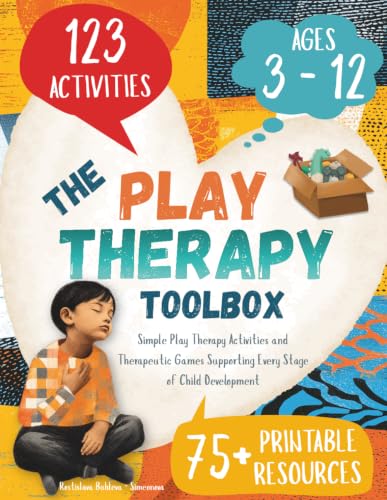
Every activity in The Play Therapy Toolbox: 123 Simple Play Therapy Activities and Therapeutic Games Supporting Every Stage of Child Development from Age 3 to 12 includes a parent guidance note — not because parents are the problem but because parents are the solution. The research on every presenting difficulty the Toolbox addresses — from anxiety to trauma to identity to emotional regulation — consistently identifies the quality of the parent-child relationship, and the specific behaviour of the parent within that relationship, as the single most powerful predictor of outcome.
The parent who has read this article and recognised something they want to do differently is a parent who is already offering their child something significant: the experience of being loved by someone who is willing to look honestly at their own patterns in the service of the child’s wellbeing. That willingness — more than any technique, any activity, or any worksheet — is the foundation on which genuine change is built.
The Toolbox is available now on Amazon at $1.99 for a limited time — with immediate access to 123 activities and 75+ full-colour printable worksheets for children aged 3 to 12, each one including a parent guidance note that translates the therapeutic principles into the language of everyday parenting.
Before You Begin: A Note on Professional Support
If any of the patterns described in this article feel significant, persistent, or accompanied by visible distress in your child, I would sincerely recommend consulting a qualified mental health professional — both for the child and, where relevant, for yourself. These patterns are most effectively addressed within the support of a therapeutic relationship that can hold both the parent’s history and the child’s present simultaneously. Recognising a pattern is the first step. Getting the right support to change it is the next one.
Three Things Worth Knowing
These patterns come from somewhere.
Every parenting pattern described in this article was learned — from the parent’s own childhood, from the cultural environment, from the survival strategies that made sense in the family they grew up in. The parent who dismisses feelings was almost certainly dismissed. The one who uses shame was almost certainly shamed. Understanding where a pattern comes from does not excuse it. But it makes it possible to approach the change with the same compassion the article is asking parents to offer their children. You cannot give what you were not given — but you can learn to give it now.
Repair is more powerful than perfection.
The research on secure attachment consistently confirms that it is not the absence of misattunement that produces secure children — it is the consistent quality of the repair that follows. The parent who makes mistakes and comes back, who acknowledges what went wrong and tries again, is modelling something that no perfect parenting could: that relationships survive imperfection, that love includes accountability, and that it is always possible to do better than before.
Your child needs you to be real more than they need you to be perfect.
The most powerful thing any parent can offer a child is not a curated, managed, ideally presented version of themselves. It is a genuine, imperfect, genuinely trying human being who loves the child specifically and is willing to keep growing in that love. That realness — the willingness to be seen making mistakes and trying again — is what gives children permission to be imperfect themselves. And permission to be imperfect is one of the most significant gifts available in any childhood.
Disclaimer: This article is intended as an educational and supportive resource for parents, caregivers, educators, and mental health professionals. It is not intended to diagnose, treat, or replace professional therapeutic or medical care. If you are concerned about patterns in your own parenting or your child’s wellbeing, please seek guidance from a qualified mental health professional.

Rostislava Buhleva-Simeonova is a psychologist and game design specialist. She has worked with children, adults, and the elderly within various therapeutic programmes over the past eight years, all the while providing the much-needed playful twist that art and gamified experiences can bring to this sometimes uneasy setting. But it wasn’t until the birth of her daughter, Aurora, that this work took on an even deeper personal meaning. With her academic and real-life experience, honed through numerous trainings and sessions, she is currently authoring books and articles in the field of child psychology and development, offering expertise in art and play therapy to guide parents and caregivers, as well as professionals in the fields of social work and mental health, throughout various pivotal moments in children’s lives. Last but not least, all of her books have been “peer-reviewed” by her daughter, who testifies to the efficiency of these methods.