
Introduction to Children’s Drawings
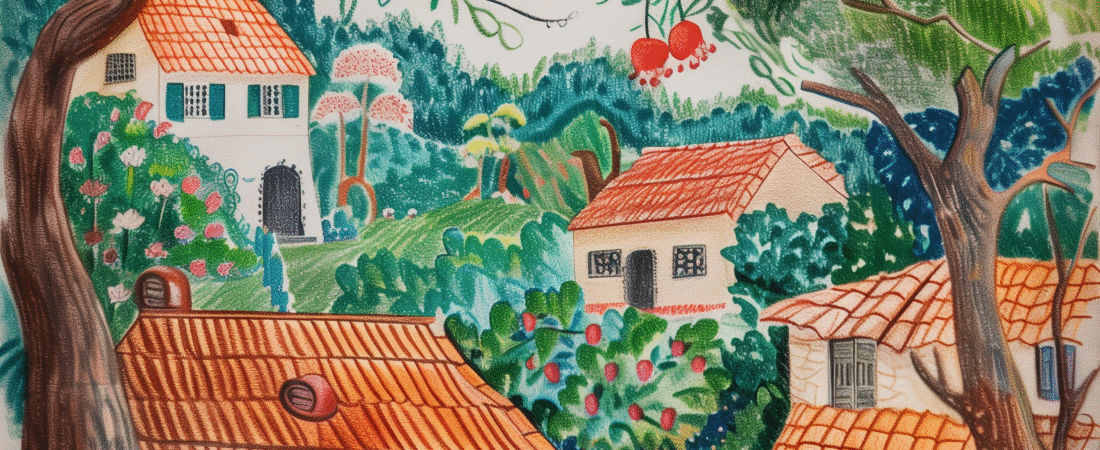
As a psychologist and art therapist, I see children’s drawings as a profound reflection of a child’s inner world, far beyond a simple pastime. Contemporary research in developmental and art therapy consistently shows that early artwork captures cognitive growth, emotional processing, and emerging social understanding. From the first scribbles to narrative-rich scenes, each stage of drawing reveals unique aspects of motor control, perception, symbolic thinking, and emotional regulation. For example, toddlers explore cause-and-effect relationships with crayons, while older children may depict family dynamics, friendships, or imaginative storylines, revealing their evolving self-concept.
Observing children’s drawings offers a window into their problem-solving abilities, social awareness, and emotional states, often providing insights that children cannot yet express verbally. Furthermore, encouraging drawing supports creativity, resilience, and confidence, giving children a safe space to experiment, reflect, and communicate with the adults in their lives. Over the first decade, the evolution of children’s drawings mirrors cognitive and emotional milestones, making art a vital tool for understanding development.
Stage 1: Scribbling in Children’s Art (Ages 1-3)
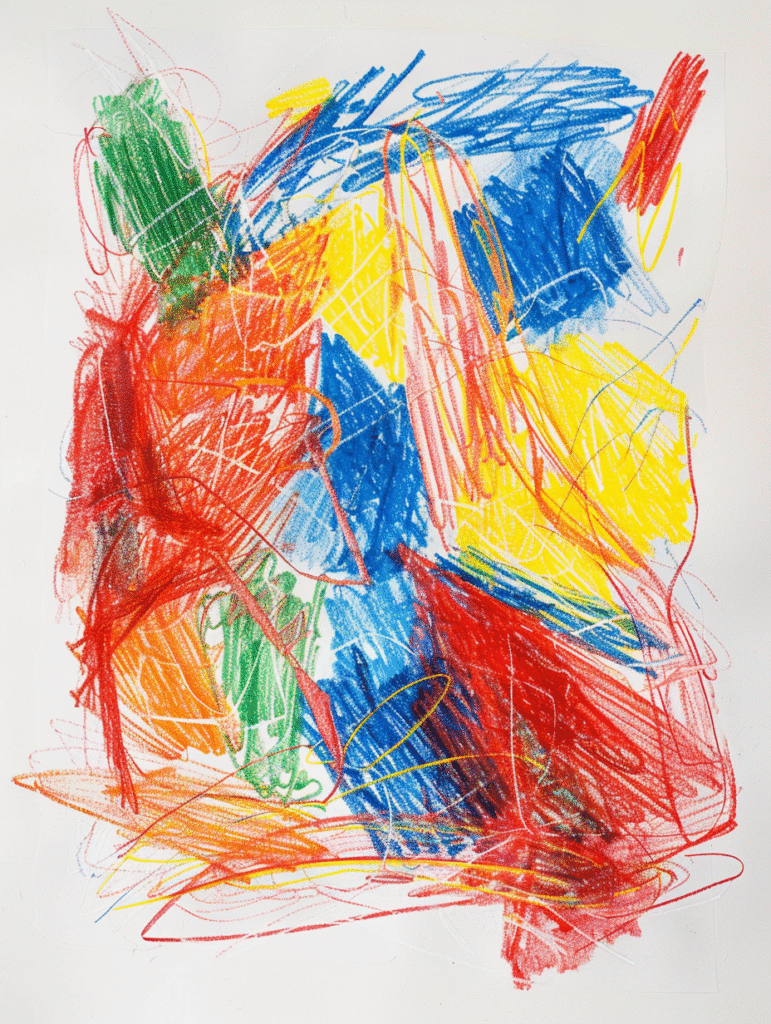
In the scribbling stage, which spans roughly from ages one to three, children explore movement, coordination, and sensory feedback through spontaneous marks. While adults may perceive these scribbles as chaotic, research in early childhood development highlights that even unstructured lines are intentional expressions of curiosity and motor experimentation. At this stage, children’s drawings are predominantly kinetic, reflecting hand-eye coordination, grip strength, and spatial awareness. Toddlers learn the physical effects of pressing harder or softer, dragging, or making circular motions, building foundational sensorimotor skills.
From a psychological perspective, these early marks also represent the beginning of self-expression and emotional regulation; children experiment with action and reaction, gain confidence in their abilities, and practice control over their environment in a low-stakes way. Supporting this stage involves providing varied tools such as chunky crayons, finger paints, or large paper surfaces, which encourage experimentation, sensory integration, and enjoyment of the creative process. By fostering free scribbling, adults contribute not only to motor skill development but also to early cognitive exploration and self-directed learning, laying the groundwork for symbolic thinking and intentional drawing in later stages.
Stage 2: The Pre-Schematic Stage (Ages 3-5)
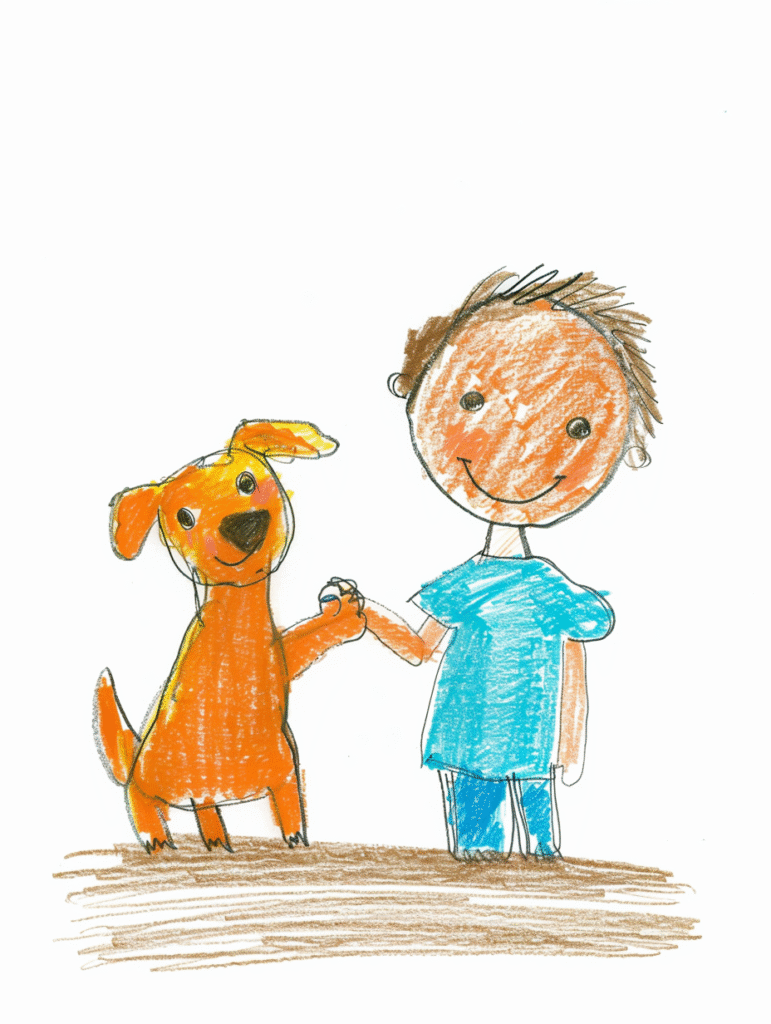
Between ages three and five, children progress into the pre-schematic stage, where drawings become recognizable representations rather than abstract lines. At this stage, children’s drawings often include simple “tadpole” figures with a head and limbs, houses, trees, or familiar objects, though scale and proportion remain inconsistent. Contemporary child development research indicates that this period aligns with rapid language growth, social-emotional awareness, and symbolic thinking; children use drawings to communicate experiences and relationships they cannot yet fully articulate verbally.
Colors may reflect preference, emotional associations, or attention to particular details, while spatial placement and repeated symbols provide insights into attachment, perspective-taking, and cognitive organization. Fine motor skills continue to improve, allowing more controlled lines, circles, and shapes, while experimentation with pattern and repetition strengthens memory, sequencing, and visual discrimination. Adults can support this stage by offering open-ended prompts, encouraging discussion about the drawing, and observing recurring themes without judgment. This engagement promotes emotional literacy, supports problem-solving skills, and validates the child’s early attempts at storytelling, self-expression, and identity exploration through art.
Stage 3: The Schematic Stage (Ages 5–7)
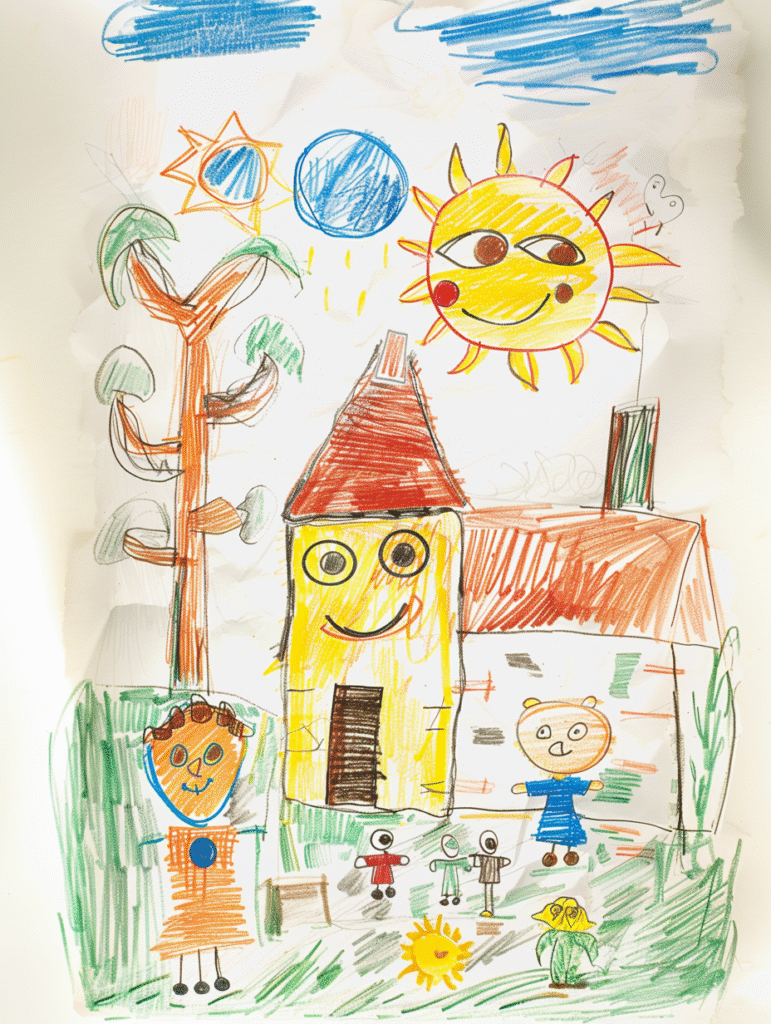
During the schematic stage, children demonstrate a growing sense of logic, structure, and consistency in their artwork. Children’s drawings at this stage often include baseline lines for landscapes, repeated symbols for people and objects, and more coherent spatial arrangements. Research shows that this stage reflects not only cognitive development, such as sequencing and spatial reasoning, but also social and emotional growth, as children use drawings to represent relationships, family structures, or favorite experiences.
Color choice can carry emotional significance, and figures may be emphasized or exaggerated to indicate importance or feelings. At this age, narrative thinking emerges; children often tell stories with their artwork, arranging elements in order, experimenting with perspective, and demonstrating awareness of cause and effect. Encouraging discussion about drawings can enhance emotional literacy, problem-solving skills, and self-expression while strengthening confidence and creativity. Parents and educators can also provide prompts for imaginative scenarios, collaborative projects, or reflective questions, allowing children to refine both artistic and cognitive abilities while enjoying the freedom to explore their inner and outer worlds.
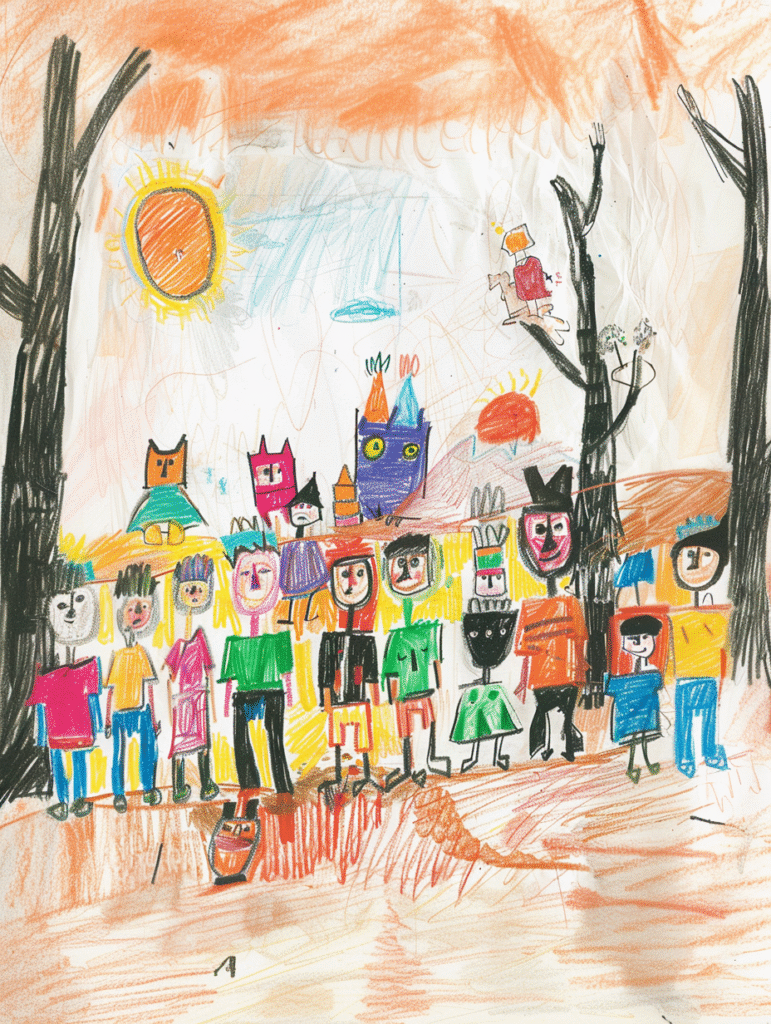
Stage 4: The Dawning Realism Stage (Ages 7–9)
From seven to nine years, children enter the dawning realism stage, in which children’s drawings become increasingly detailed, accurate, and expressive. Fine motor skills are well developed, allowing for more intricate textures, patterns, and early experimentation with shading and perspective. Cognitive growth at this stage enables children to organize visual information more logically, incorporate relative sizes and distances, and explore cause-and-effect relationships within their artwork. Social and emotional development is also reflected in drawings, as children depict friendships, family interactions, or personal identity.
Contemporary psychology research suggests that at this stage, children are capable of integrating imaginative and realistic elements, balancing creativity with observation. Observing patterns, recurring themes, and figure prominence can provide insight into self-esteem, social awareness, and coping strategies. Adults can support this stage by providing high-quality materials, encouraging storytelling through art, and allowing reflection on the meanings behind their drawings, helping children further develop emotional intelligence, problem-solving skills, and creative expression.
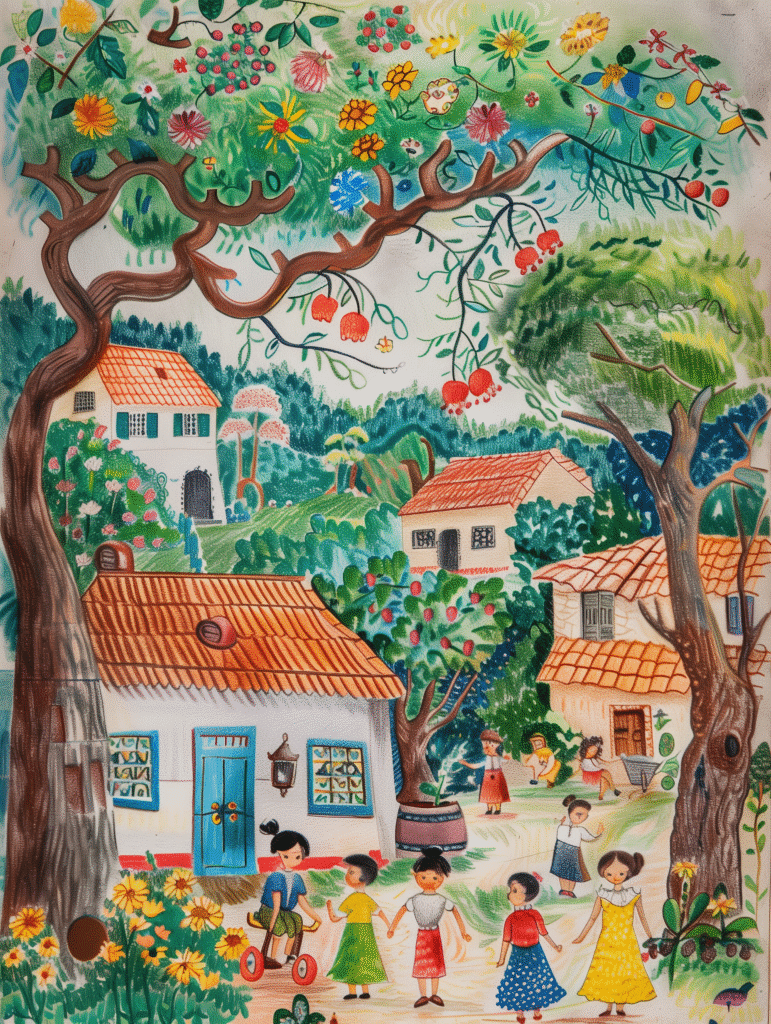
Stage 5: The Preadolescent Stage (Ages 9–10)
By ages nine to ten, children’s artwork shows sophistication in both technique and conceptual thinking. Children’s drawings at this stage often combine realism, narrative complexity, and imaginative elements, reflecting advanced cognitive, social, and emotional development. Research indicates that drawing can serve as a vehicle for abstract thinking, identity exploration, and problem-solving, while also allowing subtle expression of personal experiences, priorities, and emotional states. Children may choose compositions deliberately, refine perspectives, experiment with storytelling, and include nuanced symbolic content. Color selection, figure size, and placement offer insight into self-perception, social awareness, and internal conflicts. Engaging with children about their drawings encourages reflection, empathy, and critical thinking, while reinforcing creativity and self-confidence. Art therapists note that this stage provides opportunities for children to integrate imagination, observation, and emotion, offering a safe space to explore personal values, social relationships, and problem-solving skills, ultimately bridging artistic expression with cognitive and emotional development.
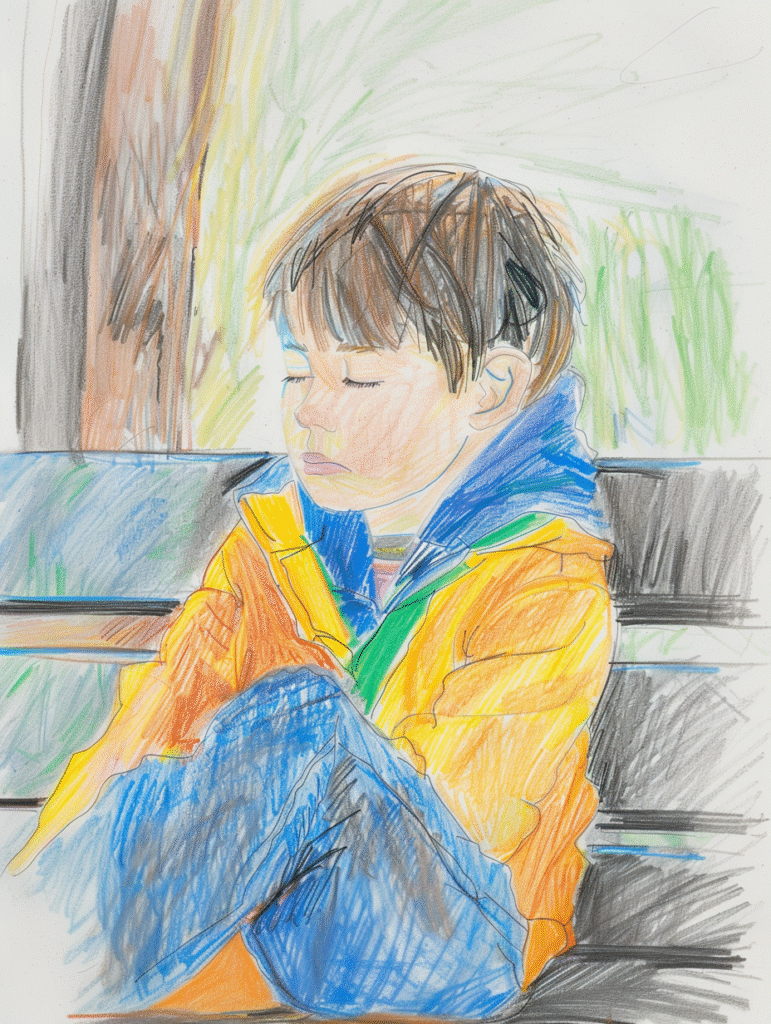
Why Children’s Drawings Matter
Across all stages, observing and reflecting on children’s drawings provides a window into cognitive, emotional, and social growth. Contemporary research emphasizes that drawing allows children to express complex emotions, test ideas, and experiment with social roles before they have fully developed verbal skills. These artworks are not simply decorative—they reveal problem-solving approaches, emotional regulation, creative thinking, and self-awareness. By offering open-ended materials and discussions about art, parents and educators validate a child’s perspective while nurturing skills such as reflection, empathy, and resilience. Engaging with children’s drawings over time allows adults to track developmental milestones, support emotional growth, and strengthen confidence and creative expression. Ultimately, drawing provides a rich, accessible tool for understanding the evolving minds of children up to age ten, fostering connection, learning, and holistic development.
Disclaimer
Some of the links on this blog are affiliate links, which means I may earn a commission if you make a purchase using the link. This comes at no additional cost to you. I only recommend products or services that I believe in and think will be valuable to my readers. I am also hoping you might consider purchasing my book 101 Art Therapy Exercises for Children: A Practical Guide for Parents and Mental Health Professionals. If you’d like to learn more about the nature and practice of art therapy for children, please visit the following article 101 Art Therapy Exercises for Children: A Practical Guide for Parents and Mental Health Professionals. Thank you for supporting this blog!

Rostislava Buhleva-Simeonova is a psychologist, art therapist, and gamificator. She has worked with children, adults, and the elderly within various therapeutic programmes over the past eight years, all the while providing the much-needed playful twist that art and gamified experiences can bring to this sometimes uneasy setting. But it wasn’t until the birth of her daughter, Aurora, that this work took on an even deeper personal meaning. With her academic and real-life experience, honed through numerous trainings and sessions, she is currently authoring books and articles in the field of child psychology and development, offering expertise in art and play therapy to guide parents and caregivers, as well as professionals in the fields of social work and mental health, throughout various pivotal moments in children’s lives. Last but not least, all of her books have been “peer-reviewed” by her daughter, who testifies to the efficiency of these methods.